Hurricane Melissa, debt and pre-arranged financing: Jamaica’s unfolding story
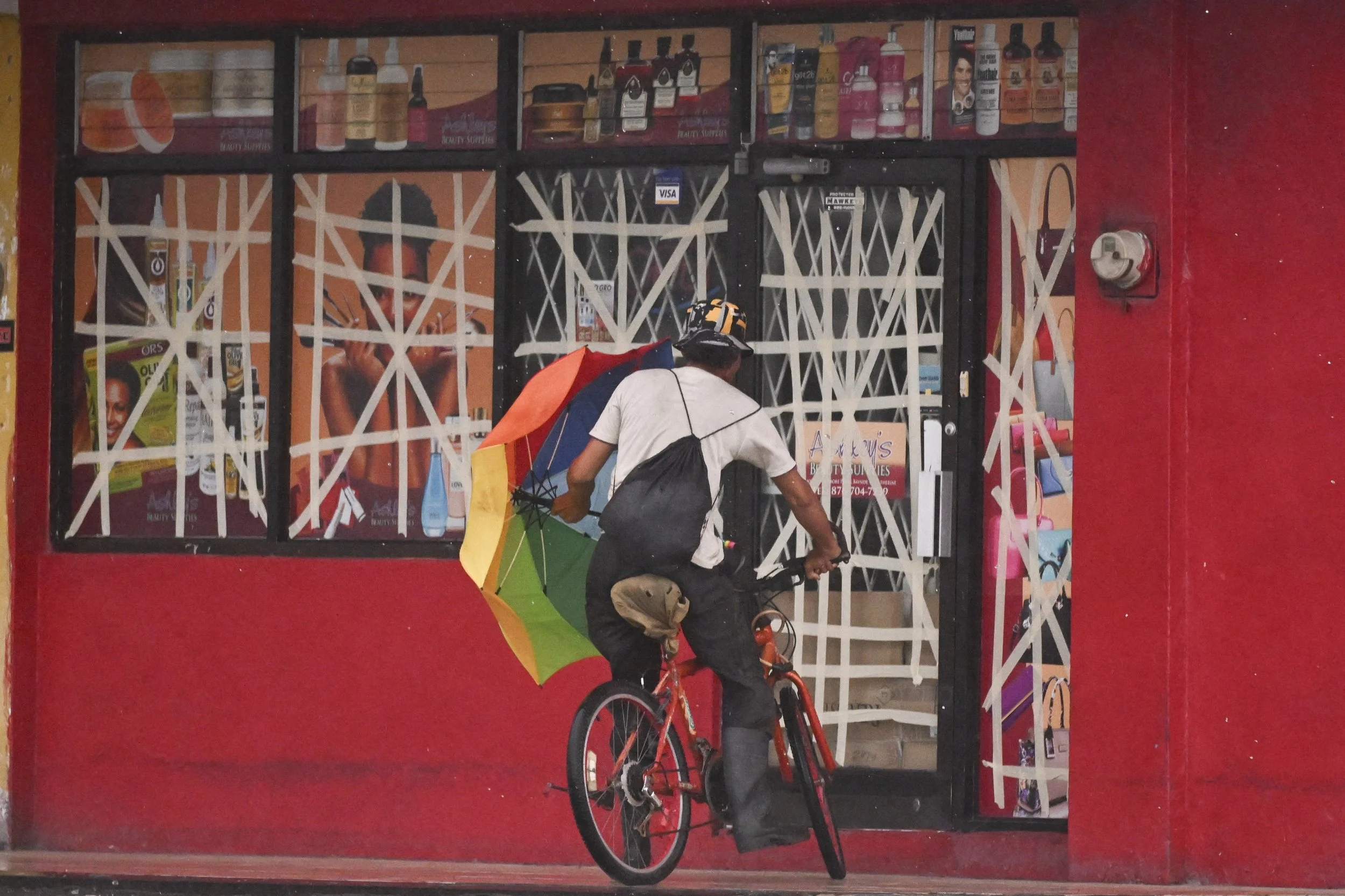
In the climate finance discourse, debt is increasingly seen as a symbol of injustice and unmet responsibility. Countries on the front lines of climate change — yet least responsible for it — face limited access to affordable financing, leaving them without the resources needed to respond effectively when disasters strike. Often, governments take on additional debt to cope. This is a hard pill to swallow, when the remedy risks ending up worse than the disease.
Several countries now spend more servicing debt than investing in essential services like health and education. The World Bank’s International Debt Statistics 2025 report released this week further cautions that “debt is still building in pernicious ways”, and warns that poor and vulnerable countries may be sleepwalking “into a larger calamity tomorrow”.
However, debt can be a complex, misunderstood character, the villain in some narratives, while in others, it is the antihero. In Jamaica, despite the destruction from Hurricane Melissa, debt is likely to emerge as the latter, playing an important role in Jamaica’s recovery and wider fiscal resilience due to the strategic decisions made by its government.
Hurricane Melissa is unlikely to bankrupt Jamaica
Hurricane Melissa struck Jamaica on October 28th and is the costliest hurricane in the country’s recorded history, impacting 900,000 people. Based on preliminary estimates, the physical damage alone totals US$8.8 billion, equivalent to 41% of the country’s 2024 GDP. In an address to Parliament on November 19th, the Honourable Prime Minister Holness explicitly noted that the government would likely be responsible for paying at least half of the damage, which will be partly funded by additional borrowing.
This expected increase in borrowing is also foreshadowed in Jamaica’s Medium Term Debt Strategy, published in February this year, and thus before Melissa. Based on a simulated shock (modelled at 26 % of GDP in FY2026/27 and thus not as severe as Hurricane Melissa), the strategy projected that this would result in debt-to-GDP increasing “by 4.4 percentage points relative to end-FY2025/26…and further to 69.0% in FY2027/28, breaching the legislated ceiling of 60.0%.” In fact, despite Melissa being more severe than the simulated shock, the credit rating agency Fitch expects that Jamaica’s debt to GDP will be close to 68% by the end of 2026.
Using the results of this simulation, as well as the reaction of the market to date, the debt outlook for Jamaica does not appear to be catastrophic. Although debt ratios will worsen in the medium term, Hurricane Melissa is highly unlikely to wipe out the remarkable gains that the Jamaican government has made over the last decade to improve its debt and fiscal outcomes. The emerging consensus is that the government is committed to its fiscal framework and will most likely take steps to reduce its debt burden once reconstruction efforts are achieved.
This is not to say it will be easy. The government will need to make difficult choices with far-reaching implications for its citizens. It will therefore be crucial to consider how development partners can support these efforts, especially as the government seeks to build back better as well as replenish its depleted fiscal buffers. The recent COP30 (somewhat ambiguous) announcement to triple adaptation finance for developing nations by 2035 is therefore a welcome development for Jamaica and other climate-vulnerable countries seeking to balance the books while building their fiscal resilience.
Pre-arranged (debt) financing is an important part of Jamaica’s story
Recognising Jamaica’s vulnerability to climate shocks and the potential devastating consequences of more frequent and severe storms and floods, the government has actively prioritised building its fiscal resilience since 2015. It has primarily done this by expanding its suite of disaster risk financing instruments in accordance with the National Natural Disaster Risk Financing Policy.
By successfully implementing this government-owned disaster risk financing strategy, the government has mobilised roughly US$650 million in rapid and timely liquidity from pre-arranged financing instruments to fund immediate disaster-related spending needs within less than two weeks of the disaster event. The government also has immediate access to approximately US$400-500 million from the International Monetary Fund’s (IMF) Rapid Financing Facility. In the words of the Prime Minister Holness, the government does not have to be “scrounging around to find $1.15 billion, we have it there to start”.
This degree of fiscal preparedness after a massive shock is a first for a Caribbean country and a small island economy. The market itself appears to value this high level of financial preparedness in helping the government to minimise the impact of the disaster on the national budget, the economy and the society. Spreads of Jamaica’s 2036 bond (relative to a 10-year US treasury bond) did not widen significantly after Melissa struck, suggesting that to date investors have shown little reaction to Hurricane Melissa. The credit implications of disasters for small island states partly depend on how mitigating actions shape resilience. In its post-Melissa commentary, Fitch explicitly identifies Jamaica’s pre-arranged financing instruments as “mitigating factors to the major hurricane shock”.
Although roughly half of the disaster risk financing payouts is debt from the World Bank and Inter-American Development Bank (IDB), these loans may be more cost-effective than current alternatives immediately available to the government. While these loans don’t qualify as concessional, they’re typically cheaper than borrowing on international capital markets, easing the fiscal impact of disasters. Indeed, during Jamaica’s contingent loan approval, the IDB estimated its contingent credit facility loan was 306 basis points less costly than issuing sovereign bonds. The rapid liquidity provided by these loans will also be used productively by the government to stabilise public finances, restore order, and support economic recovery.
Furthermore, while payouts from Jamaica’s risk transfer instruments (the Caribbean Catastrophe Risk Insurance Facility and catastrophe bonds) do not add to the public debt stock, they are not free. The government had to pay annual premiums to maintain coverage from these instruments. Moreover, the premiums are paid even if the financing is not triggered by an eligible event. In contrast, the cost of IDB’s contingent loan would be zero if the country did not use the loan, either because no eligible events occurred or because no disbursements were requested.
Ultimately, just because a pre-arranged financing instrument adds to the debt stock, it does not automatically make it inferior to a non-debt instrument if the country has the space to borrow, the terms and conditions are favourable, and the debt is used productively. Understanding these nuances is critical when formulating a disaster risk financing strategy.
Balancing innovative debt solutions with market access
As Jamaica takes on new debt from its creditors to finance recovery and reconstruction, a key question is whether it will adopt innovative debt solutions increasingly championed for climate-vulnerable countries—particularly climate-resilient debt clauses and debt-for-resilience swaps. The first temporarily pauses debt payment after a pre-agreed shock while the latter reduces or restructures debt in exchange for the government’s commitment to use the freed-up resources to finance resilience investments. Due to the strong political traction, various initiatives are underway to mainstream these innovations, like the recently launched Caribbean Multi-Guarantor Debt-for-Resilience Joint Initiative. Yet, while several of its neighbours have embraced both climate resilient debt clauses and debt swaps, Jamaica has so far stayed on the sidelines.
Jamaica’s hesitancy is most likely due to its desire to maintain and strengthen its hard-won access to international capital markets. Since 2013, both S&P and Moody’s have been steadily improving their assessments of default risk and debt sustainability for Jamaica, driven by both sustained debt reduction and the durable improvements in the economic institutional environment. Although disaster response and reconstruction are the immediate priority for the government, the government is unlikely to lose sight of its desire to improve external perceptions of Jamaica’s creditworthiness and thus its credit rating. The latter will bring several tangible benefits, financial and reputational.
On the other hand, these innovative debt solutions are not antithesis to market access, and in some cases may even enhance it. All three rating agencies have also explicitly stated that including and triggering these climate-resilient debt clauses will not be seen as an event of default if designed and implemented in a specific way. However, with respect to debt swaps specifically, leading credit rating agencies have expressed mixed reactions to recent debt swap transactions involving sovereign bonds.
These innovations are still new and untested, especially among countries seeking to maintain strong and continuous access to international capital markets. To date, the only country that regularly issues international bonds to include climate resilient debt clauses in a debt instrument is the Government of Panama, and only in its loans from IDB (and not its international bonds). The Government of Bahamas has included these clauses in its loans from multilateral development banks as well as some commercial bank loans, but also not its bonds. Only Barbados has included this clause in a primary bond issuance, but it is not a regularly issuer of international bonds. The Jamaican government should therefore explore the potential costs and benefits of adopting these clauses with its multilateral creditors (the IDB and World Bank), even if it remains cautious about including them in its primary bond issuances. As shown in the figure below, MDBs account for a significant portion of Jamaica’s external debt service, even if not its biggest creditor. Ultimately, strengthening resilience in climate‑vulnerable countries partly depends on reshaping the debt architecture and tackling barriers to innovation.

Public debt has been and will be a critical tool in Jamaica’s development journey, providing the resources needed to invest in recovery, infrastructure, and social programmes that drive long-term growth. Climate-vulnerable countries need reliable, pre-arranged financing they can deploy quickly. Used responsibly, such instruments, including debt, can reduce uncertainty, speed up recovery and limit economic disruption. Jamaica has demonstrated a strong commitment to strengthening its fiscal resilience to shocks while maintaining debt sustainability and market access. These twin objectives will almost certainly guide its disaster risk financing strategy and public finance choices in the years ahead.
Emerging Lessons On Pre-Agreed Financing For Shock-Responsive Social Protection In Jamaica
Key Terms


More Insights
.jpg)
Rewriting the rules of disaster finance
On #DRRDay, UNDRR and the Centre look at why disaster finance needs to cover disaster prevention, not just the cost of recovery.
Read more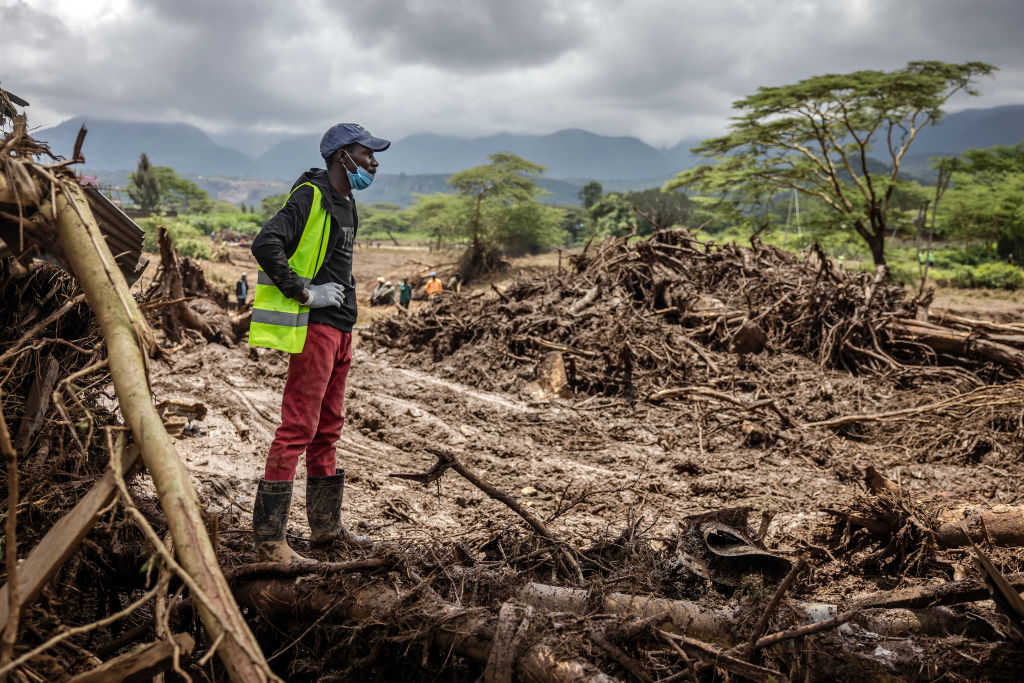
Kenya finances resilience as El Niño looms
Kenya’s new disaster risk financing strategy will be tested by a potentially record-breaking El Niño.
Read more
The DRC’s Ebola outbreak is the fastest on record. The type of financing and hurdles behind the response look almost exactly as it did seven years ago.
Read more