When every dinar counts: How Jordan can make disaster support faster and fairer
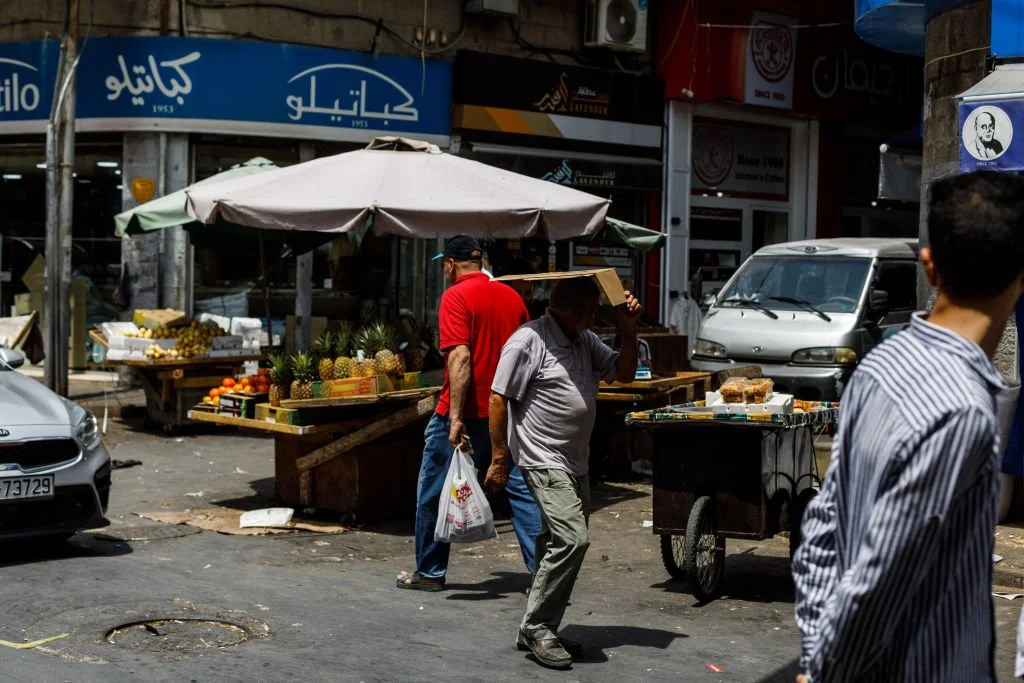
Jordan has extensive experience responding to crisis and a well-established social protection system, even as it grapples with economic volatility, chronic water scarcity, and the pressures of hosting nearly half a million registered refugees. But as climate shocks become more frequent and intense, the challenge is no longer whether support exists, but whether it can move fast enough. Pre-arranged disaster financing could make Jordan’s social protection system more agile, so help reaches vulnerable households automatically, not eventually.
In August 2025, temperatures in Zarqa, the second most populous city in Jordan, shattered records, soaring past 44.8 °C. Demand for water and electricity reached critical levels, pushing local infrastructure to its limits. Just months earlier, in May, flash floods swept through Petra after torrential rain overwhelmed the valleys, closing roads, evacuating tourists and displacing hundreds of households.
In both instances, the shocks unfolded within hours, yet assistance arrived more gradually. In similar crises in Jordan, households often have to rely on negative coping strategies such as borrowing at high interest, selling assets or reducing food consumption while awaiting support.
These events exposed not only environmental fragility but also financial vulnerability, and the persistent gap between disaster and support. From the flash floods of 2018 and 2022 to intensifying droughts and relentless heatwaves, Jordan faces an accelerating tempo of climate extremes. The damage does not end when the water recedes or the heat breaks: economic and social aftershocks ripple through communities for months, weakening livelihoods and social cohesion.
Overlapping crises have become Jordan’s new normal
Jordan has faced a major shock nearly every year for the past decade. The country’s susceptibility to crises is defined not by isolated threats, but by a convergence of several. Climate shocks erode environmental stability, economic shocks undermine household purchasing power, and the strain of hosting refugees stretches public services and resources. Together, these three vulnerabilities reinforce one another.
Climate shocks
Jordan ranks among the ten most water-scarce countries in the world, with annual renewable water resources below 75 cubic meters per person, far under the 500 m³ threshold that defines absolute scarcity. Average rainfall has dropped by roughly 20% since 1990, while summer temperatures have risen by nearly 2°C. The result is a climate squeeze from both directions, too little water for most of the year and too much in catastrophic bursts.
Economic shocks
Jordan’s small, open economy remains vulnerable to global market shifts. The 2022 commodity crisis pushed inflation to its highest level in four years, driven by rising wheat and fuel prices. Although inflation eased to close to 2.0% during the first half of the 2025, it continues to strain low-income households that spend a larger share of income on essentials. While fiscal pressures eased only partially, as weaker tax revenues and higher spending widened deficits despite continued primary surpluses, structural vulnerabilities remain, particularly in utilities, debt, and regional exposure. For many families, even small price spikes or income losses can push them back into poverty. This reinforces the need for layered financial instruments that can respond to both localised and systemic economic shocks.
Pressure on the social protection system
Despite recent reforms, Jordan’s social protection system continues to face structural and operational bottlenecks. Coverage gaps persist for vulnerable households, particularly among informal workers, female-headed households, and people with disabilities, while host communities and refugees often experience uneven access across parallel assistance channels. The National Aid Fund (NAF), is Jordan’s flagship, government-led social assistance programme and the primary delivery platform for cash support to poor and vulnerable households. It operates alongside UNHCR and WFP cash programmes, which support hundreds of thousands of refugees, together forming the core of Jordan’s social protection and humanitarian cash architecture. However, fiscal constraints limit benefit adequacy and the ability to scale rapidly during shocks, and fragmentation across programmes can hinder coordination, case management, and timely responsiveness.
The opportunity: From reactive spending to pre-arranged financing
Jordan already has the architecture for social protection and humanitarian delivery, but lacks a financing mechanism that allows these systems to scale rapidly when shocks occur. The opportunity lies in moving from reactive disaster response to proactive, pre-arranged financing—shifting from asking “What should we do when a disaster happens?” to “How will we pay for what we have already agreed to do?”
Jordan’s newly launched National Social Protection Strategy provides the policy backbone for this shift. Its resilience pillar, Sumood focuses on making social protection shock-responsive. This approach also aligns with the Jordan Response Plan, which seeks to harmonise humanitarian and development responses, and with the National Climate Change Policy, which prioritises climate resilience across sectors.
The missing piece is financial agility – the ability for systems to expand horizontally (in coverage) and vertically (in benefit levels) automatically, rather than wait for pledges or appeals. This requires leadership and fiscal ownership from ministries, especially the Ministry of Finance, integration with budget planning, and contingency instruments calibrated for different shock levels. It also depends on timely support from development partners, many of whom already contribute to humanitarian cash, and whose willingness to provide flexible, risk-informed financing is equally important.
This is not about creating new institutions but about financially empowering the ones that already exist.
The way forward: Embedding disaster risk finance in social protection
Building on existing systems, Jordan can strengthen DRF’s integration into national planning, including disaster risk management and fiscal frameworks, with a clear focus on linking financing arrangements to delivery mechanisms. Rather than developing a standalone DRF strategy, this would involve explicitly connecting sovereign DRF instruments to the country’s social protection system, particularly anchored in the National Aid Fund (NAF).
NAF sits at the centre of Jordan’s social protection and humanitarian cash architecture, alongside UNHCR and WFP cash programmes that support hundreds of thousands of refugees. However, fiscal constraints limit their adequacy and the ability to scale rapidly during shocks, and fragmentation across programmes can hinder coordination, case management, and timely responsiveness.
Under an embedded approach, DRF instruments are designed to release funds when defined shock-related triggers, such as drought indicators or price shocks, are met. The social protection system then serves as the delivery channel, enabling resources to reach affected households quickly through existing programmes. This shifts crisis response away from ad hoc funding mobilisation toward predictable financing that supports timely and system-led assistance.
By integrating financing and delivery in this way, Jordan can fundamentally re-engineer its crisis response, moving from a slow chain of shock, assessment, and ad-hoc response to a rapid pathway in which pre-arranged DRF instruments automatically release funds into existing social protection systems.
Within this broader vision, three strategic shifts can move Jordan from reactive relief to proactive financial protection:
Activating the National Aid Fund when triggers are met
A shock-responsive NAF would leverage pre-arranged financing and trigger mechanisms to provide additional support to vulnerable households when shocks occur. When agreed thresholds, such as extreme rainfall, temperature changes, or price spikes, are reached, NAF could deliver temporary top-up payments through its existing digital channels. This would enable the programme to scale by either increasing benefit levels for current beneficiaries or temporarily extending support to newly affected households.
To support this, Jordan can align these triggers with its national early-warning and fiscal planning systems, ensuring that financing is available and can be released quickly when needed. This approach strengthens NAF’s ability to respond predictably to shocks while improving transparency and efficiency in how crisis support is financed and delivered.
Establishing a multi-layered financing architecture
Effective DRF requires a layered financial structure that combines national budget buffer for frequent, localised shocks managed by the Ministry of Social Development, a contingent credit line (such as the World Bank’s Cat DDO) for medium-scale events, and, where cost-effective and fiscally feasible, a sovereign parametric insurance facility for large, less frequent disasters. Layering decisions should align with the government’s fiscal risk appetite, liquidity constraints, and evidence on the suitability and affordability of insurance instruments in the Jordanian context.
A complementary humanitarian financing window i.e. pre-arranged donor funding—whether from bilateral partners, multilateral mechanisms, or pooled emergency funds—aligned with national trigger mechanisms, would ensure that both host and refugee communities receive timely, coordinated support during shared shocks. Aligning these layers under a unified trigger-and-targeting framework ensures equitable, cost-efficient responses, eliminates duplication, and strengthens fiscal resilience.
Leveraging data for smart, adaptive targeting
A data-driven social registry is the cornerstone of rapid, equitable response. Jordan’s NAF database can evolve into a dynamic platform overlaying household vulnerability profiles with real-time indicators – such as satellite imagery on crop health, rainfall deficits, food-price fluctuations or heatwave forecasts. When thresholds are reached, the system can automatically identify which households are both exposed and vulnerable, enabling payments within hours rather than days. Data integration also enables anticipatory action – providing temporary cash transfers before shocks fully materialise, protecting households earlier and more efficiently.
Jordan has the systems, data, policy vision and partnerships needed to build a truly shock-responsive safety net. The final, critical step is to engineer the financial circuitry that connects them, hardwiring pre-arranged financing to transform resilience from a concept into a financial reality.
For a country carrying such a heavy humanitarian and climate burden, making disaster finance predictable through pre-arranged financing mechanisms is not only an economic necessity, but also a moral imperative.
Key Terms
Authored by

More Insights
Kenya finances resilience as El Niño looms
Kenya’s new disaster risk financing strategy will be tested by a potentially record-breaking El Niño.
Read more
The DRC’s Ebola outbreak is the fastest on record. The type of financing and hurdles behind the response look almost exactly as it did seven years ago.
Read more.jpg)
Learning disaster risk finance the playful way
Can a game replicate real decision-making better than a workshop ever could? Layer Up!, our new simulation game, is finding out.
Read more