From coverage to protection: Putting a risk diagnostic to work in The Gambia
People in The Gambia have increasingly been affected by climate-related disasters. More frequent dry spells and droughts are undermining food security for families, while sudden flash floods are causing displacement and the loss of homes and livelihoods. Understanding these risks is critical to building protection through risk finance strategies, instruments and delivery systems. In 2023–24, The Gambia’s Ministry of Finance and Economic Affairs undertook a disaster risk diagnostic with the Centre for Disaster Protection to do exactly that.
Over the past decade, the Gambian government has taken important steps to prepare financially for shocks, including becoming one of the first countries to join the African Risk Capacity (ARC) and one of the few that have consistently purchased insurance. It also joined the African Development Bank’s (AfDB) African Disaster Risk Finance Programme, receiving premium support to expand financial protection against droughts.
Yet having insurance coverage is not the same as ensuring help reaches people in time. The challenge lies in what happens next: how fast money moves, who it reaches, and whether it translates into protection on the ground.
To develop a roadmap for greater financial protection with expanded coverage across hazard types and disaster severity levels, the Ministry of Finance and Economic Affairs, in collaboration with the National Disaster Risk Management Agency and the AfDB, engaged the Centre for Disaster Protection to jointly conduct a disaster risk diagnostic. A diagnostic takes stock of and assesses data on disaster risks and their costs, requiring the involvement of government ministries and agencies, the insurance regulator and industry, non-government actors, and international partners.
The diagnostic highlighted several gaps in the understanding and financing of disaster risks. There was limited understanding of financial exposure across risk scenarios, which is critical to improving financial protection. Existing pre-arranged instruments also left major risks uncovered, particularly floods and windstorms.
Perhaps most importantly, the diagnostic showed that protection was breaking down not only at the point of financing, but in what happened next. Insurance could pay out quickly, but without clear links to delivery systems, those funds did not automatically translate into timely support. The process identified an opportunity to transform insurance payouts into timely disaster relief by linking the country’s up-to-date social registry to risk finance coverage, strengthening the ‘money-out’ side of disaster response.
Having a clearer picture of disaster risk unlocked new sources of protection. A high-quality diagnostic was instrumental for accessing fast resources and the technical support necessary to upscale protection through the World Bank’s Global Shield Financing Facility – an initiative that links countries’ risk finance needs with international support. The Government requested support to scale up flood and windstorm coverage through social protection-linked insurance. This has now become a USD 10 million World Bank grant.
The diagnostic also opened the door for the Ministry to a deeper, long-term strategy process to continue building on the momentum. Supported by the World Bank’s Social Protection team and the Centre for Disaster Protection, The Gambia’s strategy process is helping the country move toward an aligned, risk-layered, and risk-informed approach to pre-arranged finance and financial protection.
A clearer grip on disaster risks won’t stop the next flood, but against the backdrop of tight fiscal space, it means the government can act before the water rises. The Permanent Secretary of the MoFEA, Mr Baboucarr Jobe, made the stakes clear: “Strengthening disaster risk finance is no longer optional. We must move away from ad hoc, reactive responses to disasters and towards a proactive and sustainable approach that protects vulnerable people.”
Isatou Camara is Director of Climate Finance at the Ministry of Finance and Economic Affairs, The Gambia.
To find out more about how the Centre for Disaster Protection works with countries to develop and implement more impactful disaster risk management and financing, visit our Advisory & Training page or get in touch.
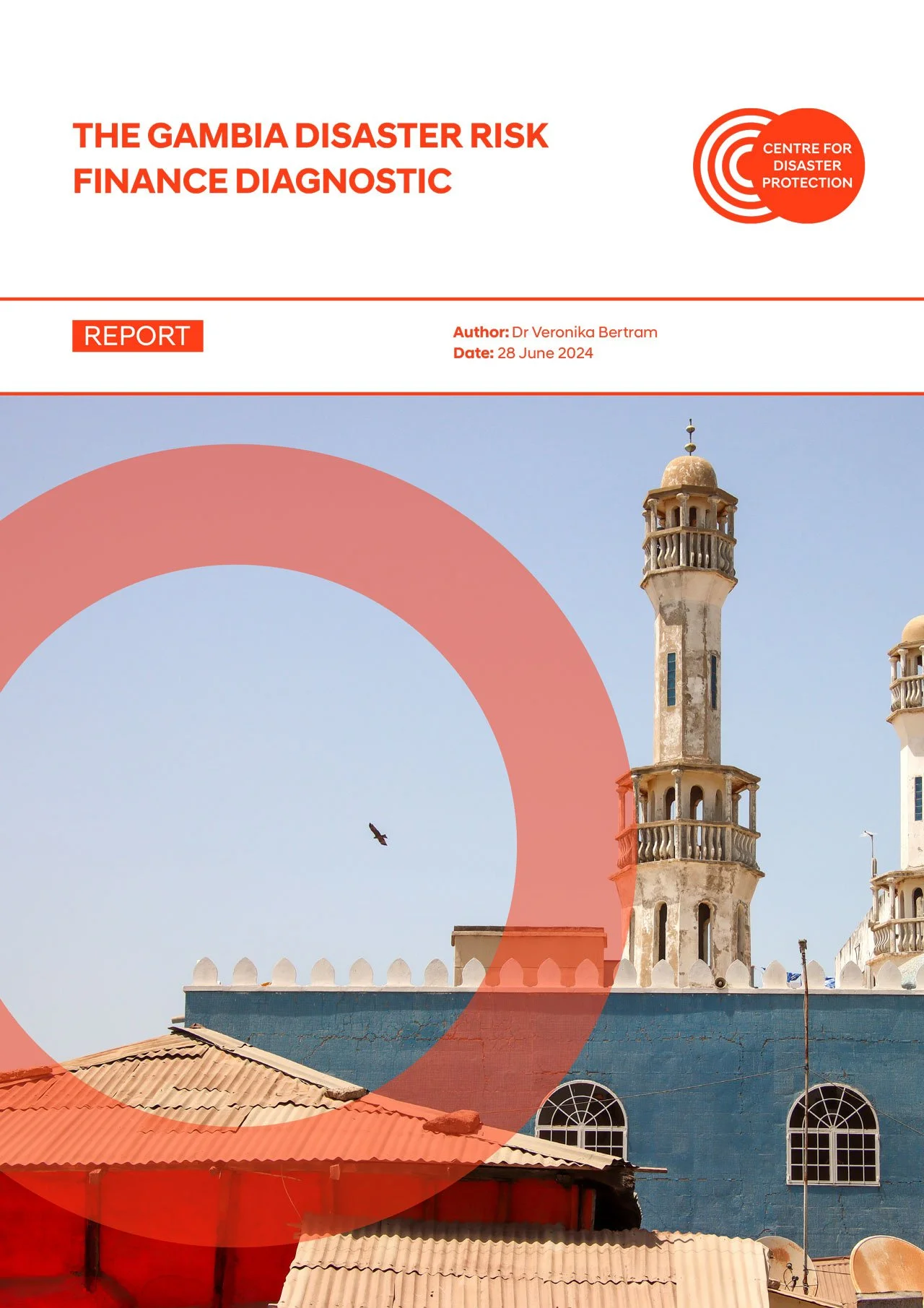
The Gambia Disaster Risk Finance Diagnostic
Key Terms

More Insights
Kenya finances resilience as El Niño looms
Kenya’s new disaster risk financing strategy will be tested by a potentially record-breaking El Niño.
Read more
The DRC’s Ebola outbreak is the fastest on record. The type of financing and hurdles behind the response look almost exactly as it did seven years ago.
Read more.jpg)
Learning disaster risk finance the playful way
Can a game replicate real decision-making better than a workshop ever could? Layer Up!, our new simulation game, is finding out.
Read more