A Year in Review: Annual Report 2024-25
Disaster risks are increasing, but so is the momentum for change. Read our Year in Review and join the journey.
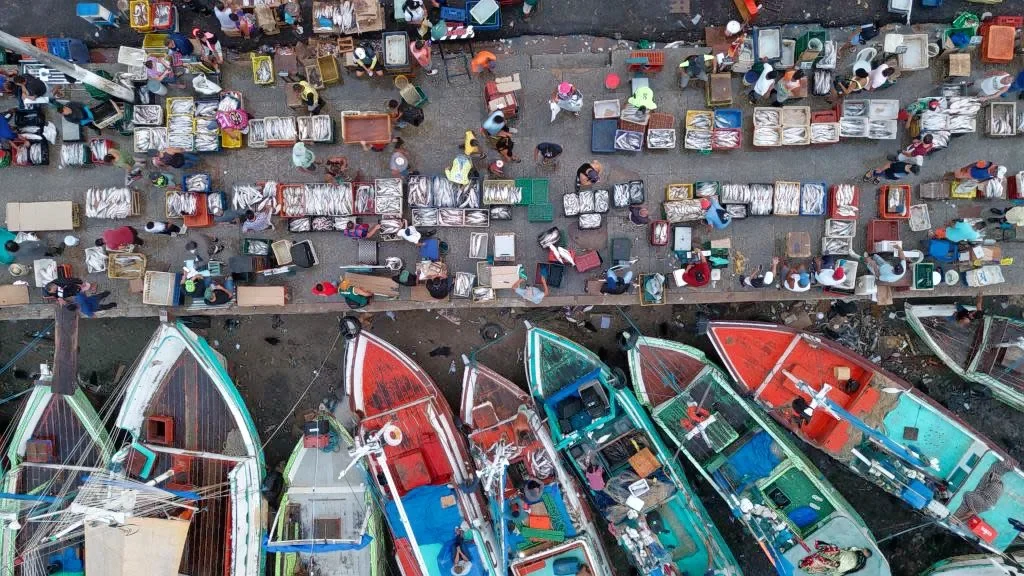
Droughts, floods, storms, earthquakes and disease outbreaks are hitting more often and with greater force. At the same time, global uncertainty is deepening. Millions of people face risks that threaten to undo decades of progress and push communities back into poverty.
The case for better ways to plan and pay for crises is clear. Our work is now increasingly about working directly with countries to help them plan and deliver protection for those most vulnerable to disasters.
Our latest Year in Review shows how we are cementing our role as a trusted technical adviser, policy voice and convener. We have been connecting the big picture with real-world country impact through our work on advisory, evidence and policy engagement. Our expertise is underpinned by values, partnerships and the people who bring this mission to life.
There’s a strong commitment to quality and healthy challenge you bring to discussions. unlike other initiatives that can feel donor-driven, the Centre promotes evidence and quality without needing to ‘sell’ a particular agenda
Daniel Stadtmueller, Team Lead, Global Shield Secretariat

Disasters strike suddenly and visibly, but the work to reduce their impact often unfolds quietly. Change can take years, yet over the past twelve months, we saw real progress:
In The Gambia, what began as a diagnostic review unlocked funds from the African Development Bank and paved the way for the country’s first disaster risk financing strategy.
In Ethiopia, momentum is building across public institutions to create self-reliant systems that reduce aid dependency, from a new disaster response fund to a subsidised agricultural insurance scheme.
In Kenya, a review of the country’s first national strategy is shaping a broader framework that ties disaster risk financing to longer-term development plans.
In the Pacific, our collaboration with the Pacific Catastrophe Risk Insurance Company has increased regional awareness of disaster risk finance and supported insurance uptake.
And through our work with the Global Shield, we have been able to connect countries' efforts to a bigger shift: helping lay the groundwork for stronger national systems and faster, fairer protection when disasters strike.
[The disaster risk financing diagnostic] gave us the insight and direction we needed to build real financial protection for the most climate-vulnerable communities.
Isatou Camara, Director of Climate Finance, Gambian Ministry of Finance and Economic Affairs
Disaster risk finance tools and practices shaped by evidence, not theory
Disaster risk finance tools are often rolled out without knowing what works, for whom, and in what context. That’s why we provide impartial research and practical frameworks to help design smarter, more tailored solutions:
The first-ever practical guide on pre-arranged finance instruments is helping governments cut through technical complexity. Analysis of disaster risk financing in the wake of Hurricane Beryl and the first-ever use of debt pause clauses have fed into policy debates, including a new global alliance on debt. And in the Sahel, a series of assessments on adaptive social protection has sparked regional interest in how risk financing can protect people before crises spiral.
Just sitting down and listening to the Centre team helped us accumulate knowledge and speak confidently with finance ministers and prime ministers. They really know what they’re talking about.
Aholotu Palu, CEO, Pacific Catastrophe Risk Insurance Company

Global policy is beginning to shift. The State of Pre-Arranged Financing for Disasters 2024 gave the evidence base for The High-Level Panel on Closing the Crisis Protection Gap to set an ambitious goal: raise the share of pre-arranged crisis finance from 2% to 20% by 2035. The panel's recommendations fed into the 'Compromiso de Sevilla' and the Sevilla Platform for Action on Pre-arranged Financing launched at the UN Financing for Development conference in July.
These ideas are also reaching wider audiences. Our Counter Crisis podcast with Tortoise Media, and a three-month campaign in The Guardian have helped move the narrative around pre-arranged financing from niche to mainstream.
Charting the path ahead
Governments are no longer asking whether disaster risk finance is needed, but how to make it work. Increasingly, they turn to the Centre not just for short-term advice but for long-term partnerships that bring together national authorities, development banks, risk pools and other regional bodies.
Looking ahead, our five-year strategy for 2025-30 focuses on closer collaboration with countries, innovation and partnerships. We will continue to build the profile of pre-arranged finance and ensure it moves from technical circles into mainstream policy debates.
Disaster risks are increasing, but so is the momentum for change. The Centre enters its next chapter with a clear mandate and a stronger team. We invite partners to join us and help shape a world where disasters do not devastate lives.
Download A Year in Review 2024–25 here.
Want to be part of the journey? Sign up for our latest news, insights and job opportunities.