Our Impact
.webp)
Changing how the world plans and pays for disasters takes time. Some shifts are visible: a payout triggered, a grant secured, a declaration signed. Others unfold over months or years, as governments build the knowledge and systems to act before the next shock arrives. The Centre contributes to both.
_web%20(2).webp)
The first insurance payout for a humanitarian fund
In September 2024, an insurance payout was triggered for the IFRC's Disaster Response Emergency Fund. It was the result of the first-ever indemnity policy sponsored by a humanitarian agency, developed with impartial technical advice from the Centre. The payout enabled National Societies to reach an additional 1.6 million people.

Building disaster resilience across the Pacific
When an earthquake struck Vanuatu in December 2024, the country was ready. Following a Centre-supported regional workshop on disaster risk finance tools, Vanuatu had purchased an insurance policy and received a $1.2 million payout within weeks of the tremor.
That kind of preparedness depends on more than individual policies. It requires institutions that can sustain long-term disaster risk financing across the region. Working with the UK Government Actuary’s Department, the Centre continues working with PCRIC, the Pacific's regional risk pool, to strengthen its finances and standing with the governments and donors it serves, helping build the foundations that Pacific countries rely on."
“Just sitting down and listening to the Centre team helped us speak confidently with finance ministers and prime ministers." Aholotu Palu, CEO, Pacific Catastrophe Risk Insurance Company

From diagnosis to USD 10 million
An independent assessment supported by the Centre gave The Gambia a clear picture of its exposure to floods and windstorms and a credible basis for requesting investment. When the government engaged with the Global Shield, that evidence enabled specific, evidence-backed requests to donors, resulting in a USD 10 million World Bank grant for flood-triggered social protection.
"It didn't just lay the groundwork for accessing Global Shield programmes — it gave us the insight and direction we needed to build real financial protection." Isatou Camara, Director of Climate Finance, Gambian Ministry of Finance
Pre-arranged financing on the G20 agenda
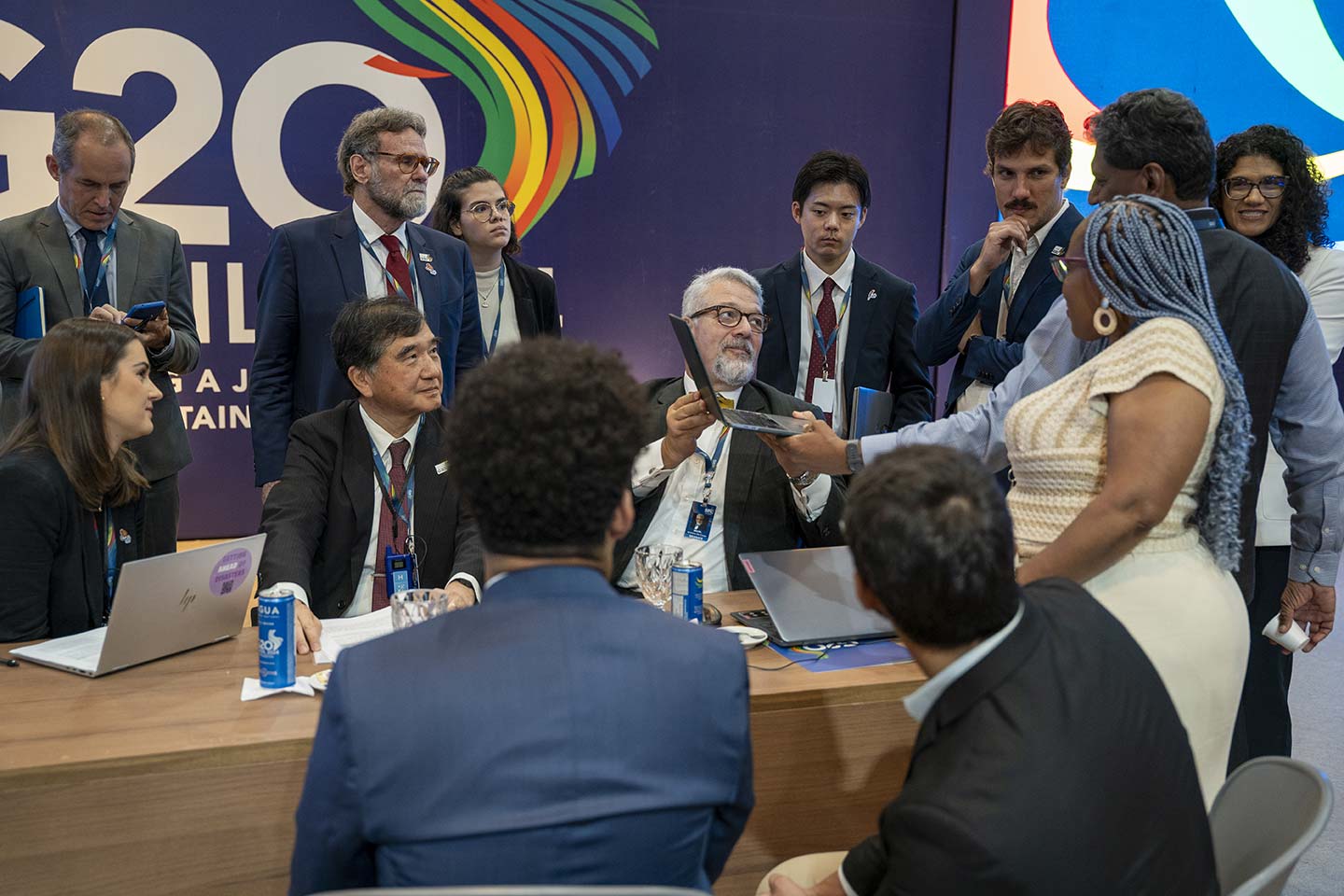
When Brazil assumed the G20 presidency in 2024, pre-arranged financing was absent from draft declarations on disaster risk reduction. Through sustained engagement with G20 members, the Centre helped change that. The final declaration was the first at the ministerial level to include language on pre-arranged finance. The shift carried into South Africa's 2025 presidency, where a new set of High-Level Principles included a dedicated principle on arranging finance before disaster strikes.
A bold global target
The High-Level Panel on Closing the Crisis Protection Gap, convened by the Centre, called for increasing the share of pre-arranged crisis finance from 2% to 20% by 2035. That ambition is now backed by more than 70 finance ministers and reflected at the UN Financing for Development conference in Seville, and a new Global Coalition launched by the UK and the Bridgetown Initiative.
.jpg)
Read More
.webp)