Blogs
.jpg)
Rewriting the rules of disaster finance
On #DRRDay, UNDRR and the Centre look at why disaster finance needs to cover disaster prevention, not just the cost of recovery.
.webp)
)%2B(Presentation%2B(169))%2B-%2BCopy.webp)
Read more about how Conor, an earth sciences and geophysics specialist, came to apply his expertise in disaster risk finance.
Read more
Measuring the crisis protection gap
The Centre recently published findings from a multi-year research exercise that set out to understand whether it is currently possible to quantify how much money should be pre-arranged to protect low income and vulnerable populations in response to future crises.
Read more
The state of pre-arranged financing for disasters 2023
Pre-arranged financing (PAF) for disasters has the potential to significantly increase the predictability, speed and effectiveness of responses to shocks, reducing the human and financial costs.
Read more_web.webp)
The launch of a new risk transfer instrument by the IFRC marks an important milestone for risk transfer in humanitarian contexts.
Read more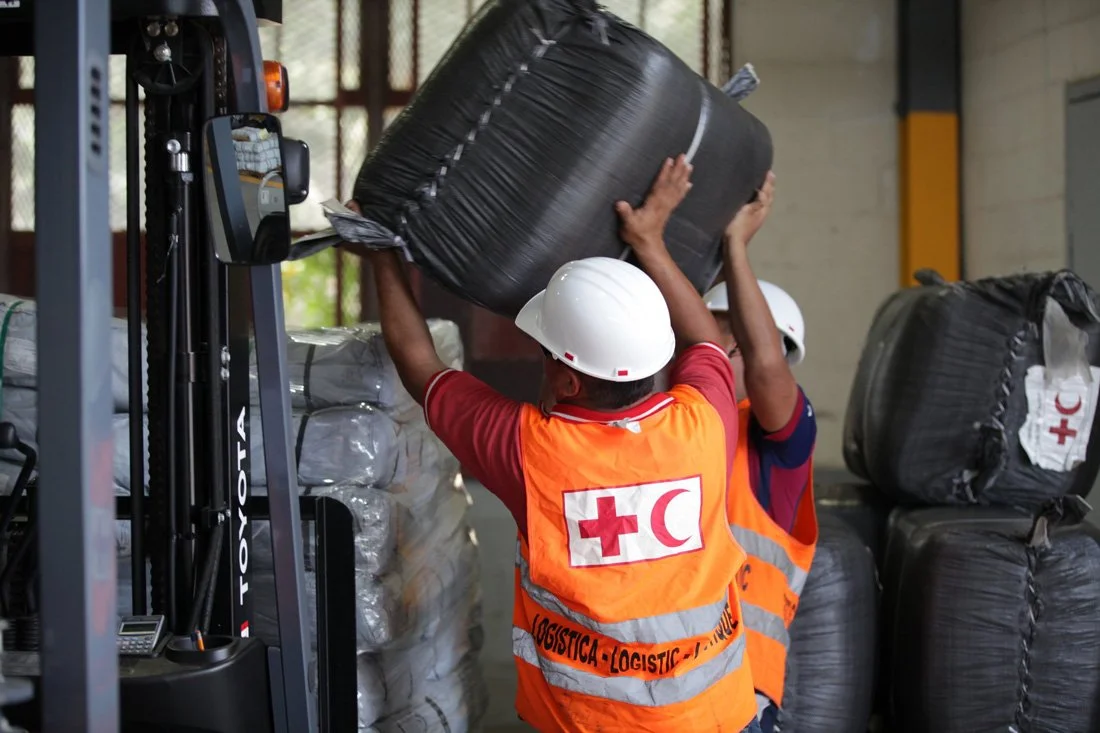
For the past two years, our Advisory team has worked with the International Federation of the Red Cross to explore an innovative financing project supporting the ambition to scale the Disaster Response Emergency Fund using risk transfer and the private insurance market.
Read more
Breaking the cycle: The role of Disaster Risk Finance in the fight against disaster inequality
On this International Day for Disaster Risk Reduction, Anna Svensson reflects on the Centre's evidence workstream and how tackling disaster inequality underpins our focus on impactful disaster risk finance.
Read more_web.webp)
In this blog post, we highlight the need for pre-arranged financing, fit-for purpose instruments and the right incentives to facilitate timely and effective outbreak response.
Read more
In our latest insight, Anna DeGrauw explores the critical connection between disaster risk finance and disaster risk reduction within the UN frameworks.
Read more
This blog navigates the complexities surrounding the intricate landscape of funding arrangements aimed at addressing climate-related losses and damages, shedding light on the Global Shield's role as an essential piece in this broader mosaic.
Read more_web.webp)
Putting people first in disaster risk finance – the Centre's new accountability guidance
The Centre’s new guidance on accountability provides an accessible framework that applies core elements of accountability to the specificities of DRF instruments.
Read more
The future of Anticipatory Action: Four challenges to reaching scale and sustainability
The Centre for Disaster Protection recently concluded learning exercises on the Central Emergency Response Fund (CERF) Anticipatory Action (AA) pilots in Nepal and Bangladesh, as part of our process learning support to OCHA.
Read more
In our latest insight, we discuss country ownership, international responsibility and a global ‘risk deal’ to upscale protection in climate-vulnerable countries.
Read more)%2B(Presentation%2B(169))_web.webp)
“I thought my year-long secondment to the Centre for Disaster Protection would teach me a lot about the world of international development and disaster risk financing. However, it has also taught me a lot about myself.”
Read more
Staying ahead of the curve: applying a disaster risk finance lens to epidemic and pandemic risk
Our new insight paper takes a closer look at disaster risk finance for pandemic and epidemic outbreaks.
Read more

Remembering Jonathon Gascoigne
We are mourning the loss of our dear colleague, Jon Gascoigne.
Read more
As the World Bank welcomes its newly appointed leader, Ajay Banga, this post explores the practical and philosophical considerations associated with multilateral lenders taking the lead in implementing pause clauses.
Read more
A world in crisis: who foots the bill?
The Centre for Disaster Protection partnered with Tortoise Media to host a thought-provoking online on the pressing issues of accelerating debt, climate change, and disaster risk.
Read more_web%20(1).webp)
In this insight, Lydia Poole, Associate Director for Evidence, shares her thoughts on what the evaluation of the intervention could mean for a system-level shift towards anticipatory response.
Read more