Can localisation research escape its own contradiction?
If local actors are meant to hold more decision-making power over disaster finance, the case is stronger when the research making it was designed to shift power too.
Too often, the people most exposed to disasters are the least involved in decisions about how funding reaches them. Our recent report with the Global Network of Civil Society Organisations for Disaster Reduction (GNDR) finds that less than 10% of frontline organisations can access funding immediately after a disaster, while many wait months to get the money they need to prevent escalation of humanitarian needs and economic losses. When they are involved, it is usually in a consultation or implementation capacity and not in decision-making. If that power imbalance is the problem, then research trying to document it faces an uncomfortable question of what it means to study localisation using methods that replicate the same dynamics they are critiquing. Addressing this imbalance was central in the methodology of our research.
Local organisations are locked out of disaster finance and the data proves it
The Centre for Disaster Protection partnered with GNDR to investigate the localisation of disaster risk financing for frontline responders in communities. This research drew on a global survey of more than 2,000 GNDR members from predominantly small and local civil society organisations working on the frontlines of disaster risk management, with 330 civil society organisations (CSOs) across 71 countries, primarily from the Global South. We sought to examine how local and national actors access disaster risk financing, the barriers they faced, and the potential of pre-arranged and anticipatory finance to enable faster, more predictable, and more locally led action.
The research found that many frontline actors face systemic access barriers as a core constraint. International NGOs remain the dominant recipients of disaster risk financing, while less than 10% of local organisations can access funding immediately after a disaster. Community-based organisations and women-led groups also face restrictive eligibility criteria, complex compliance requirements, and heavy reliance on intermediaries.
Pre-arranged finance was highlighted as a critical solution to these challenges, with nearly 90% of survey respondents believing it could help reduce access barriers to finance, primarily by improving speed, predictability, and planning. However, access to these mechanisms remain highly concentrated, with local organisations not actively engaged in decision-making, trigger design, or financial control.
Building access into research design
In conducting this research, we were attentive to designing the process to include local actors. Standard research practice often asks communities to respond in the funder’s vocabulary, even though these terms are rarely explained. Given the technical nature of disaster risk financing and uneven familiarity across the network, two orientation webinars were held to establish a shared baseline. Consistent definitions, aligned with UNDRR and the Centre for Disaster Protection, were used throughout to avoid variation in how terms were understood. The training provided a light-touch introduction to the principles of pre-arranged finance and disaster risk financing mechanisms for GNDR members, helping them better understand how funding is provided to those on the front line of managing and responding to disaster risks.
Following these trainings, we conducted a survey to deepen understanding of the gaps and challenges in accessing finance at the local level. The survey was circulated in English, Spanish, French and Arabic to lower the barrier to participation. The translation into Arabic was a challenge as many English disaster-related words did not have direct Arabic translation. With more than 300 respondents, we generated a global evidence base shaped by frontline priorities.
Focus on regional contexts
To further drive local participation, we went back to respondents through regional focus groups clustered around Africa, Asia, the Americas and the Caribbean, and a dedicated group for fragile and conflict-affected states. Fragility and conflict create distinct financing barriers that aggregate global findings tend to flatten. Separating them out meant those realities could be examined on their own terms. The discussions moved across anticipatory action, recovery, gender-sensitive approaches, and the power dynamics of local leadership, and fed directly into the advocacy roadmap the report generates. These groups also created a safe space to facilitate local conversations and shared problem solving for local organisations within the same region. The regional group highlighted the gaps and challenges prevalent at each region. For example, in Asia, it was pointed that there was a lack of support for women-led organisations in accessing financing, while in Africa, respondents highlighted the dominance of International NGOs (INGOs) and lack of cooperation and collaboration from government and financial entities in supporting local actors.
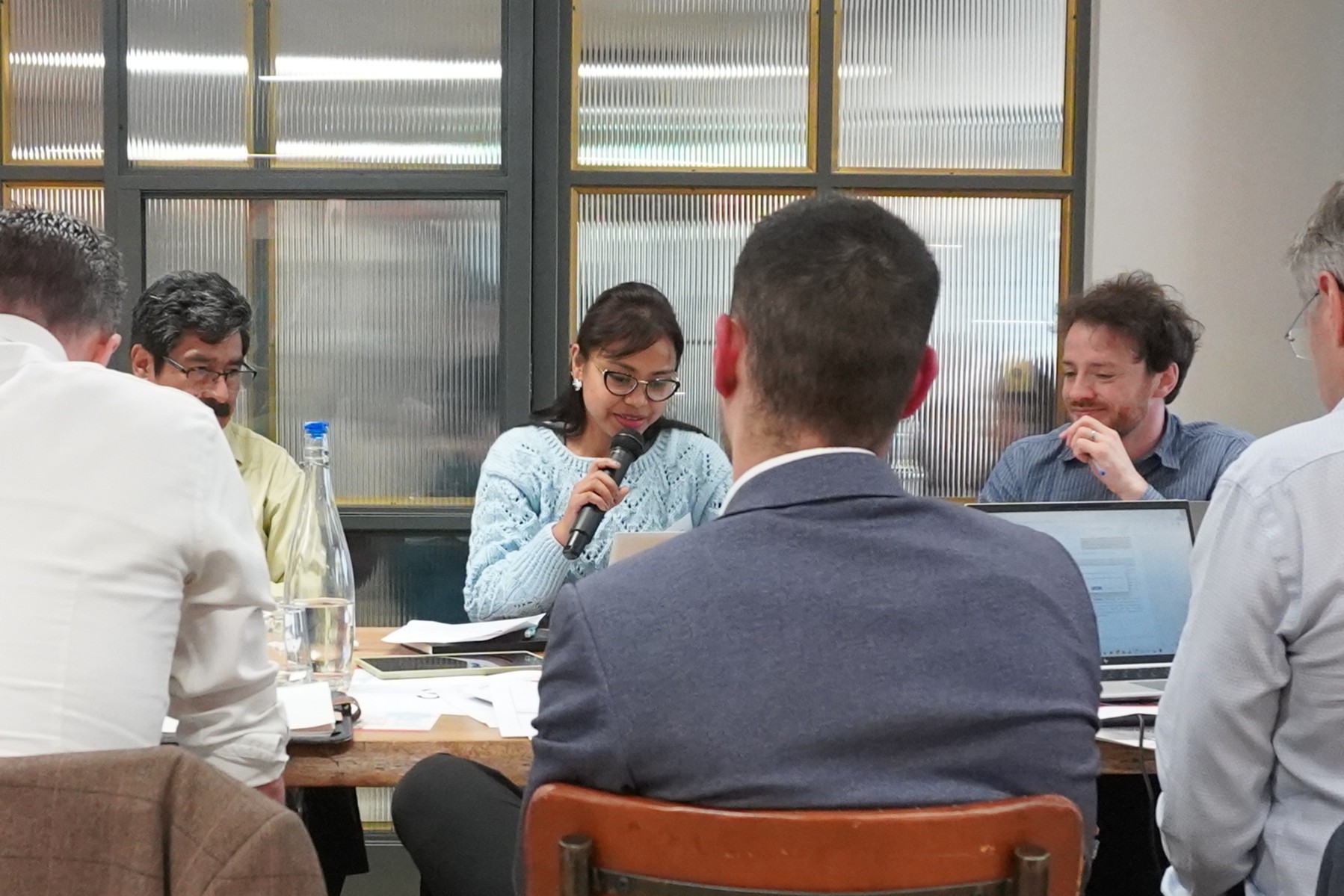
The final step in the process was a roundtable discussion with key partners and stakeholders within the disaster risk financing ecosystem to test the recommendations from the global survey and inform the report development. To avoid drawing conclusions shaped by institutional participants, four local champions representing Cameroon, Bolivia, Bangladesh, and the Central African Republic shared personal testimony on disaster risk financing from the frontline. The testimonies fed into a plenary discussion in which all participants reflected on what they had heard. Rather than simply being presented to the local actors, the roundtable functioned as a validation mechanism where findings were challenged and refined by a diverse expert audience with direct frontline experience.
Where the design did not fully close the gap
While frontline actors were engaged and centred throughout the research process, and recommendations were stress-tested with frontline participants, the final framing and policy language remained with the Centre and GNDR, as the institutions that commissioned the research. That reflects a structural tension that community-led research – where local actors define the questions, control the analysis, and own the outputs – requires resources, time, and institutional trust that the current financing system rarely provides.
There is also a more subtle tension. The survey frameworks, focus group topics, and roundtable themes were designed by institutions, drawing on concepts that institutions built, and frontline organisations responded within a structure they did not set. A fully locally led process might have surfaced entirely different questions or challenged whether pre-arranged finance is the right frame at all.
Closing this gap fully would require donors to fund local organisations to lead their own research agendas, on their own timelines, with international partners in a supporting rather than commissioning role. That is not yet how the system works. But this project worked within those constraints as critically as it could, but naming them honestly is part of making the case for change.
Localisation means co-authorship, not just consultation
Localising disaster risk finance cannot stop at directing money closer to the frontline. It requires placing local actors in control of the decisions that shape how that money moves. This project tried to reflect that principle in how the research itself was designed. The final report sets out what needs to change in disaster finance, but the design of this research is itself an argument that localisation is possible, but it requires moving from consulting to genuine co-authorship.
Authored by

More Insights
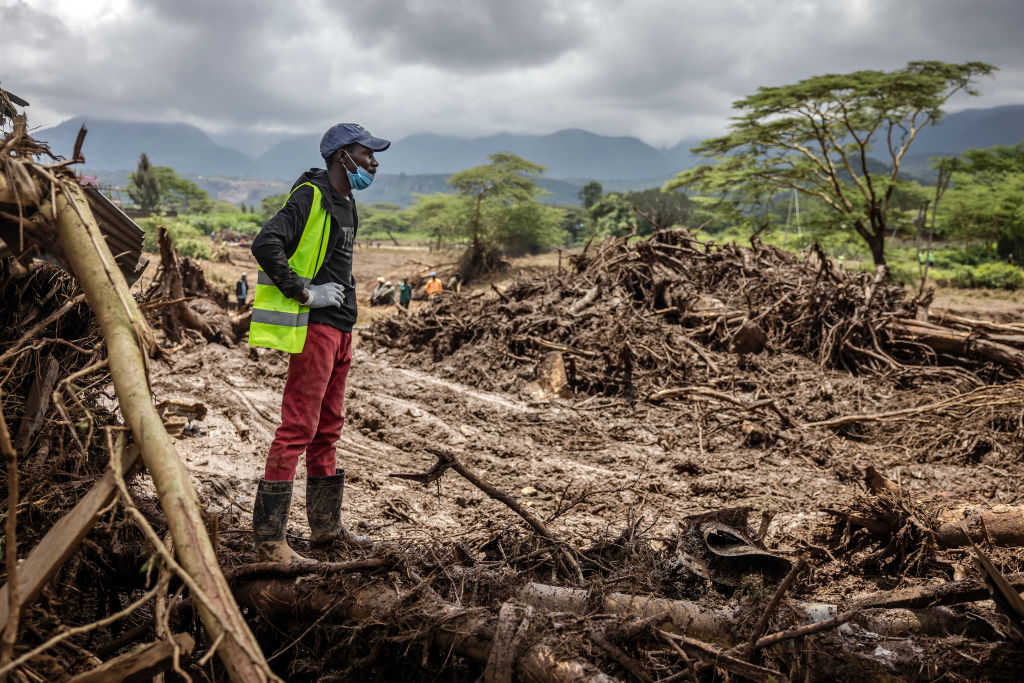
Kenya finances resilience as El Niño looms
Kenya’s new disaster risk financing strategy will be tested by a potentially record-breaking El Niño.
Read more
The DRC’s Ebola outbreak is the fastest on record. The type of financing and hurdles behind the response look almost exactly as it did seven years ago.
Read more.jpg)
Learning disaster risk finance the playful way
Can a game replicate real decision-making better than a workshop ever could? Layer Up!, our new simulation game, is finding out.
Read more