The Future Of Crisis Financing: A Call To Action

A landmark new report from the Centre for Disaster Protection examines how the right financial planning, incentives, tools and commitment could help the world to be far better prepared for crises.
The Future of Crisis Financing: A Call to Action offers a diagnosis of some of the current challenges in the international crisis financing system, and sets out a new vision and agenda for change.
Since the report was produced a brutal pandemic has spread across the world: Covid-19. As outlined in a blog by the Centre’s Director, Daniel Clarke, this experience underscores many of the paper’s key findings, including the need for better and earlier responses to risks, and the critical importance of working together to monitor global threats and put pre-agreed support in place ahead of time.
.webp)
Covid-19 caught the world off guard - pandemics must never surprise us again
Public health experts and commercial risk modellers knew that something like this was quite likely, and that the world was woefully underprepared.
Read MoreKey Findings
Key Terms Used In This Report
Funding designed to prevent, prepare for and respond to crises before and after they occur.
The network of global organisations funding crisis prevention, preparedness and response.
Being responsible for decisions and resources, listening to affected people, and accepting consequences for actions taken.
Related Publications
Funding Disasters: Tracking Global Humanitarian Funding For Response To Natural Hazards
This study analysed international financial flows to nine countries for the 18 months after recent crises to understand funding timelines and other features.
Read more
Methodology For Calculating Pre-Arranged ODA Funding
We explore the key issues in developing a methodology for calculating pre-arranged funding.
Read more
Mapping Financial Flows For Disasters
This paper aims to identify available data and methodologies, explore whether these could support a global database to track disaster-related financial flows.
Read more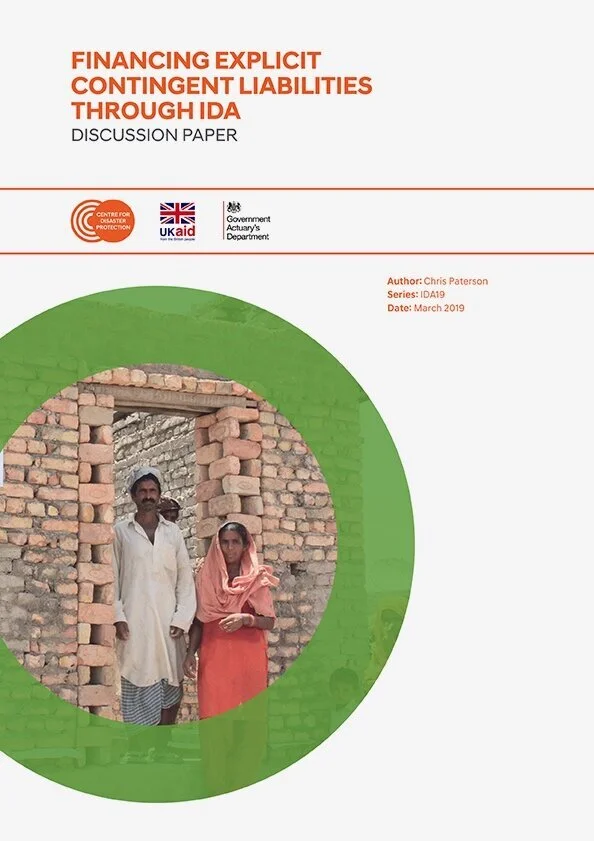
Financing Explicit Contingent Liabilities Through IDA
This paper proposes an innovative approach to financing contingent liabilities using IDA.
Read more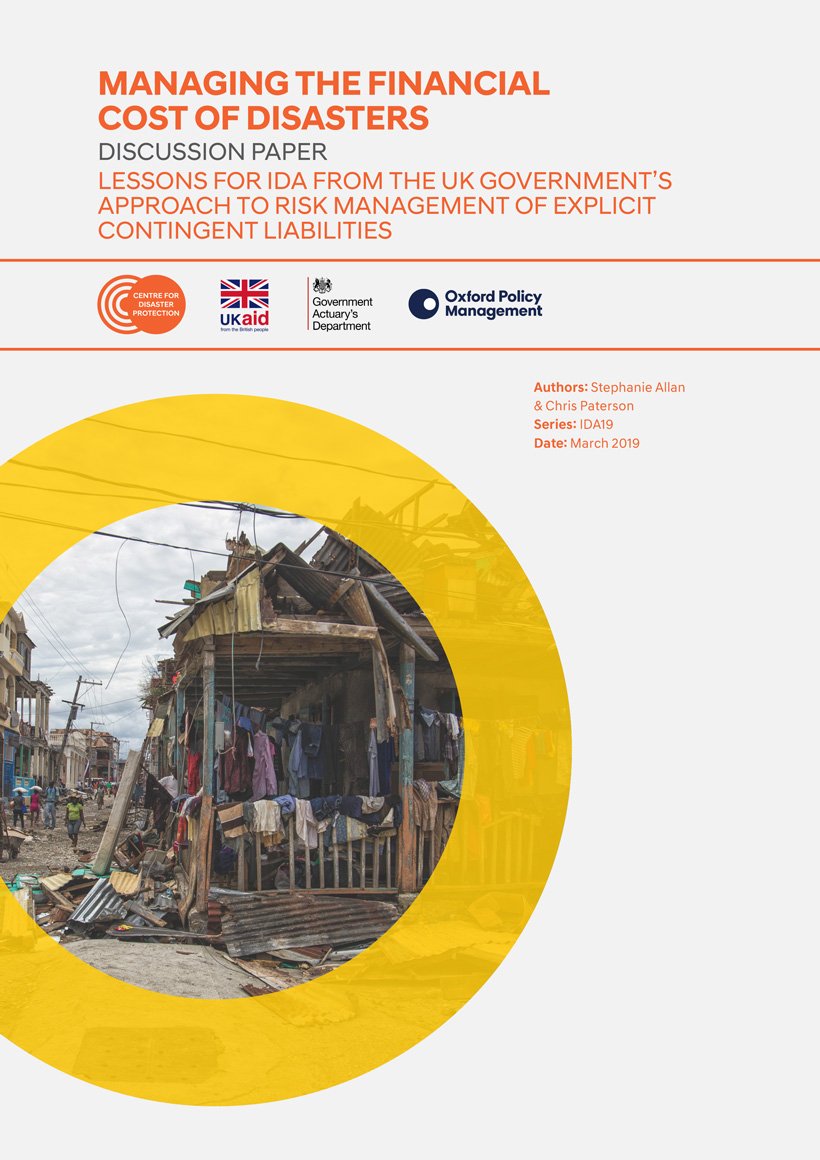
Managing The Financial Cost Of Disasters
Lessons for IDA from the UK Government’s approach to explicit contingent liabilities.
Read more