Kenya finances resilience as El Niño looms
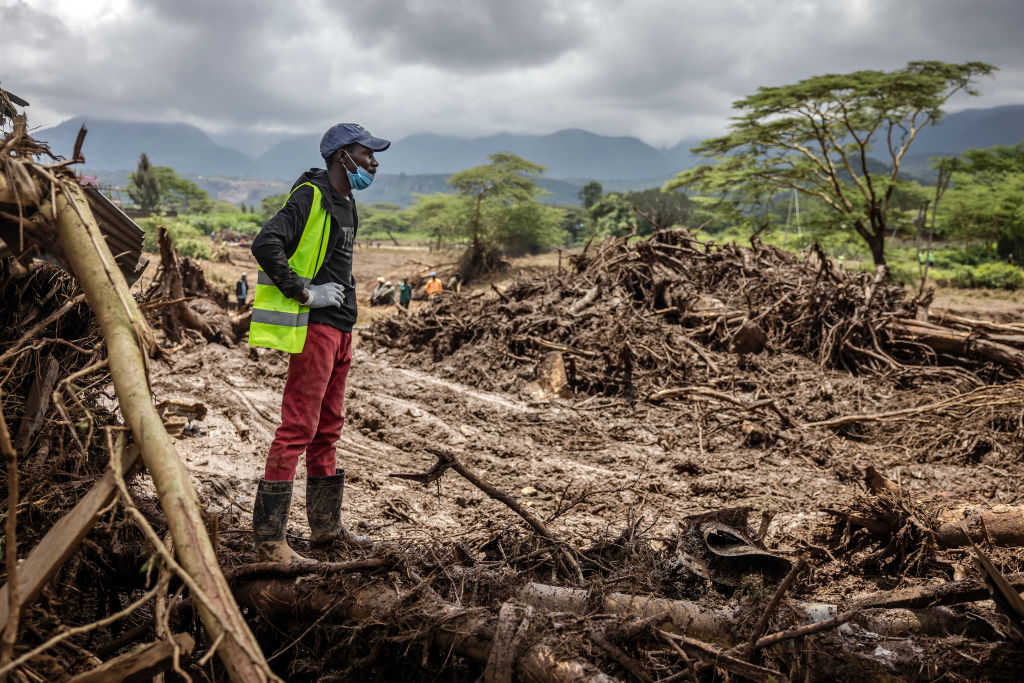
El Niño floods, a regional Ebola outbreak and a fuel price shock. The cost of crises increasingly falls on public budgets that also need to fund long-term development.
Financing strategies have been slow to keep up with disasters, and remain narrow in scope. Kenya is pioneering a new model: a multi-hazard strategy covering the full risk management continuum from prevention to recovery. The strategy arrives as the World Food Programme warns that a strengthening El Niño threatens both floods and drought across the region into 2027 and beyond.
Most disaster strategies start the same way
Kenya was the first country in Africa to adopt a disaster risk financing strategy in 2018. The idea was new everywhere, and Kenya’s version followed the now well-established pattern: development partners proposed the approach and helped shape it. The emphasis was on financing for the portion of risk that could no longer be reduced and needed to be retained within government budgets or transferred (such as through insurance).
While Kenya had a range of instruments developed overthe course of the first strategy to protect lives and livelihoods, the fiscal space narrowed considerably in the years that followed its adoption. Kenya has also faced a wider range of hazards. These occurred more frequently and often at the same time: the Covid-19 pandemic, drought, desert locust invasion and floods, to name but a few.
The financing already flowing into risk reduction in Kenya has been substantial. Budget allocations for risk-related spending averaged around 7.3% of the national budget between 2021 and 2024, amounting to approximately USD 1.16 billion. Development finance has also been significant,with loans and ODA grants totalling more than USD 360 million between 2018 and 2023. It became clear that the strategy needed to break from the convention and include disaster risk reduction, rather than treat prevention as a separate stream of development spending.
The new disaster risk management act enacted in early 2026 serves as the country’s comprehensive legal framework governing how the state prepares for, responds toand recovers from disasters. It is the legal framework for the new DRF strategy as it mandates a continuous and integrated approach to disaster risk management.
Expansion to multiple hazards and the whole risk management continuum
Drought and floods have always been defining hazards. Roughly 80% of Kenya is arid or semi-arid, while most Kenyans live in areas where flooding has been getting worse. Property and business losses in cities, and lost harvests in rural areas mean that the government always has to step in with food and other support. The floods that lasted three months from March to May in 2024, for instance, caused total economic losses exceeding USD 1.45 billion, with damages at USD 783 million and losses at USD 672 million. Earlier events, such as the 2023 drought, added USD 650 million in direct losses. This year, the chances of a record-breaking El Niño, stronger than any since 1950, are put at 75%. The Kenya Meteorological Department expects above-average rainfall across most of the country.
Unlike drought, flood risk is highly amenable to risk reduction interventions. This specific characteristic presented a foothold for thinking about disaster risk finance not just in terms of response, but in terms of what can be prevented.
For these reasons, Kenya’s new strategy changes its approach to a true multi-hazard focus, covering the whole spectrum of disasters alongside the full continuum of risk management from reduction to preparedness, response and recovery. The expanded scope of the strategy has opened the door to mobilising additional resources from both the public and private sector.
Pricing risk and protecting people in the same process
The private sector provides various financing instruments, whereas the pay-outs to people who have been impacted are typically implemented with the help of civil society organisations. While various government entities had been speaking to the national Treasury, the insurance market and other private sector bodies had been largely absent.
A roundtable with Kenya’s private sector, convened jointly with the British High Commission and the Centre for Disaster Protection, brought company CEOs into the process for the first time. Their message revealed a gap: insurance companies could not price a flood policy, or cover poorly built infrastructure, without historical risk data. To improve insurance product design and pricing, the new strategy aims to strengthen risk data, analysis and use in financing through a national interactive multi-hazard risk atlas.
Civil society organisations, who implement most disaster pay-outs on the ground, also needed to be in the room. Their contribution tested the strategy’s central premise: how different financing instruments actually protect communities when a disaster strikes.
What earns Kenya’s strategy its second-generation label, however, is not just the new hazards it covers, nor the insurers in the discussions. The more fundamental shift is the broader conceptualisation of disaster risk financing. That shift could not be timelier as El Niño will raise the risk of floods, landslides and disease outbreaks.
Prevention protects both revenue and expenditure
Countries nearing the end of their own first DRF strategy — or adopting one for the first time — could take note: Investments in risk reduction measures such as resilient infrastructure, early warning systems, and climate-adaptive agricultural practices mitigate disaster impacts and reduce vulnerability. For the government, this means that it may be able to access more affordable risk transfer instruments. A more balanced mix of retention and transfer instruments ensures liquidity when shocks occur, which, in turn, reduces reliance on ad-hoc financing and external aid.
A more holistic way to understand risk in Kenya got different actors into the room and went beyond specific hazards to became about financing resilience. As Ronald Inyangala, Director of Financial and Sectoral Affairs at the National Treasury summarised at the launch event in June 2026: “What matters is whether a strategy finances prevention as well as recovery or only pays for what prevention failed to stop”.
The Centre for Disaster Protection supported Kenya’s process throughout, alongside UNDRR and the British High Commission. The strategy was spearheaded by the national Treasury alongside other ministries, departments and agencies. For the first time, it integrates new voices from the private sector and civil society.
Isabel Joy is Assistant Director of Financial and Sectoral Affairs within the National Treasury & Economic Planning, Kenya.
Key Terms



More Insights
.jpg)
Rewriting the rules of disaster finance
On #DRRDay, UNDRR and the Centre look at why disaster finance needs to cover disaster prevention, not just the cost of recovery.
Read more
The DRC’s Ebola outbreak is the fastest on record. The type of financing and hurdles behind the response look almost exactly as it did seven years ago.
Read more.jpg)
Learning disaster risk finance the playful way
Can a game replicate real decision-making better than a workshop ever could? Layer Up!, our new simulation game, is finding out.
Read more