From coverage to payouts: tracking pre-arranged finance country by country

Pre-arranged finance reached USD 9.2 billion in 2024, yet the data behind that figure has remained largely inaccessible. Our new interactive dashboard changes that by bringing disaggregated, country-level data together for the first time so that governments, practitioners and researchers can see not just how much financial protection exists, but how it has actually performed.
The State of PAF dashboard covers 82 countries and spans 2017 to 2024, drawing on data from major PAF providers. Here are three things it allows you to do.
Zoom in: from global totals to country-level stories
Our annual State of Pre-Arranged Financing for Disasters report captures global trends, but the underlying data has until now only been available in aggregate form. The State of PAF dashboard lets you drill down by country, region, year, instrument type, hazard, and provider to explore how financial protection is actually used in practice.
This opens up two particularly useful angles. First, countries can track their own financial protection over time, including how their coverage levels (the financial protection in place before a disaster) and payouts (actual disbursements following a disaster) have evolved. This can help governments assess whether their current mix of instruments is sufficient to meet their needs.
Second, the dashboard enables regional comparisons. You can explore how neighbouring countries, often facing similar hazards, are managing disaster risk and which instruments they are relying on. For example, in the Pacific, the dashboard allows you to identify whether countries were covered by a contingent loan or grant from the Asian Development Bank or the World Bank, or by coverage for hazards via the regional risk pool, PCRIC. It also allows you to see which instruments were triggered and for what hazards.
Dig deeper: from financial protection on paper to real-world payouts
A central feature of the State of PAF dashboard is its ability to track both coverage and payouts side by side. Peru’s portfolio illustrates what sustained coverage looks like over time. Since 2017, the country has held protection across four instruments: a catastrophe bond, two Cat DDOs, and a contingent credit facility. After experiencing its worst floods in almost 30 years, the Cat DDO paid out USD 70 million for reconstruction in 2018. When an earthquake followed in 2019, the catastrophe bond disbursed USD 60 million.
By bringing coverage and payouts together, the dashboard lets you examine how protection levels have evolved over time within a country, and which instruments have been triggered most frequently for which hazards.
Connect: trace which instruments respond to which hazards
Another key strength of the dashboard is the ability to link financial instruments to the specific hazards they are designed to cover and to the events they actually paid out for. This makes it easy to see how different types of risks are being managed and whether countries are drawing on a diverse set of instruments.
In 2024, for instance, Malawi received three separate payouts for drought. A USD 57 million contingent disaster grant from the World Bank arrived in April; a further USD 11.6 million came in August and September through regional risk pool insurance from ARC (sovereign) and ARC Replica (humanitarian). The staggered timing and mix of providers illustrate what layering looks like in practice.
Nepal's experience makes a different point. A single USD 50 million Cat DDO from the World Bank, drawn in 2020, was disbursed against two separate hazards: USD 25.5 million for a flood in October 2020 and USD 23.8 million for an earthquake in April 2024. One instrument, two shocks, four years apart: a good illustration of how flexible contingent credit can be.
Beyond the dashboard
While the State of PAF dashboard provides a powerful new way to explore PAF data, it doesn’t capture the detailed terms and conditions associated with each financial instrument. Trigger mechanisms, disbursement conditions, pricing, repayment structures and other terms and conditions are essential for governments and practitioners to understand how instruments function and their suitability for different contexts.
To address this gap, the Centre is producing plain-language summaries of how each instrument works and what governments need to consider when selecting financial tools. Together with the dashboard, these resources will provide a more complete picture of pre-arranged finance, combining accessible data with explainers on how the instruments work in practice.
Explore the State of PAF dashboard at this link and download the underlying data directly from the platform. The dashboard was built by Darshni Nagaria, Michèle Plichta, Tala Bismar and Shakira Mustapha.
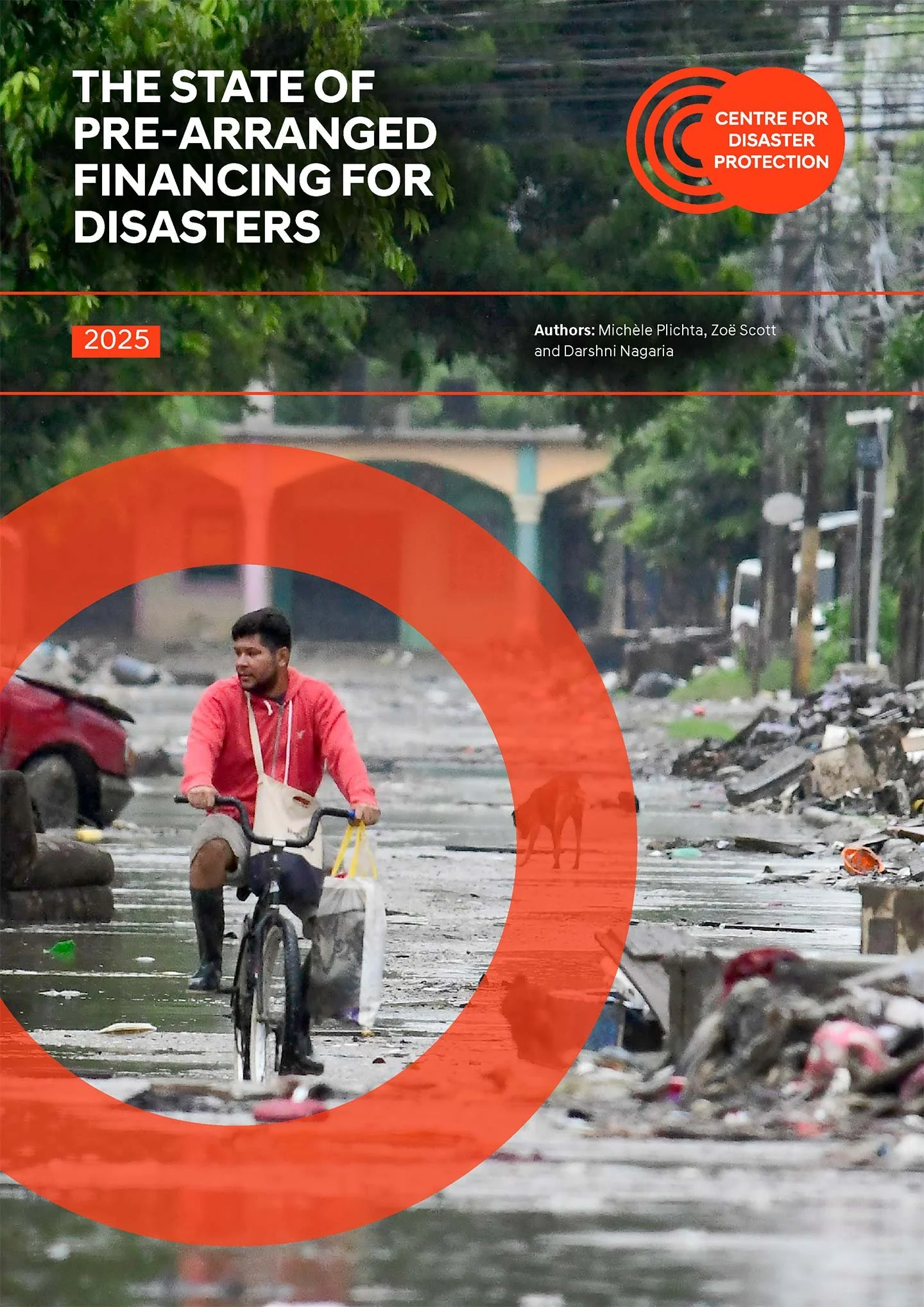
The State of Pre-Arranged Financing for Disasters 2025
Authored by


More Insights
.jpg)
Rewriting the rules of disaster finance
On #DRRDay, UNDRR and the Centre look at why disaster finance needs to cover disaster prevention, not just the cost of recovery.
Read more
Kenya finances resilience as El Niño looms
Kenya’s new disaster risk financing strategy will be tested by a potentially record-breaking El Niño.
Read more
The DRC’s Ebola outbreak is the fastest on record. The type of financing and hurdles behind the response look almost exactly as it did seven years ago.
Read more