Crisis risk
The potential suffering and loss of life that could occur in a specific time period due to a crisis, determined probabilistically as a function of hazard, exposure, vulnerability and capacity (Centre for Disaster Protection).
More money is being arranged before disasters strike than ever before. Our 2025-26 review looks at our part in that shift and where we go next.
Read more.webp)
This technical brief, authored by CERDI and supported by the Centre for Disaster Protection, provides an in-depth analysis of flood risk in Chad.
Read more.webp)
A Year in Review 2024–25 shows how the Centre for Disaster Protection is turning ideas into impact.
Read more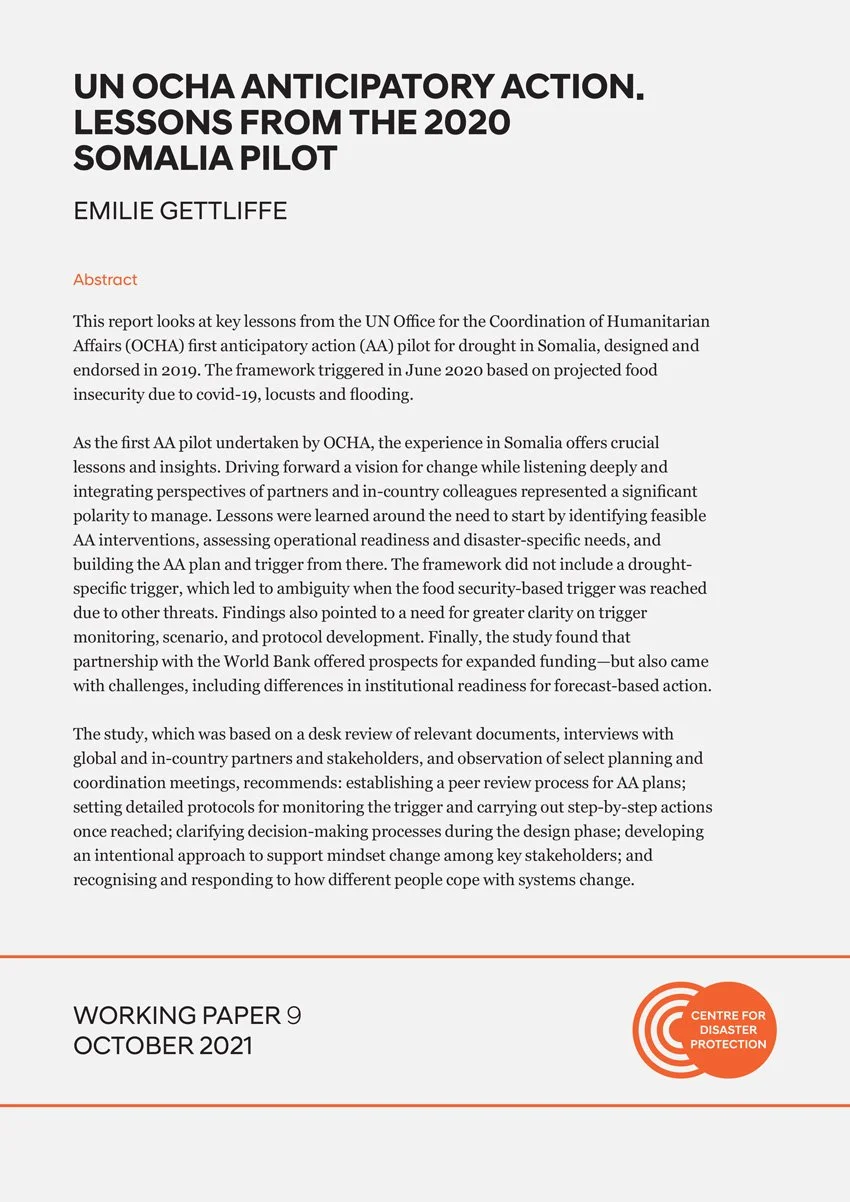
This report looks at key lessons from the UN Office for the Coordination of Humanitarian Affairs (OCHA) first anticipatory action (AA) pilot for drought in Somalia.
Read more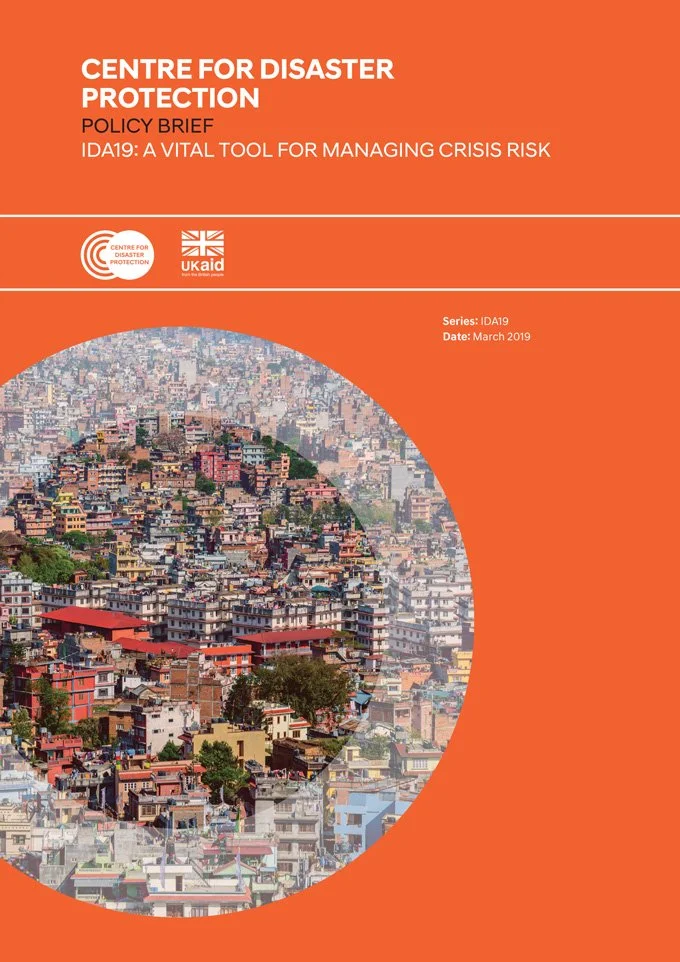
This policy brief draws on the findings of five Discussion Papers in the Centre’s IDA19 Series.
Read more
This paper argues that civil society organisations play a vital role in ensuring that crisis financing approaches are designed and delivered effectively.
Read more
This paper sets out detailed and practical proposals for how the G7 could better protect vulnerable communities by better predicting and preparing for disasters.
Read moreCrisis protection gap
The difference between expected crisis costs and funding already arranged to cover them.
Resilience
The ability to withstand shocks, adapt, recover and continue functioning over time.
Crisis financing
Funding designed to prevent, prepare for and respond to crises before and after they occur.
Indemnity insurance
Insurance that pays based on assessed losses after damage to a specific asset.
Vulnerability
Conditions that increase how severely people or communities are affected by hazards.
Pre-arranged financing
Financing approved before crises that is released automatically when agreed triggers are met.