Accountability In Disaster Risk Financing
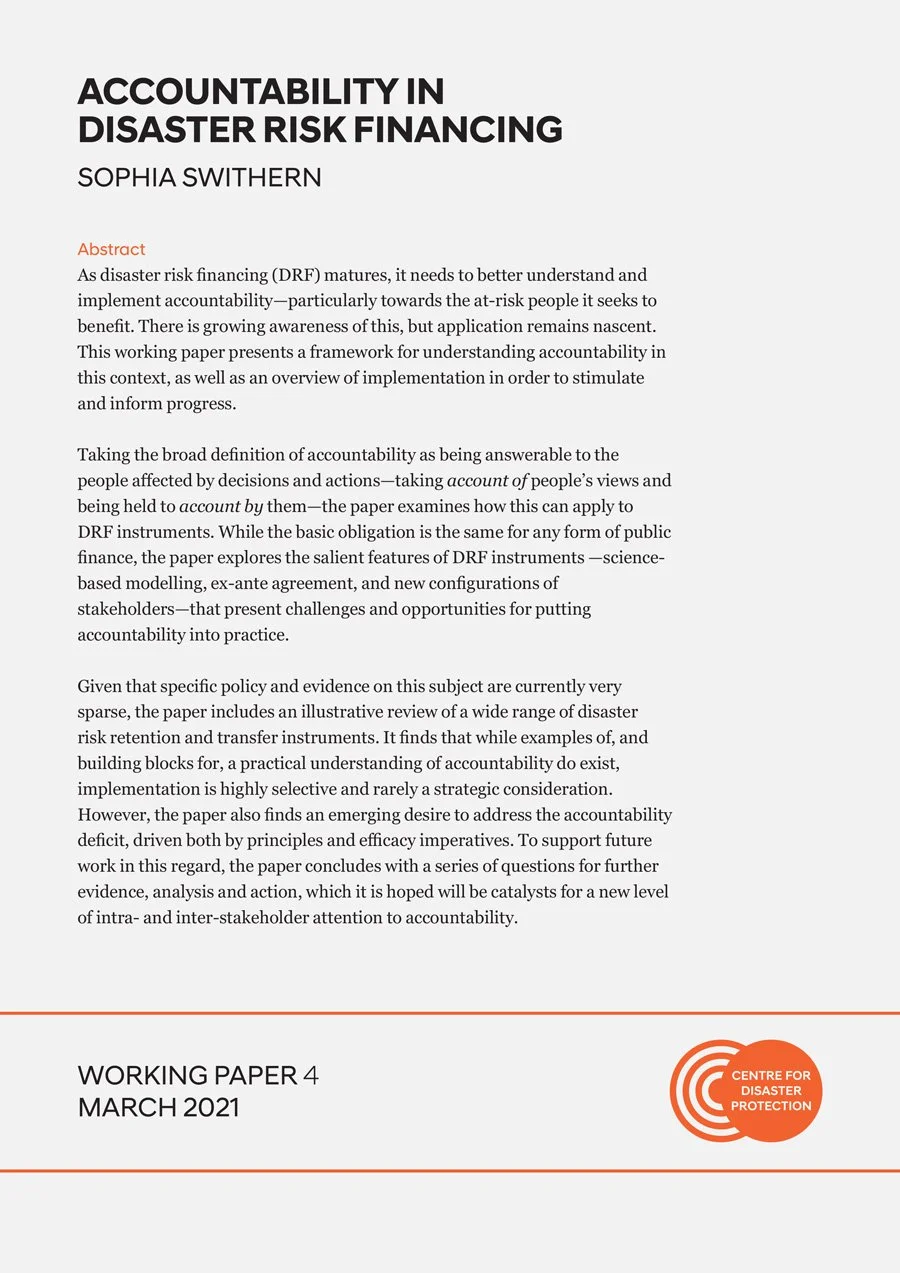
As disaster risk financing (DRF) matures, it needs to better understand and implement accountability—particularly towards the at-risk people it seeks to benefit. There is growing awareness of this, but application remains nascent. This working paper presents a framework for understanding accountability in this context, as well as an overview of implementation in order to stimulate and inform progress.

The language of collaboration: Why disaster risk finance matters for the G20 – and why the G20 matters for disaster risk finance
In our latest insight, Anna DeGrauw explores the critical connection between disaster risk finance and disaster risk reduction within the UN frameworks.
Read MoreKey Findings
Key Terms Used In This Report
Being responsible for decisions and resources, listening to affected people, and accepting consequences for actions taken.
Financial arrangements made in advance to pay for disaster prevention, response and recovery.
Actions taken before a crisis hits to prevent or reduce potential disaster impacts prior to a shock or before acute impacts are felt.
Related Publications
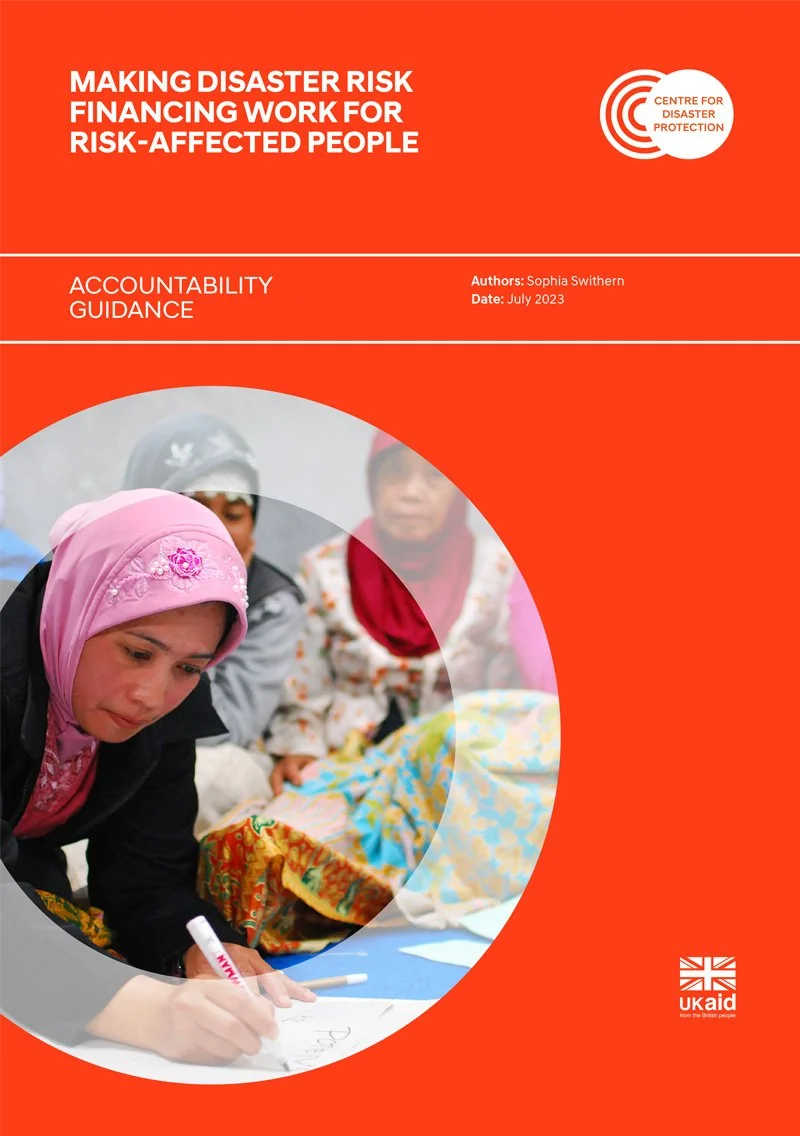
Making Disaster Risk Financing Work For Risk-Affected People
This guidance note is intended as a common framework to support practical approaches to meaningful accountability across the sector.
Read more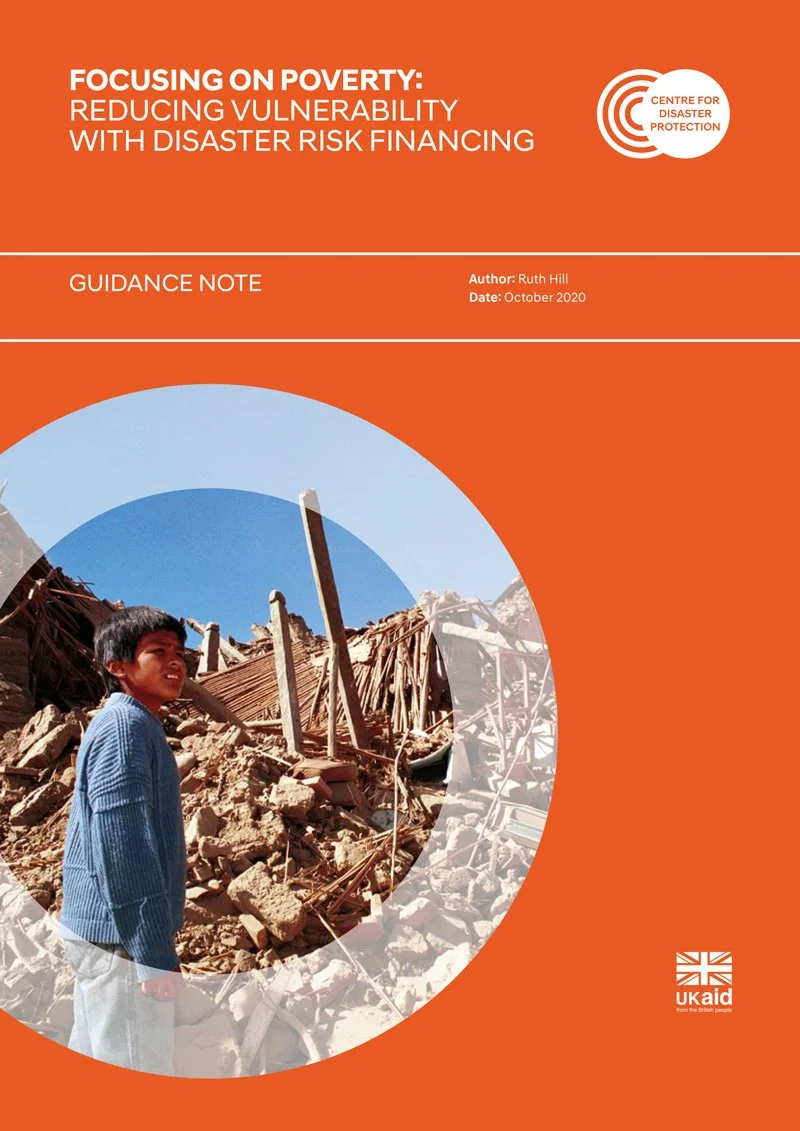
Focusing On Poverty: Reducing Vulnerability With Disaster Risk Financing
This guidance note sets out some questions to help ensure that DRF is most directed to those who are least able to withstand shocks.
Read more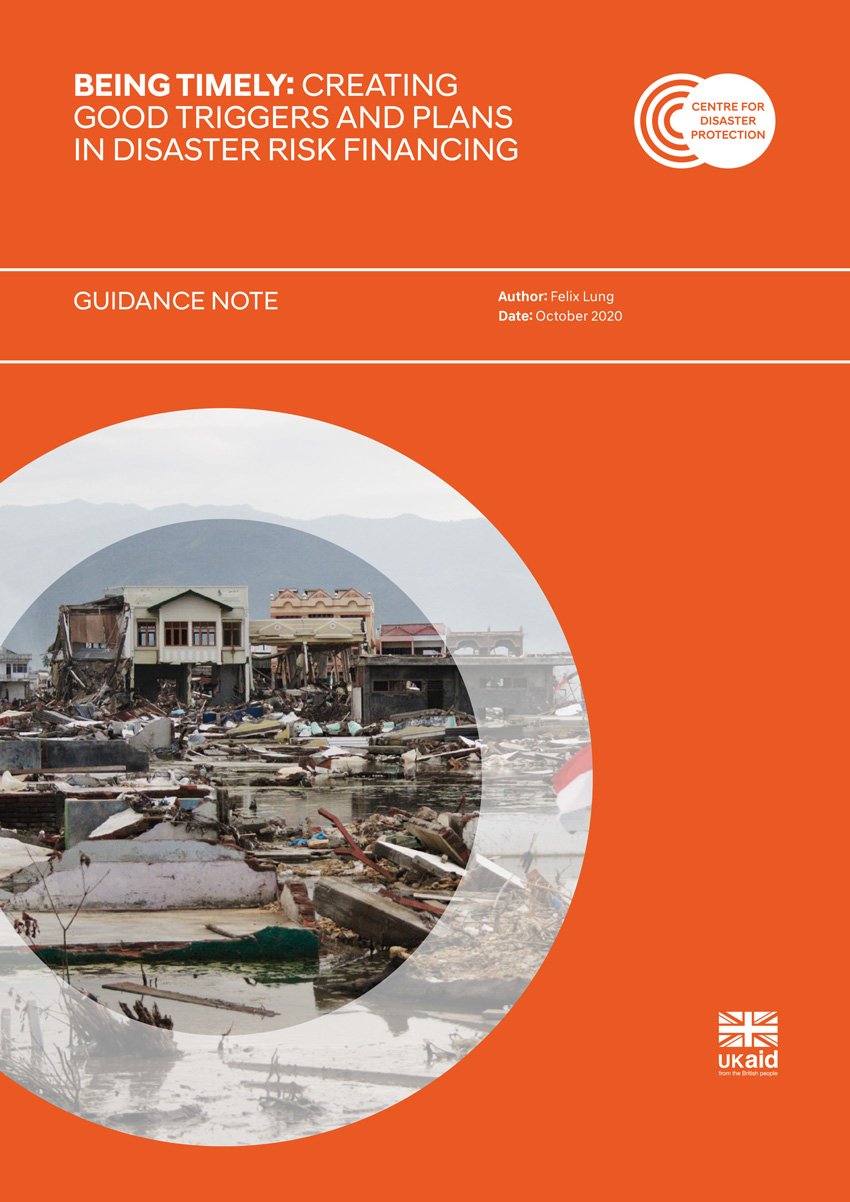
Being Timely: Creating Good Triggers And Plans In Disaster Risk Financing
Practical guidance on contingency planning a before a disaster strikes to support a faster, more coordinated, and ultimately, more effective response.
Read more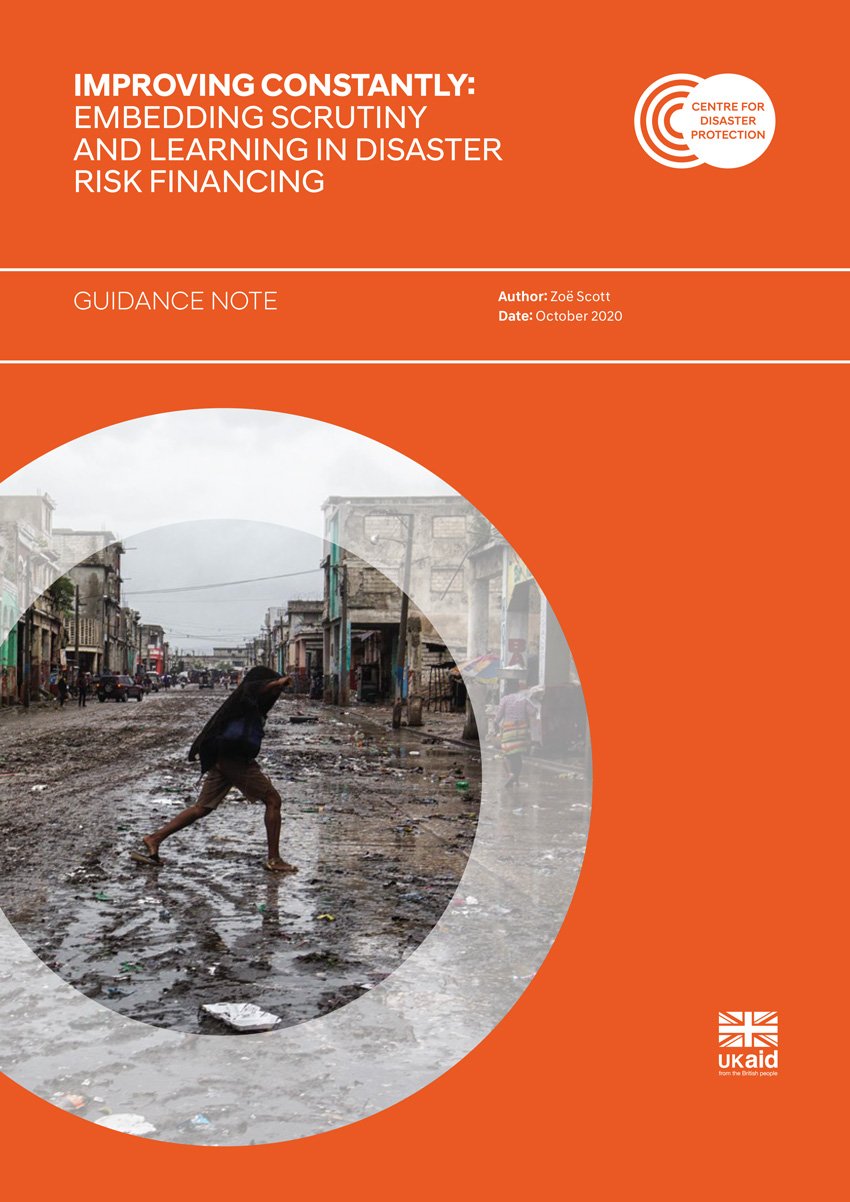
Improving Constantly: Embedding Scrutiny And Learning In Disaster Risk Financing
This guidance note sets out practical ways to ensure quality, independent scrutiny and improved learning in your DRF initiatives.
Read more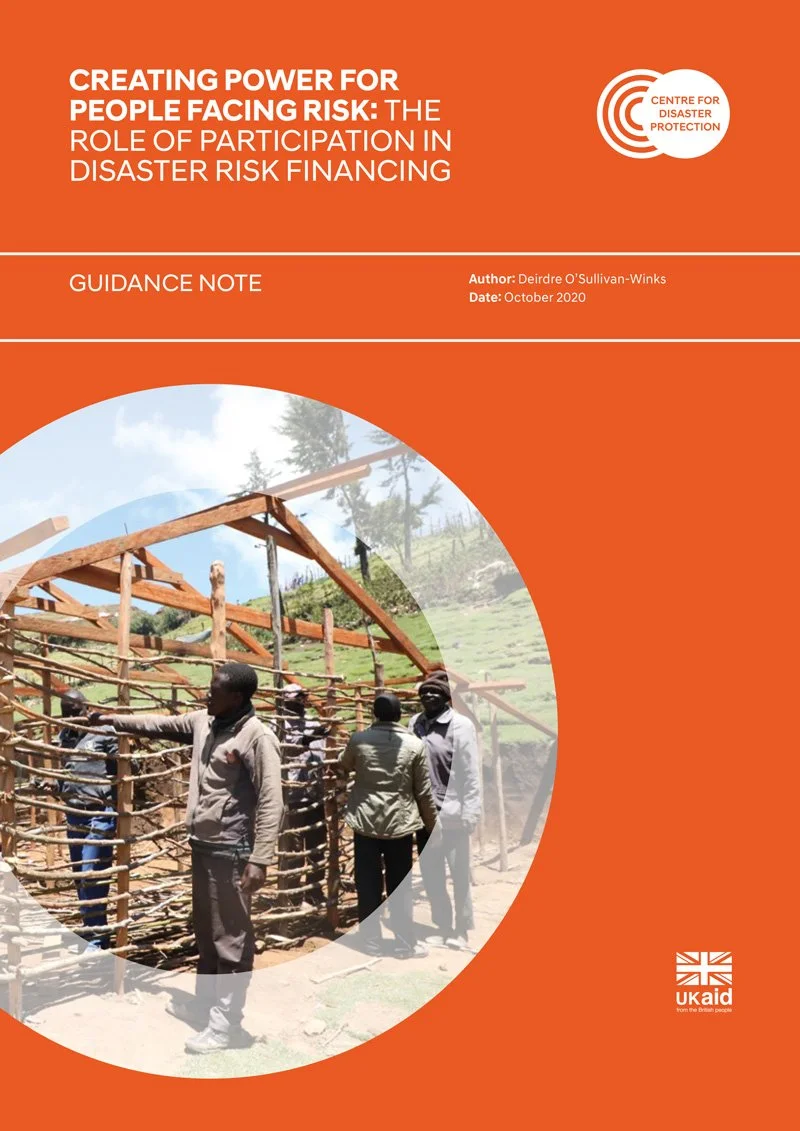
Creating Power For People Facing Risk: The Role Of Participation In Disaster Risk Financing
This guidance note gives practical advice on consulting and involving communities in decision-making that impacts their lives.
Read more
Anticipatory Crisis Financing And Action
This paper outlines the current state of anticipatory action and discusses some of the existing evidence on its impact.
Read more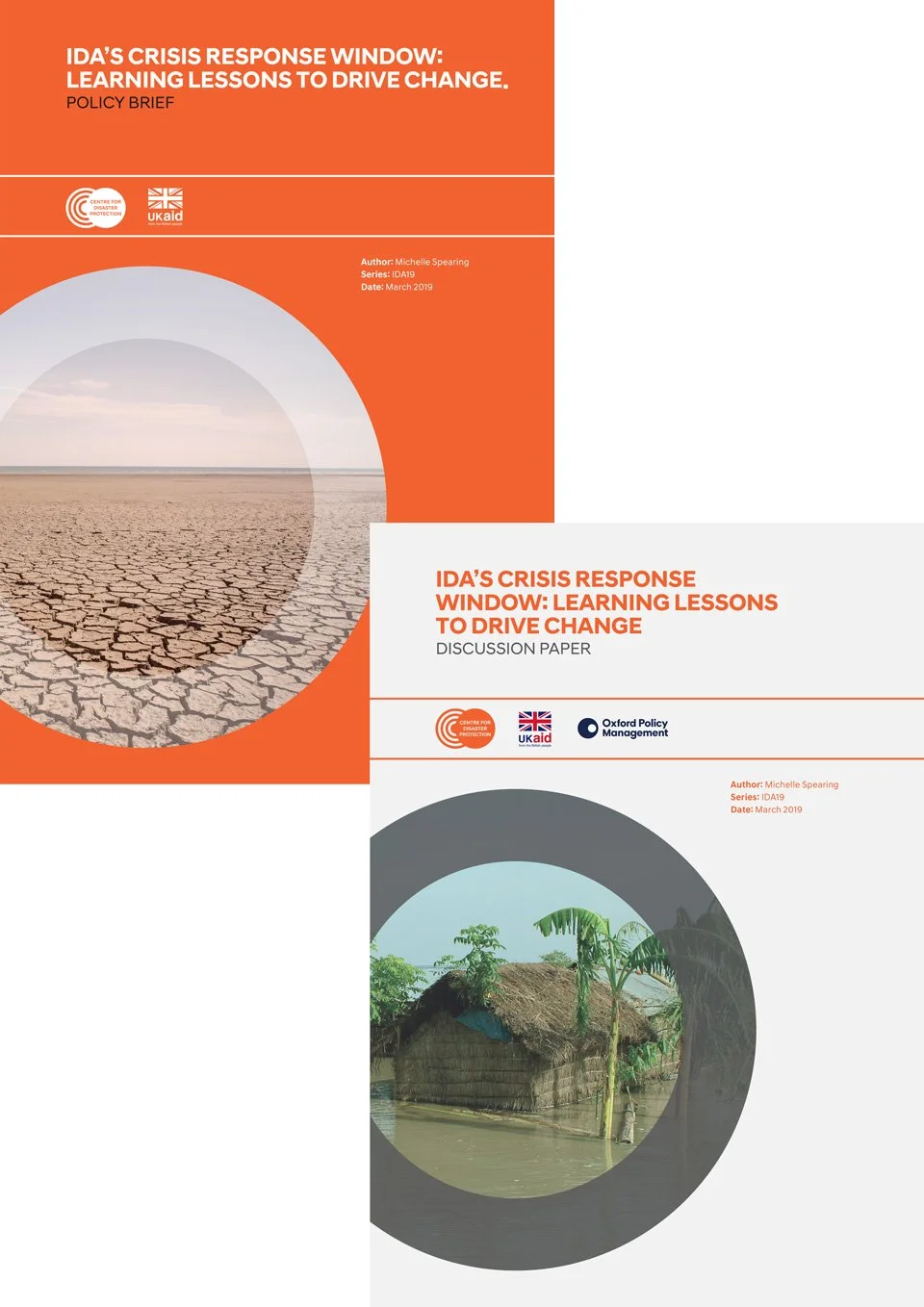
IDA’S Crisis Response Window (CRW): Learning Lessons To Drive Change
This paper and accompanying policy brief detail how the CRW has been used to date, and identifies a number of concrete ways of improving its performance.
Read more