Disaster risk financing
Disaster risk financing covers the system of budgetary and financial mechanisms to credibly pay for a specific risk, arranged before a potential shock. This can include paying to prevent and reduce disaster risk, as well as preparing for and responding to disasters (Centre for Disaster Protection 2019).
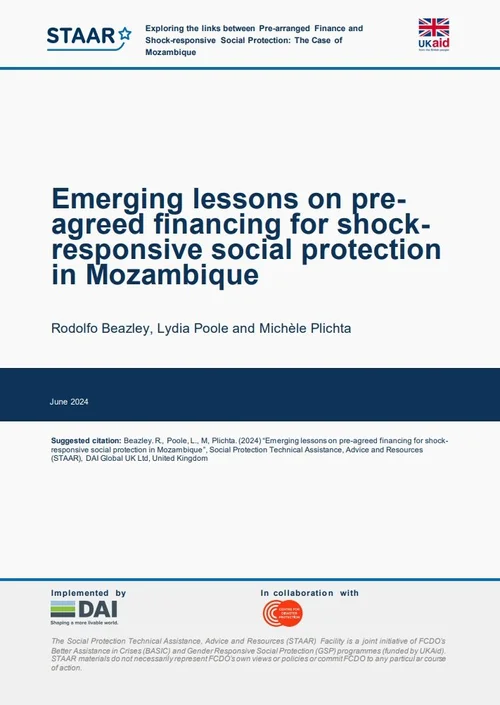
The report contributes to a broader study to consider the opportunities, potential risks, and benefits of channelling disaster risk financing instruments through national social protection systems.
Read more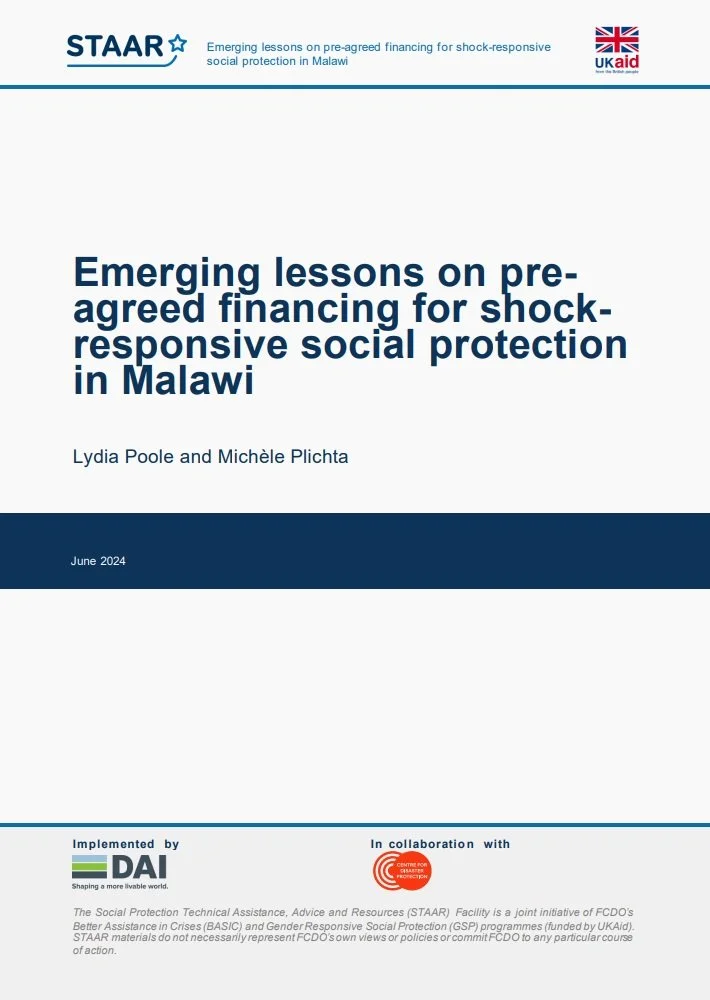
The report contributes to a broader study to consider the opportunities, potential risks, and benefits of channelling disaster risk financing instruments through national social protection systems.
Read more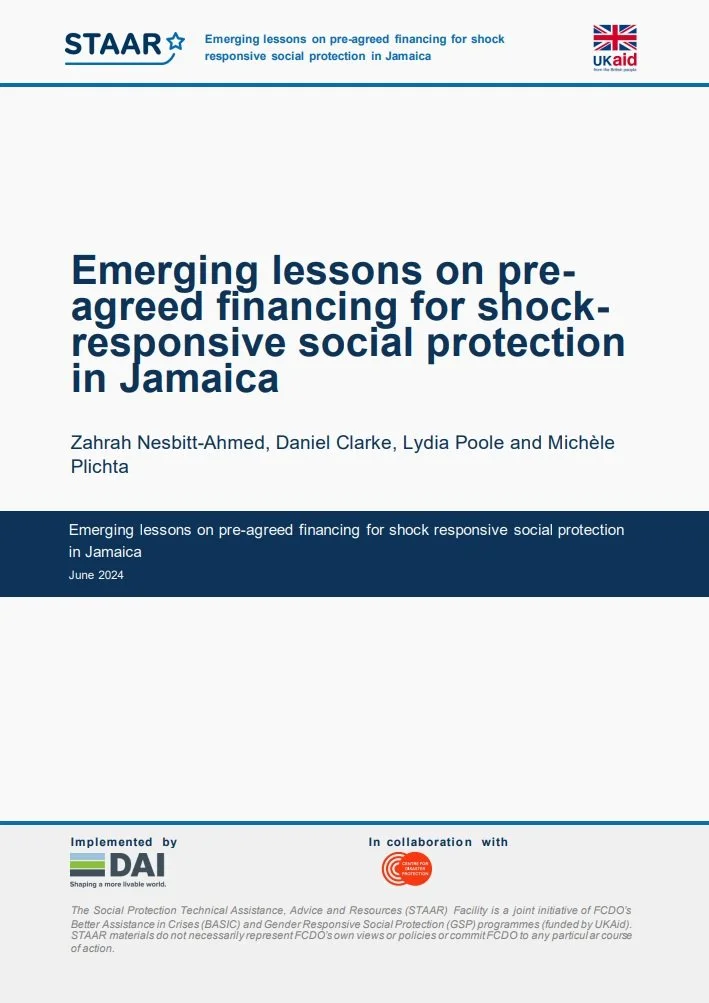
The report contributes to a broader study to consider the opportunities, potential risks, and benefits of channelling disaster risk financing instruments through national social protection systems.
Read more
The study puts forward six lessons and 12 recommendations for donors interested in supporting this agenda.
Read more
A Year in Review is the Centre’s first published annual report. It details our progress and the challenges we’ve encountered, and showcases our impact.
Read more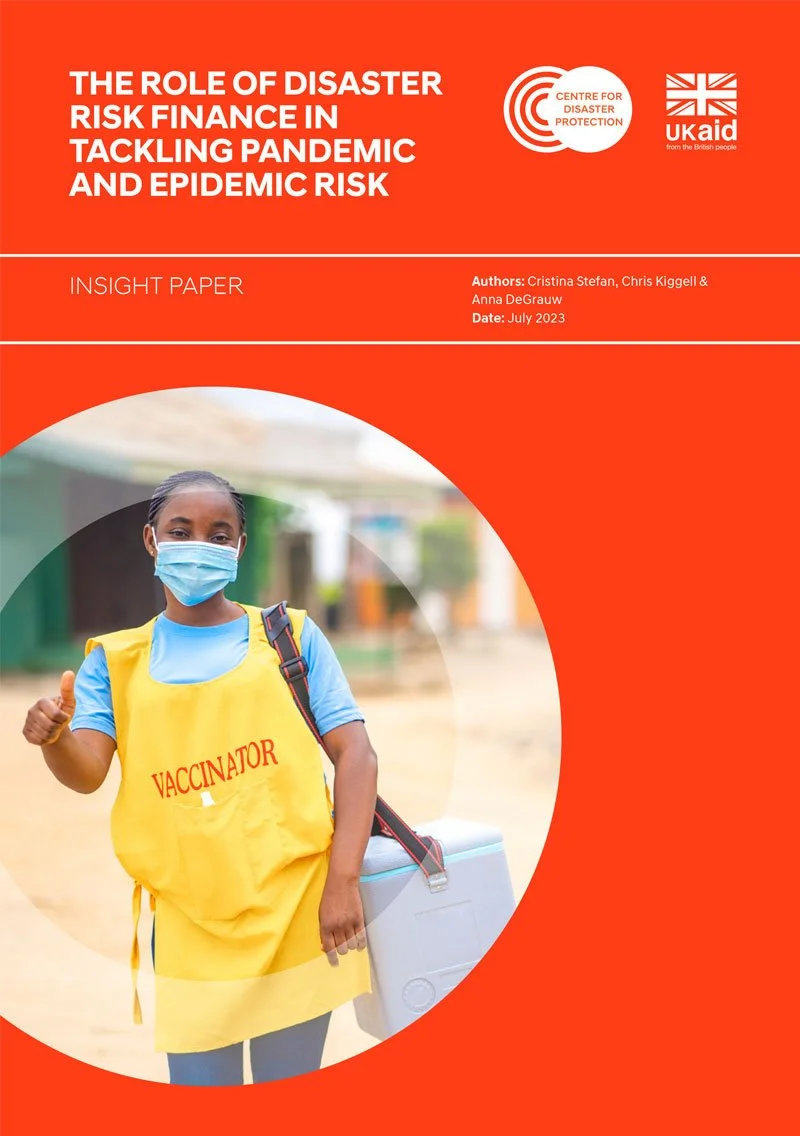
This paper outlines key trends of financial flows toward outbreak response and identifies relevant emerging initiatives.
Read more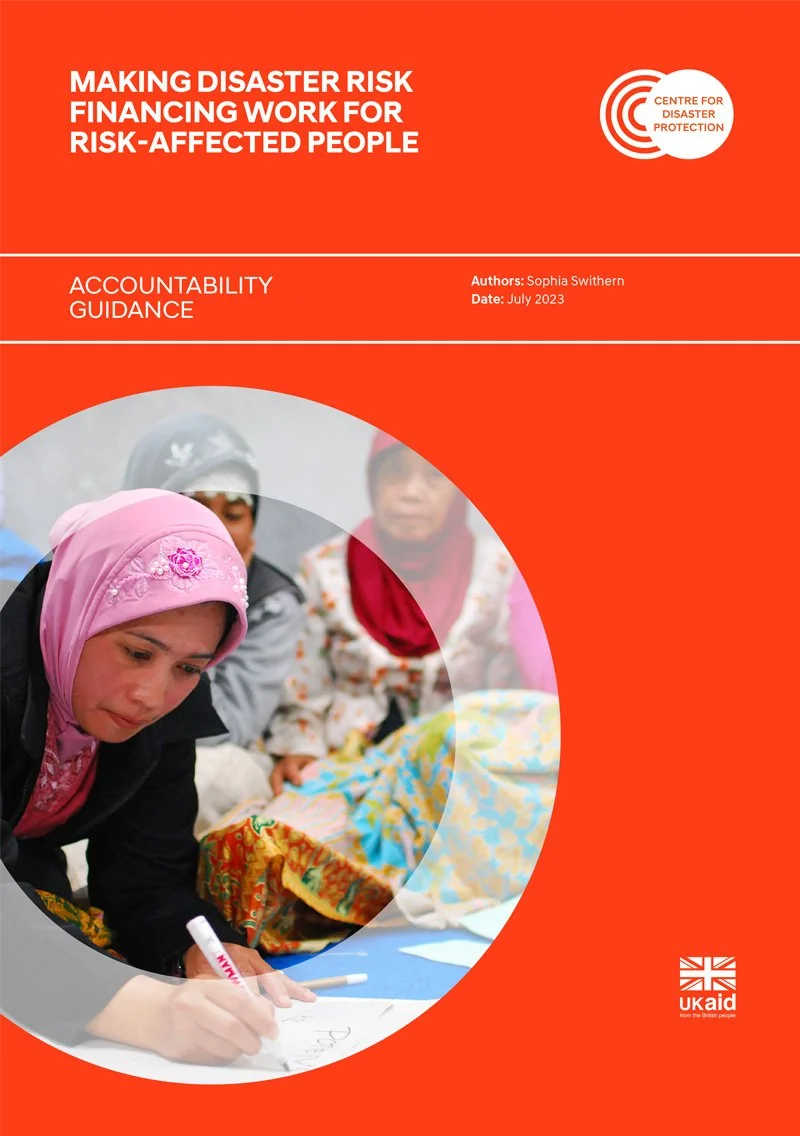
This guidance note is intended as a common framework to support practical approaches to meaningful accountability across the sector.
Read more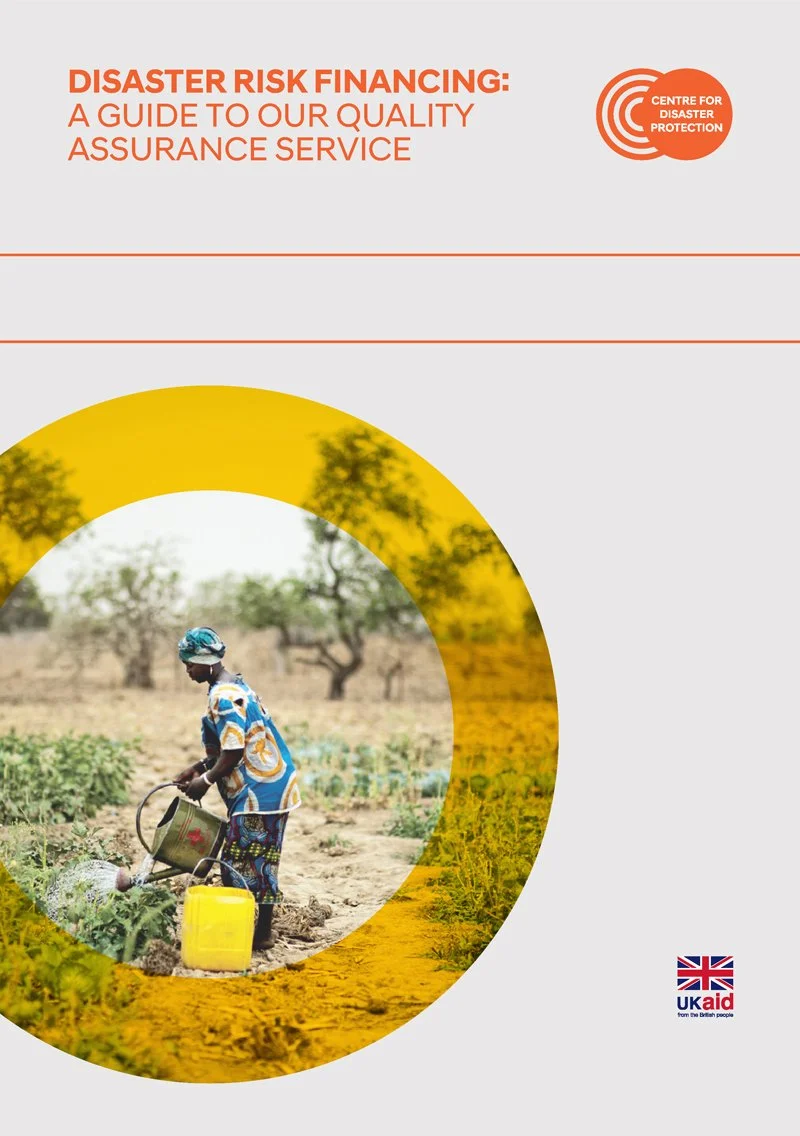
This guidance note provides an overview of the Centre for Disaster Protection’s quality assurance service—a free-to-use and impartial service.
Read more
Process Learning For Disaster Risk Financing
This guidance document offers practical steps on how to capture lessons from DRF initiatives.
Read more
This paper explores how DRF instruments are being framed and understood within the panorama of Loss and Damage policy and finance agendas, highlighting areas of contention and sensitivity.
Read more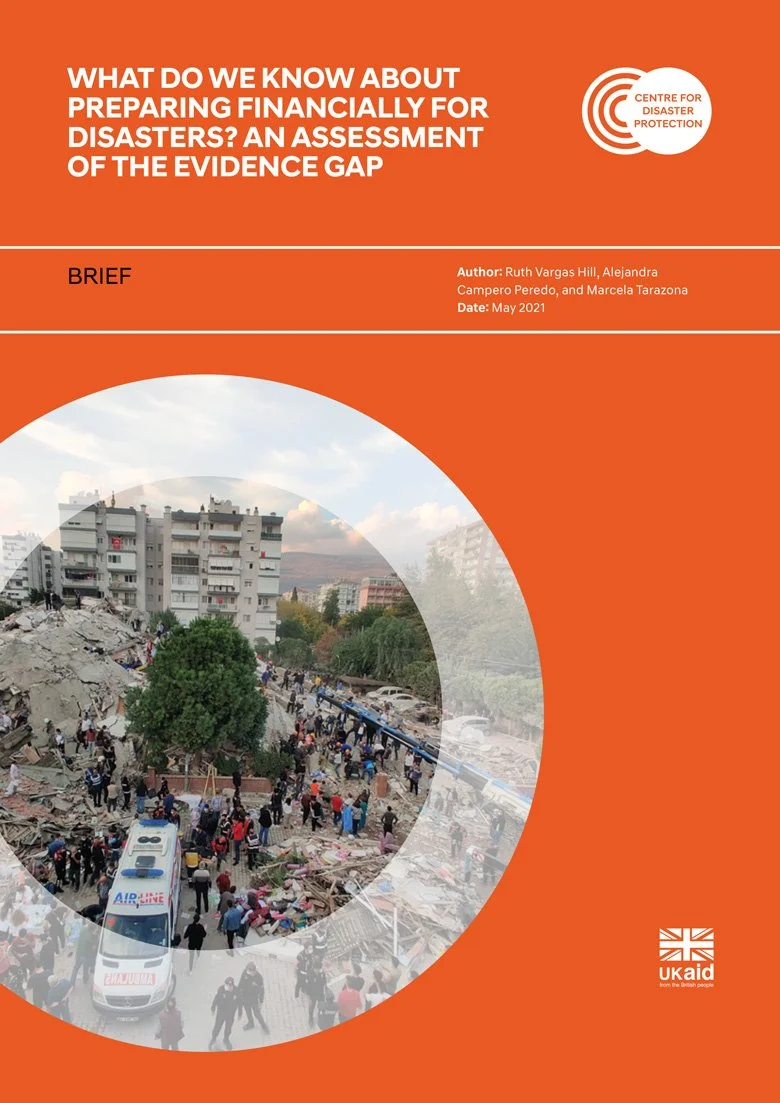
This brief reviews the evidence on the welfare impacts of proactive approaches to setting up finance for disaster response.
Read more
This paper examines the evidence on how to prepare better for disasters.
Read more
In the face of increasing climate volatility and stretched aid budgets, more effective ways to support households in times of crisis are needed.
Read more
Accountability In Disaster Risk Financing
This working paper presents a framework for understanding accountability as well as an overview of implementation.
Read more
This discussion paper examines the unequal impacts of the pandemic across different groups.
Read more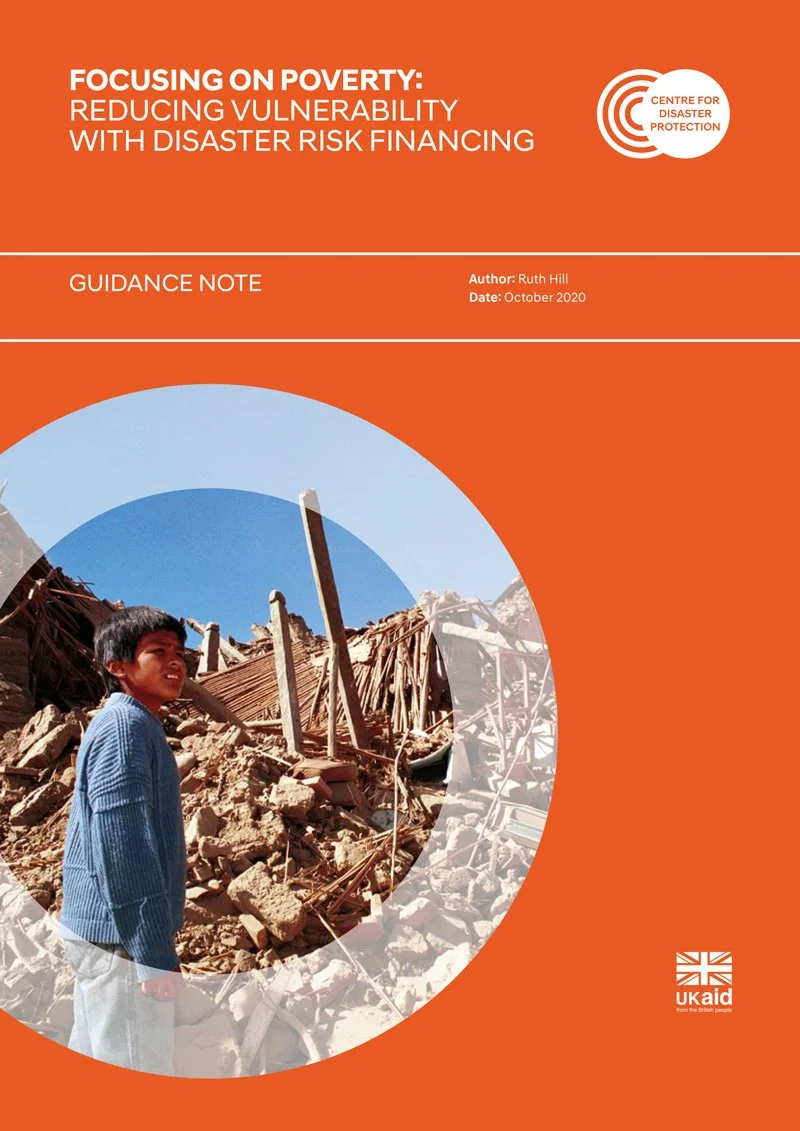
This guidance note sets out some questions to help ensure that DRF is most directed to those who are least able to withstand shocks.
Read more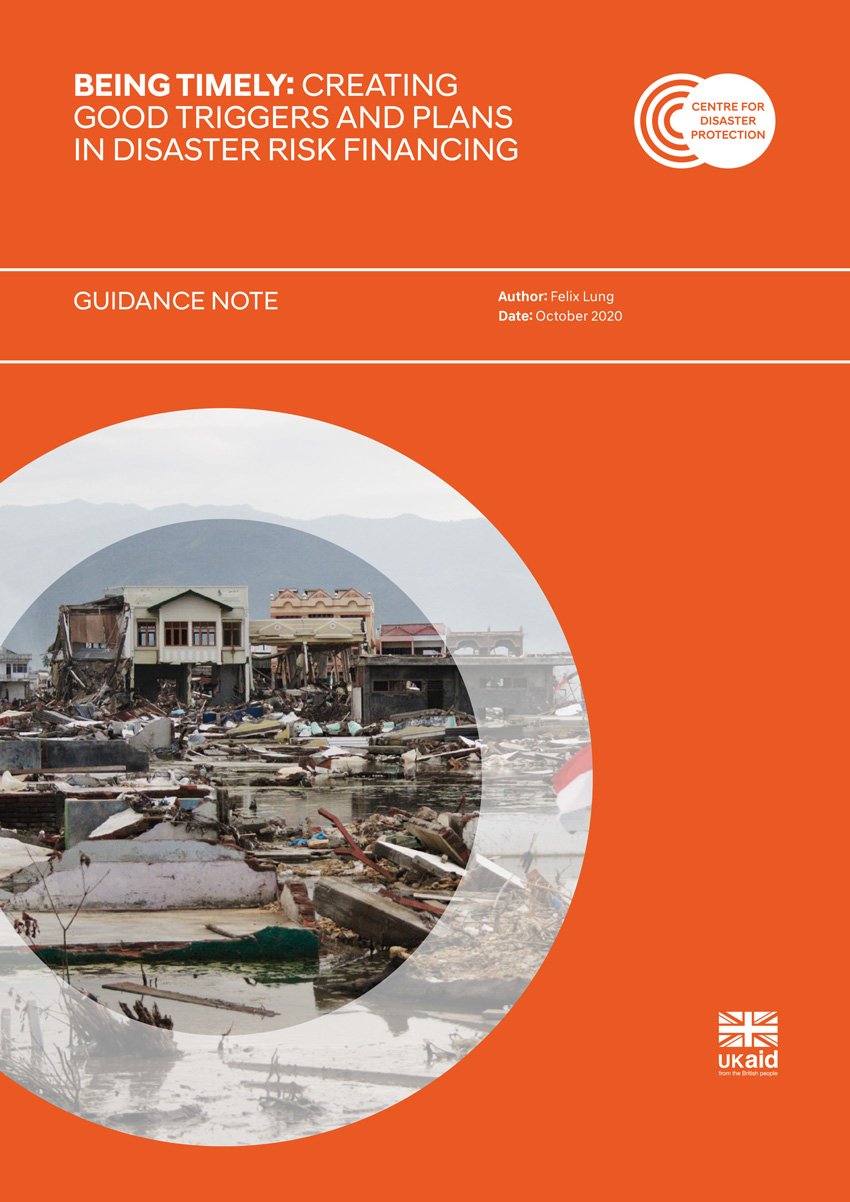
Practical guidance on contingency planning a before a disaster strikes to support a faster, more coordinated, and ultimately, more effective response.
Read more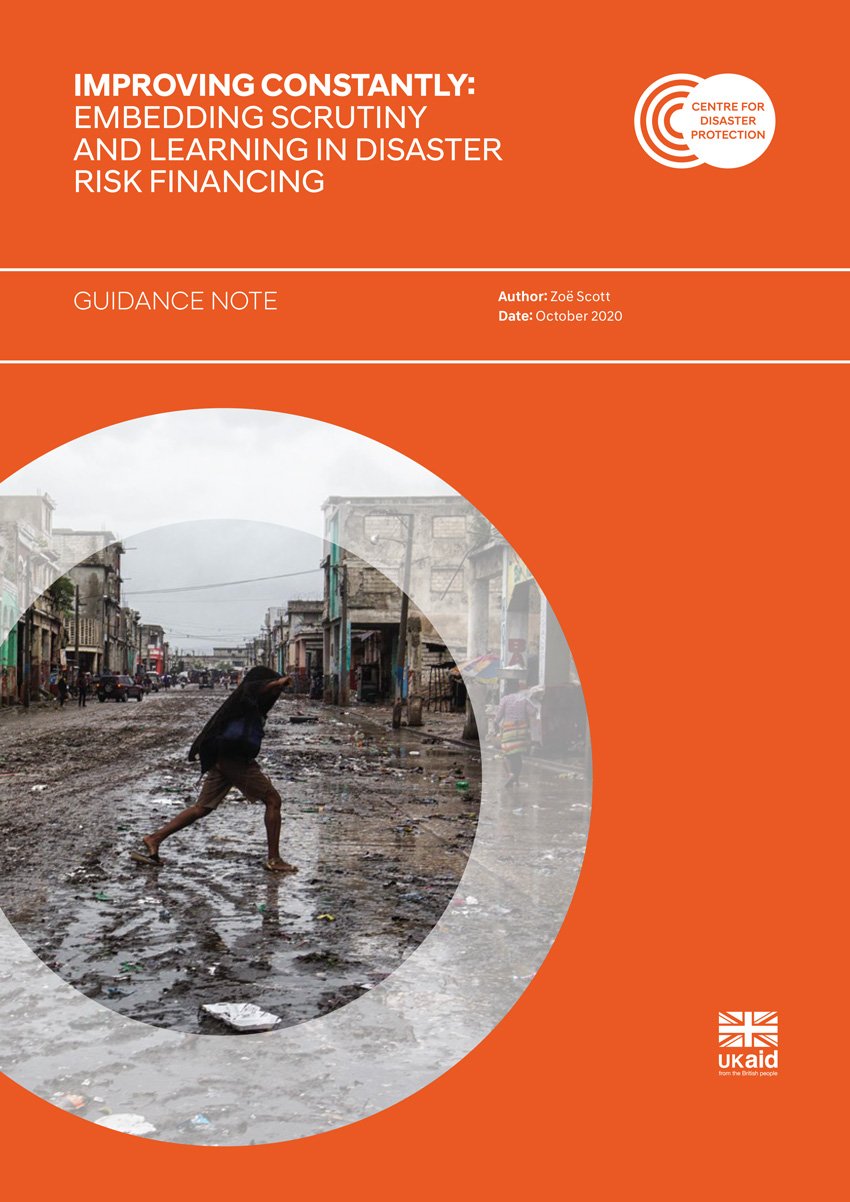
This guidance note sets out practical ways to ensure quality, independent scrutiny and improved learning in your DRF initiatives.
Read more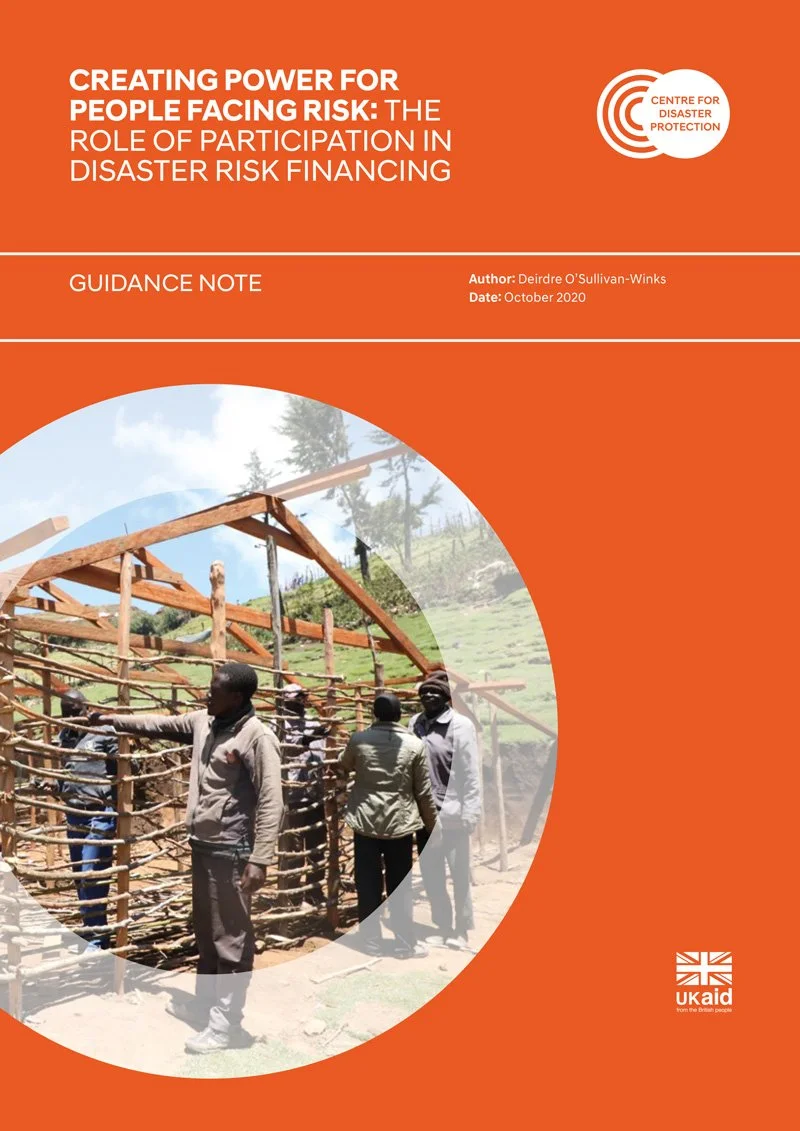
This guidance note gives practical advice on consulting and involving communities in decision-making that impacts their lives.
Read more
This publication explains the importance of thinking strategically and sets out four principles for taking a strategic approach, with practical advice and resources.
Read more
Mapping Financial Flows For Disasters
This paper aims to identify available data and methodologies, explore whether these could support a global database to track disaster-related financial flows.
Read more
This insight paper examines the challenge of handling basis risk in disaster risk financing systems.
Read more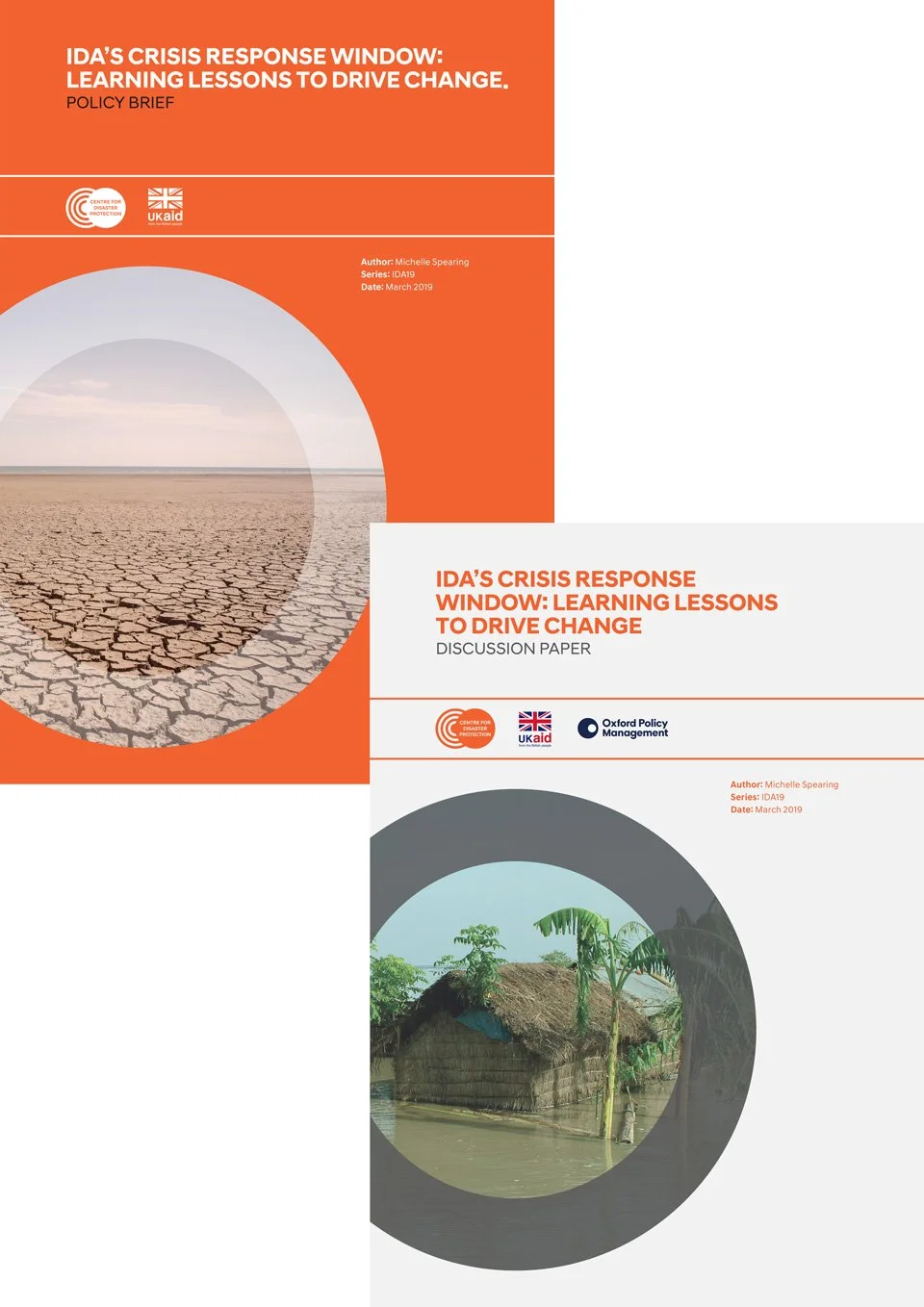
This paper and accompanying policy brief detail how the CRW has been used to date, and identifies a number of concrete ways of improving its performance.
Read more
This paper argues that civil society organisations play a vital role in ensuring that crisis financing approaches are designed and delivered effectively.
Read more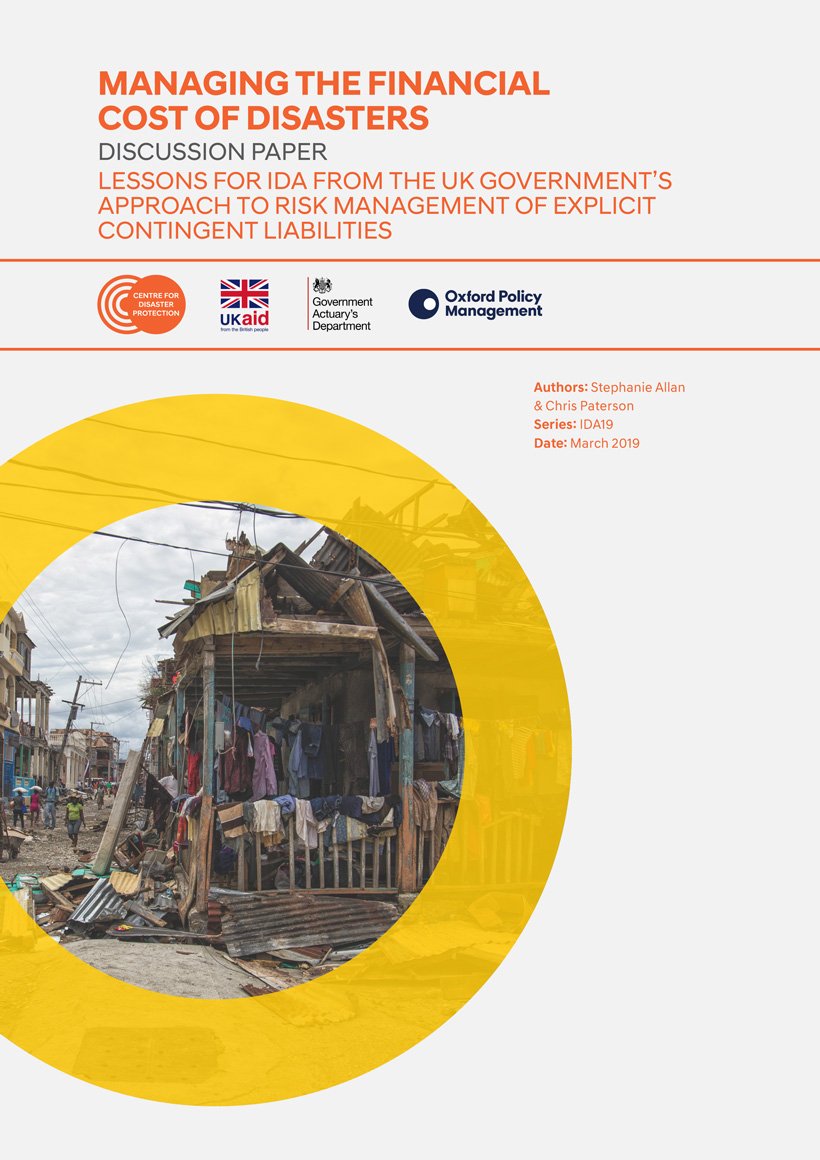
Lessons for IDA from the UK Government’s approach to explicit contingent liabilities.
Read more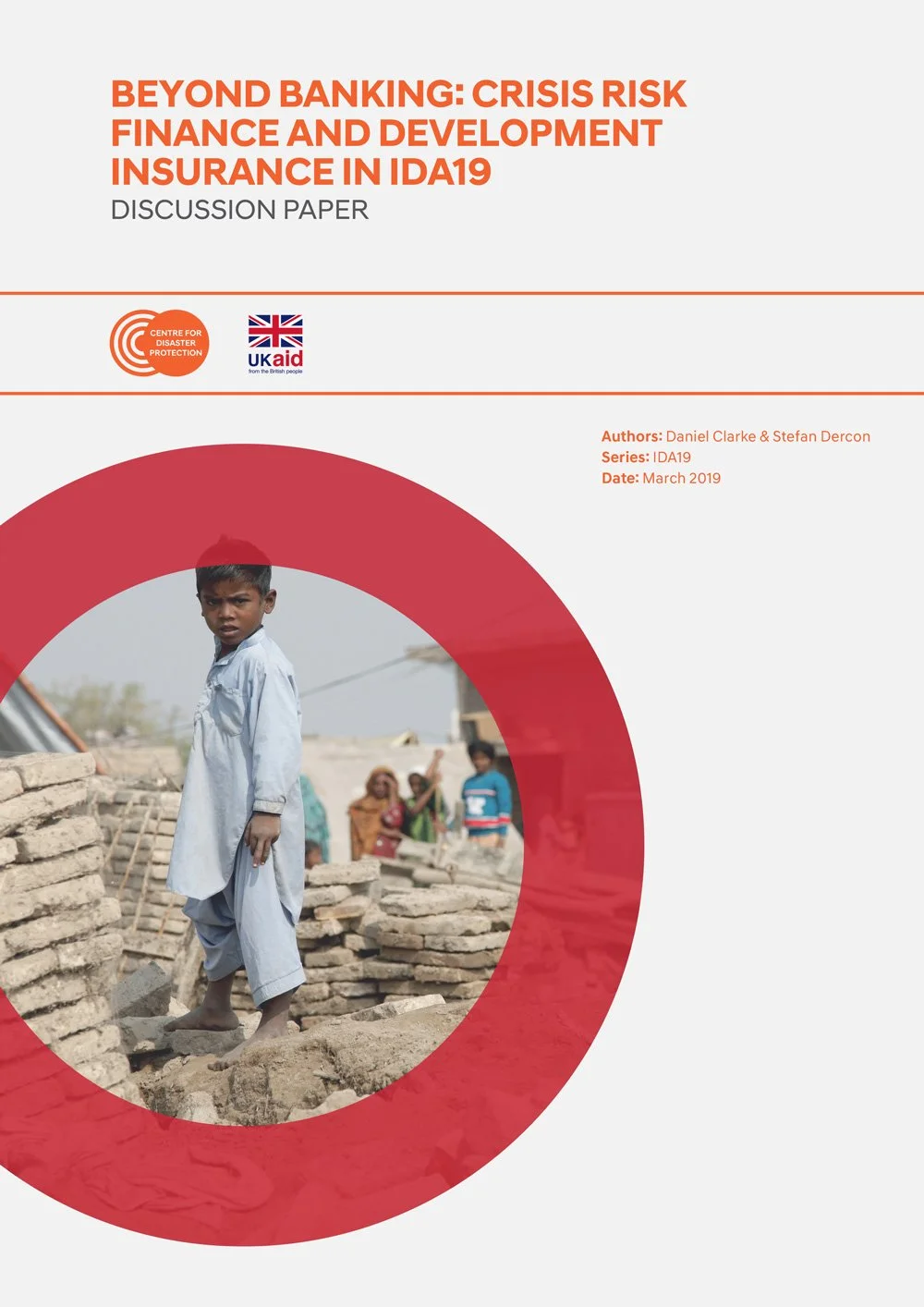
This paper charts the evolution of the World Bank’s approach to crisis risk financing.
Read moreFinancial Flows
Financial flows refer to the movement of funds for disaster risk reduction (DRR) and response, covering planned and unplanned sources.
Social protection
Policies and programmes designed to reduce and prevent poverty and vulnerability throughout the life cycle.
Fragility
High exposure to risk combined with weak capacity to cope, often leading to crisis.
Development bank
A public financial institution providing loans, grants and expertise to support development goals.
Anticipatory Action
Actions taken before a crisis hits to prevent or reduce potential disaster impacts prior to a shock or before acute impacts are felt.
Shock-responsive social protection
Social protection systems adapted to scale quickly when large shocks affect many people.