Cost Multiples For Pre-Arranged Financing: A Comparison Of Instruments From International Financial Institutions
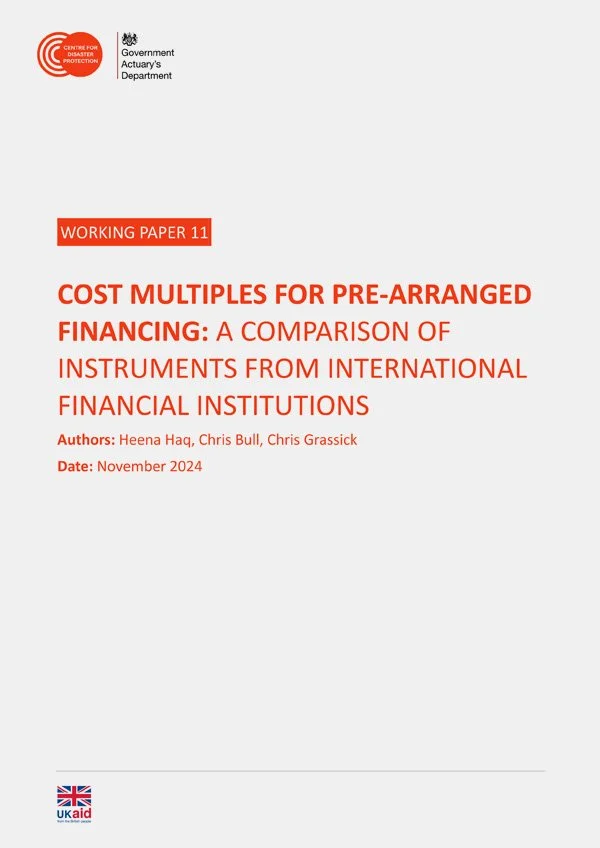
With growing fiscal constraints, governments and development partners face increasing pressure to maximise the impact of every dollar spent.
This working paper presents a framework that compares contingent loans, grants from multilateral development banks, catastrophe bonds, and insurance provided through regional risk pools. The analysis reveals that while some instruments are more cost-effective for frequent events, others perform better for less frequent, high-impact shocks.
Key Findings
1.0–1.3
Typical cost multiple for contingent credit (contingent loans). Governments pay about $1.00–$1.30 to receive $1 of expected payout.
2–4+
Typical cost multiple for catastrophe bonds. Governments may pay two to four times the expected payout.
Key Terms Used In This Report
A pre approved loan or grant released automatically when agreed crisis conditions or triggers are met.
The cost multiple measures the average amount a government pays to receive USD 1 of payout from a financing instrument over its lifetime.
Sovereign insurance is insurance coverage purchased by a national government to protect its budget against the financial impacts of disasters.
A catastrophe bond (cat bond) is a risk-transfer financial instrument that allows governments or insurers to transfer disaster risk to capital market investors.
Related Publications
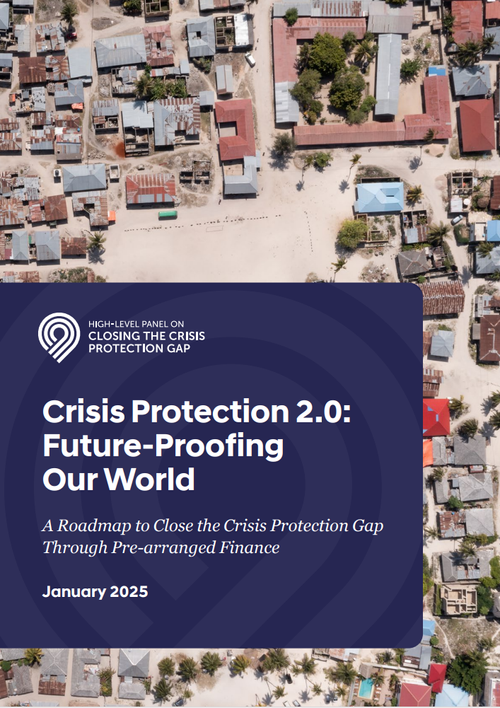
Crisis Protection 2.0: Future-Proofing Our World
This report outlines ten strategic recommendations for closing the crisis protection gap, providing an ambitious roadmap for the next decade.
Read more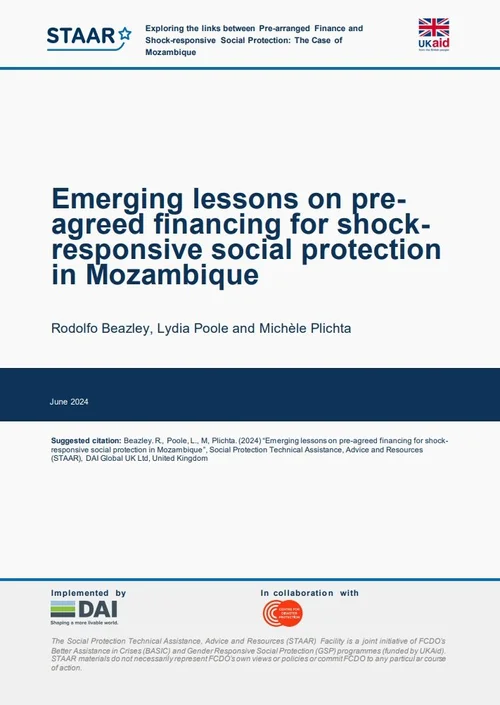
Emerging Lessons On Pre-Agreed Financing For Shock-Responsive Social Protection In Mozambique
The report contributes to a broader study to consider the opportunities, potential risks, and benefits of channelling disaster risk financing instruments through national social protection systems.
Read more
Emerging Lessons On Pre-Agreed Financing For Shock-Responsive Social Protection In Malawi
The report contributes to a broader study to consider the opportunities, potential risks, and benefits of channelling disaster risk financing instruments through national social protection systems.
Read more
Emerging Lessons On Pre-Agreed Financing For Shock-Responsive Social Protection In Jamaica
The report contributes to a broader study to consider the opportunities, potential risks, and benefits of channelling disaster risk financing instruments through national social protection systems.
Read more
Making Social Protection Shock-Responsive Through Disaster Risk Finance Mechanisms: Synthesis Report
The study puts forward six lessons and 12 recommendations for donors interested in supporting this agenda.
Read more