Uninsurability is a policy choice

In California, “uninsurable” means wildfire premiums jumping from $2,500 to $20,000 a year, or insurers refusing to renew policies altogether. In rural Mozambique, it means families having no financial safety net when a cyclone destroys their home.
The first is a crisis of loss: people who had protection and are losing it, often suddenly, after decades of assuming it would always be there. The second is a crisis of absence: people who have never had any protection at all, for whom financial cover against disaster has always been a distant abstraction.
What connects them is this: the ability to protect yourself and your loved ones from disaster should be a basic right. The fact that this remains out of reach for so many is not an accident of geography or fate. The last twenty years of innovation have solved most of the technological challenges to getting people meaningfully protected. Where people are still exposed, it is almost always the result of choices that governments have made, or have failed to make.
The global debate about climate uninsurability focuses overwhelmingly on the Californian story. That makes for powerful headlines, and the stakes are real. But the Mozambican story affects billions more, and it demands a different set of solutions. Uninsurability is not a natural law. Itis almost always a policy choice, and that means it can be changed.
Definitions matter
How we define insurability shapes the solutions we reach for. Most definitions focus on whether insurers are willing to sell a traditional insurance policy, one where a loss adjuster visits your farm or home after a disaster, verifies the damage, and pays accordingly. By that measure, huge swathes of the world may be deemed permanently uninsurable. Not because climate risks have suddenly changed (though that doesn’t help), but because the economics of bespoke underwriting don’t suit low-value, non-standardised assets. It costs far too much for an insurer to design a tailored product, verify each claim, and guard against fraud while keeping the premium affordable.
Recent attempts by the insurance industry to spotlight the growing insurability crisis have expanded the definition in two useful ways. Products that pay out based on measurable indicators, such as rainfall or windspeed, are now counted alongside traditional insurance. And affordability has been factored in. If you can buy either index or traditional insurance at an affordable price, you are insurable; if you cannot, you are not. This is a step forward. But by counting all insurance products, regardless of how reliable the coverage, it risks declaring uninsurability solved before people are meaningfully protected.
Imperfect coverage beats none
For most disaster risks where traditional insurance is not viable, index insurance offers a realistic alternative. Instead of sending a loss adjuster to verify individual damage, index insurance triggers payouts based on a measurable indicator (such as wind speed, earthquake shaking intensity, or area average crop yields). If the indicator crosses a pre-agreed threshold, everyone covered receives a payout. No claim forms. No waiting.
This matters because index insurance sidesteps the three classic barriers to insurability. It reduces moral hazard: you cannot influence the wind speed. It avoids adverse selection: the insurer does not need to know your individual risk profile. And it eliminates the high cost of individual underwriting and loss adjustment that makes traditional insurance unviable for low-value assets.
For most people living on less than $10 a day, index insurance is the most realistic path to financial protection against climate shocks. And it is increasingly relevant to higher-income settings too.
But available and affordable does not necessarily mean good. Index insurance has a chequered history. Too many low-quality products have been sold to unsuspecting consumers. When paddy farmers in Maharashtra had their crops destroyed by flooding last year, the insurance did not pay out because the satellite imagery underpinning the index failed to detect the flood. If we count poor-quality index products as evidence of insurability, we risk congratulating ourselves while people hold only the illusion of protection.
The goal should not be insurability for its own sake. It should be reliable, affordable protection that closes the protection gap, the difference between what people need to withstand disasters and the finance they have arranged in advance.
Governments are not helpless bystanders in an uninsurable world
The countries making the most progress are not waiting for markets to solve the problem on their own. They are building public-private-people partnerships that protect. And they are playing three powerful roles.
The first is aggregating risk. Governments can aggregate the risks of individuals and infrastructure and insure them collectively, achieving economies of scale that no farmer, homeowner or government department could manage alone. Zambia bundles subsidised seeds and fertiliser with high-quality index insurance to boost productivity whilst protecting farmers against losing everything, embedding financial protection into a programme farmers already use. This is practical and scalable. It does not ask farmers to seek out and evaluate standalone insurance products on their own. Indonesia aggregates public assets like schools and hospitals, insuring them together so that public services can resume quickly after a disaster.
The second is making protection affordable through subsidies or cross-subsidies. For a typical crop insurance product in China, farmers pay 30-40% of the full commercial premium, with the rest borne by government. Many governments subsidise agricultural insurance to reduce farmer vulnerability while making it easier for farmers to borrow to invest in their production, boosting both economic growth and food security. Turkey takes a different approach: it requires households facing lower earthquake risk to pay a little more so that higher-risk households are not priced out. Morocco goes further still, combining cross-subsidy among insured homeowners with a levy on insurance that funds post-disaster compensation for people who did not buy cover. Instead of subsidising insurance directly, governments can also subsidise the cost of reducing underlying risks, indirectly making insurance more affordable. Japan provides subsidies to homeowners to strengthen their homes against earthquake. And Indonesia is relocating people from its sinking, flood-prone capital Jakarta to a new capital, Nusantara.
The third is protecting consumers by making insurance markets safe. Index insurance is easy to design and sell, but hard to buy well. Distinguishing a high-quality product from a lottery ticket is fiendishly difficult for any consumer. Governments need to decide whether to permit only products that provide demonstrably reliable protection, or to allow all products while ensuring consumers receive information that helps them make decisions they won’t regret. Without either of these, the market risks a race to the bottom with cheap products that offer the illusion of protection without delivering it when it matters most, and undermine attempts to build public trust in insurance. Index insurance is a step in the right direction, but it requires careful attention to consumer protection to deliver real value.
A choice with consequences beyond borders
The choices governments make about insurance protection don’t stay within their borders. When a country builds a functioning system of financial protection it demonstrates something the rest of the world can learn from and build on. When it doesn’t, prosperity becomes a gamble and disaster costs spill outward through slower recovery, greater dependence on shrinking international aid, and communities less able to withstand the next shock.
The uninsurability crisis too often ends with a shrug: some risks are just too big, some populations just too hard to reach. That framing lets everyone off the hook. The evidence from countries that have acted suggests otherwise. With the march of technological innovation uninsurability is not an inevitability. It is the result of choices. The question is whether policymakers are willing to make different ones.
Key Terms



More Insights
.jpg)
Rewriting the rules of disaster finance
On #DRRDay, UNDRR and the Centre look at why disaster finance needs to cover disaster prevention, not just the cost of recovery.
Read more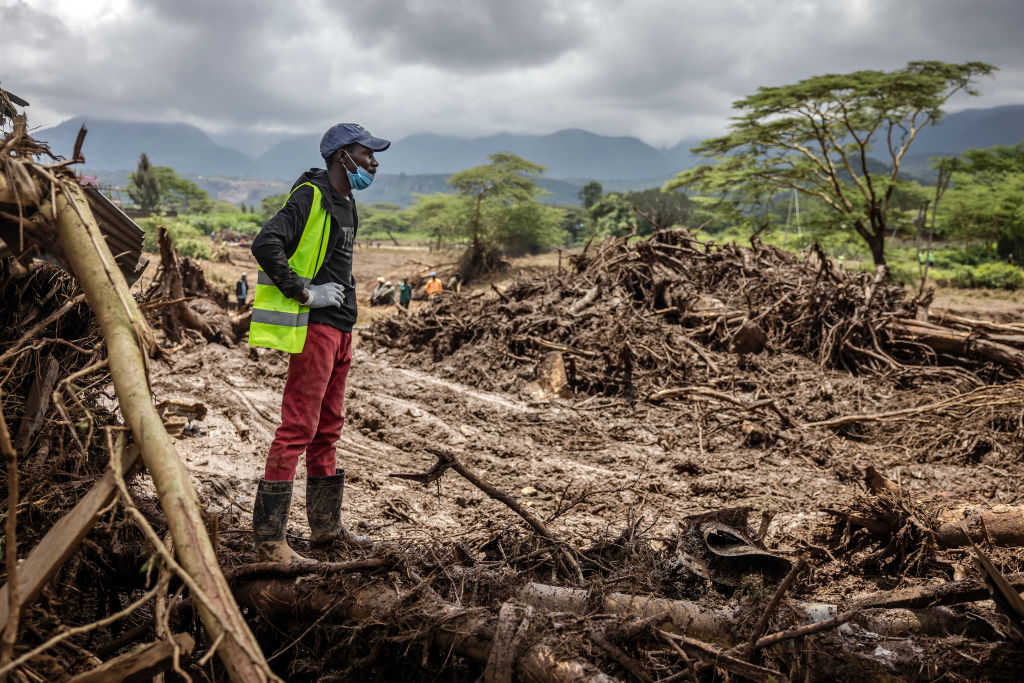
Kenya finances resilience as El Niño looms
Kenya’s new disaster risk financing strategy will be tested by a potentially record-breaking El Niño.
Read more
The DRC’s Ebola outbreak is the fastest on record. The type of financing and hurdles behind the response look almost exactly as it did seven years ago.
Read more