Disaster risk management
Disaster risk management is the application of disaster risk reduction policies and strategies to prevent new disaster risk, reduce existing disaster risk and manage residual risk, contributing to the strengthening of resilience and reduction of disaster losses (UNDRR n.d.).
.webp)
This technical brief, authored by CERDI and supported by the Centre for Disaster Protection, provides an in-depth analysis of flood risk in Chad.
Read more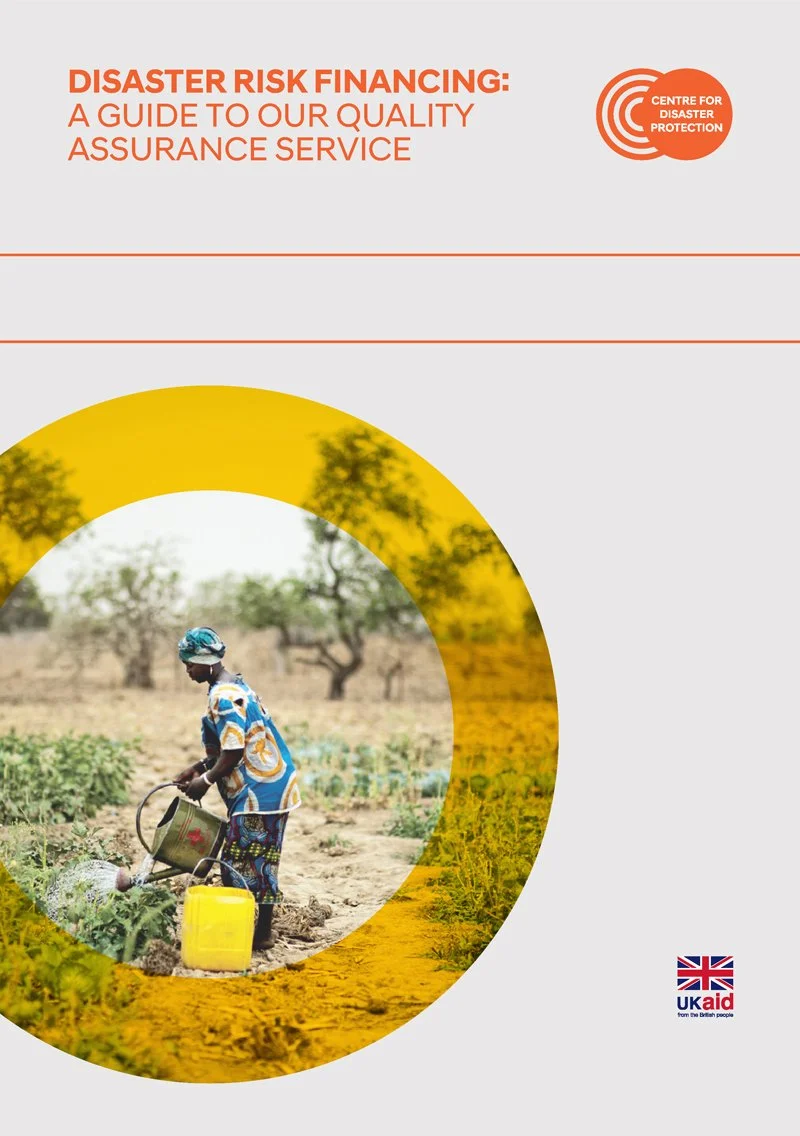
This guidance note provides an overview of the Centre for Disaster Protection’s quality assurance service—a free-to-use and impartial service.
Read more
This brief forms part of a cross-country study on the opportunity cost of reallocating budgets in response to disasters.
Read more
This paper explores how DRF instruments are being framed and understood within the panorama of Loss and Damage policy and finance agendas, highlighting areas of contention and sensitivity.
Read more
This paper examines the role insurance can play as part of a wider strategy to help societies adapt to climate change and recover from disasters.
Read moreDisaster risk financing
Financial arrangements made in advance to pay for disaster prevention, response and recovery.
Adaptive social protection
Social protection systems that adjust to shocks, helping vulnerable people prepare, cope and recover over time.
Accountability
Being responsible for decisions and resources, listening to affected people, and accepting consequences for actions taken.
Climate resilient debt clause or 'debt pause clause'
A provision in sovereign debt contracts that enables the borrower to temporarily stop repaying debt service for a pre-agreed period when a predefined event occurs.
Trigger
A predefined threshold that activates payments or actions within risk financing mechanisms.
Early warning system
Systems that monitor hazards and share information early, so people can act in time.