Shock-responsive social protection
Shock-responsive social protection is a term used to bring focus on shocks that affect a large proportion of the population simultaneously (covariate shocks). It encompasses the adaptation of routine social protection programmes and systems to cope with changes in context and demand following large-scale shocks. This can be ex ante by building shock-responsive systems, plans and partnerships in advance of a shock to better prepare for emergency response; or ex post, to support households once the shock has occurred. In this way, social protection can complement and support other emergency response interventions (European Commission 2019).
.webp)
This report on Chad provides an in-depth analysis of the country’s social protection and disaster risk financing landscape to inform future programme design.
Read more
The report contributes to a broader study to consider the opportunities, potential risks, and benefits of channelling disaster risk financing instruments through national social protection systems.
Read more
The report contributes to a broader study to consider the opportunities, potential risks, and benefits of channelling disaster risk financing instruments through national social protection systems.
Read more
The report contributes to a broader study to consider the opportunities, potential risks, and benefits of channelling disaster risk financing instruments through national social protection systems.
Read more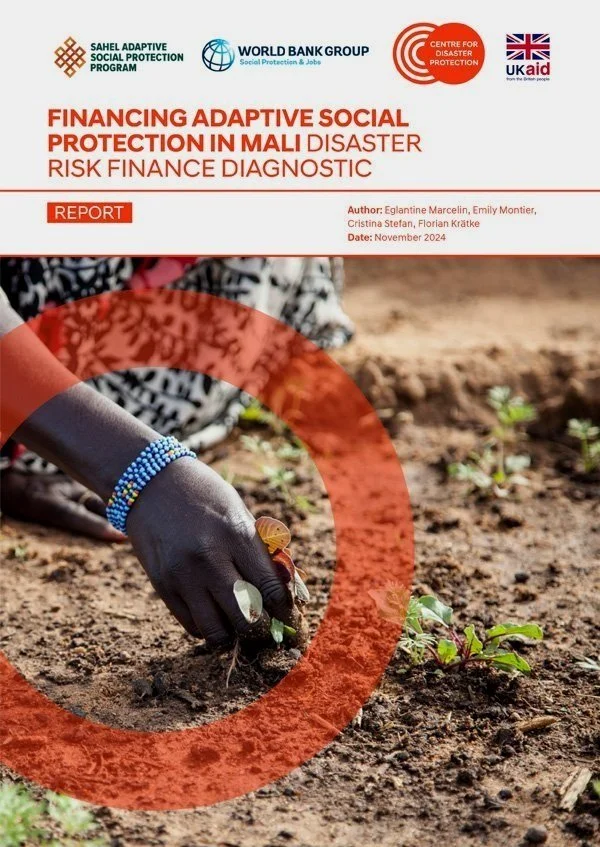
This report on Mali provides an in-depth analysis of the country’s social protection and disaster risk financing landscape to inform future programme design.
Read more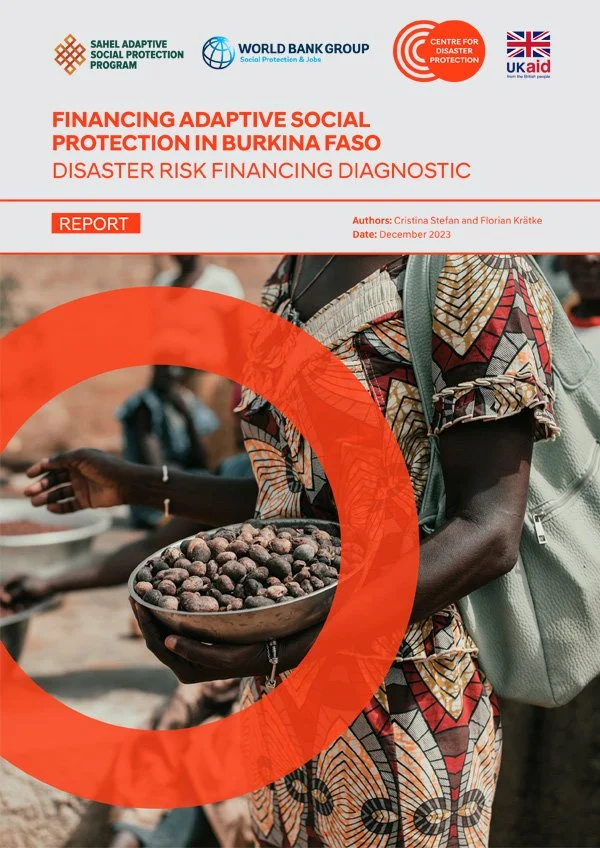
This is the first in a series of diagnostic reports aimed at informing the design and programming of the Centre’s support to the SASPP.
Read more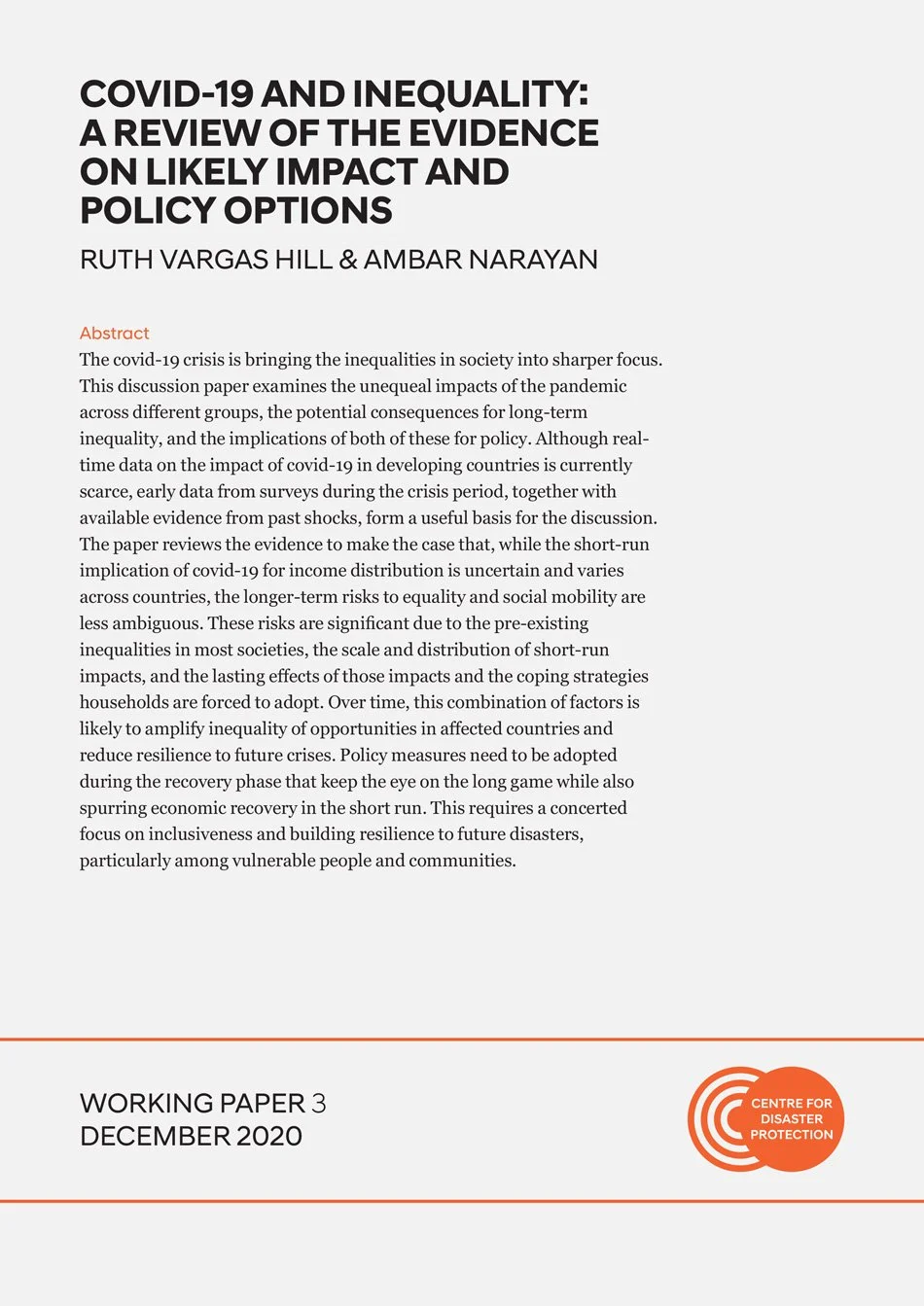
This discussion paper examines the unequal impacts of the pandemic across different groups.
Read more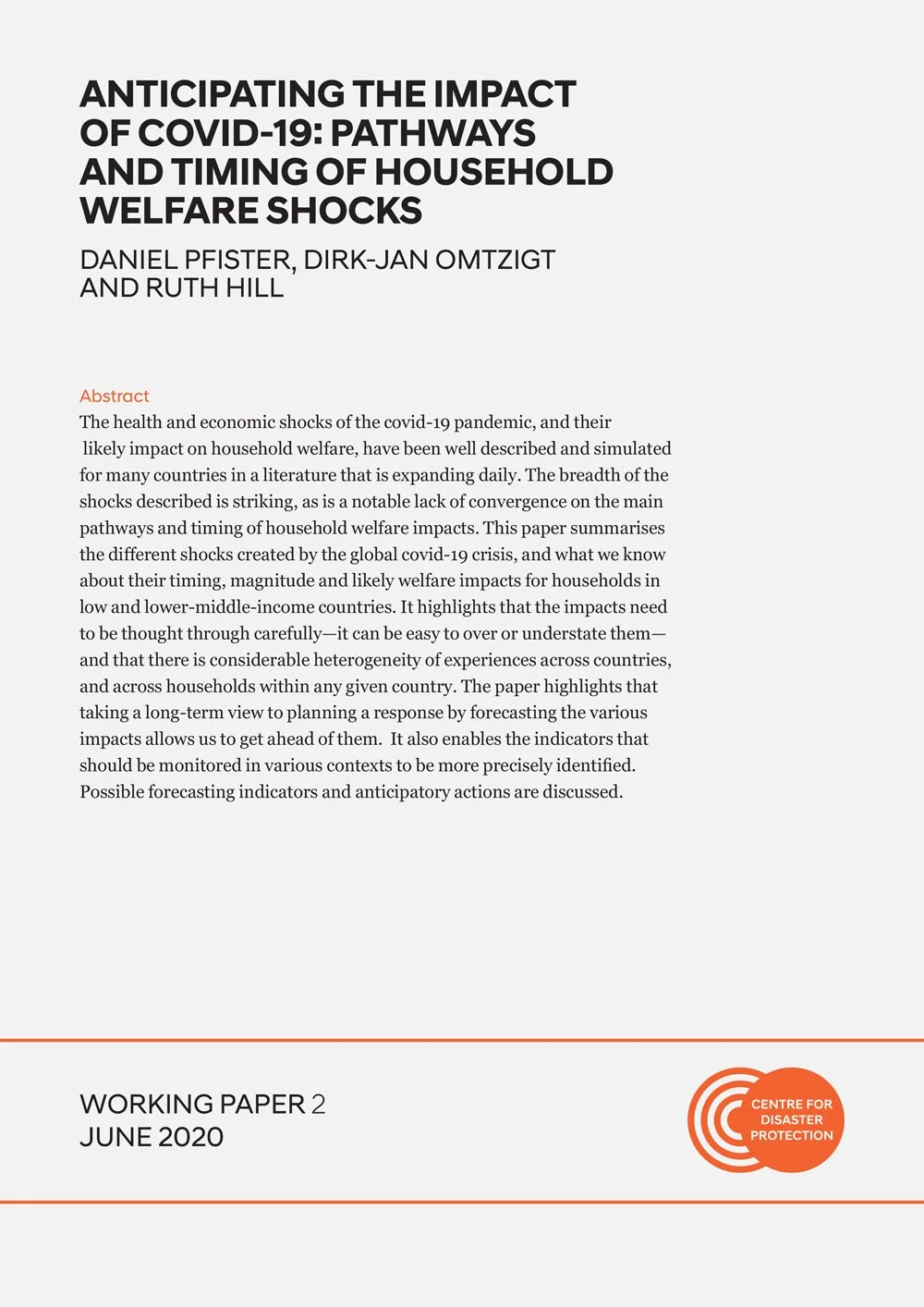
This paper summarises the different shocks created by the global Covid-19 crisis.
Read moreIndemnity insurance
Insurance that pays based on assessed losses after damage to a specific asset.
International premium support
Premium support is international funding to pay for insurance premiums.
Official development assistance (ODA)
Public aid supporting development and welfare in eligible countries, usually on concessional terms.
Development insurer
An insurer supporting development goals through insurance products and technical assistance.
Risk transfer
When disaster risk is shifted to insurers or capital markets.
Risk layering
Using different financial instruments for different disaster frequencies.