Vulnerability
The conditions determined by physical, social, economic and environmental factors or processes that increase the susceptibility of a community to the impact of hazards (UNISDR 2016).
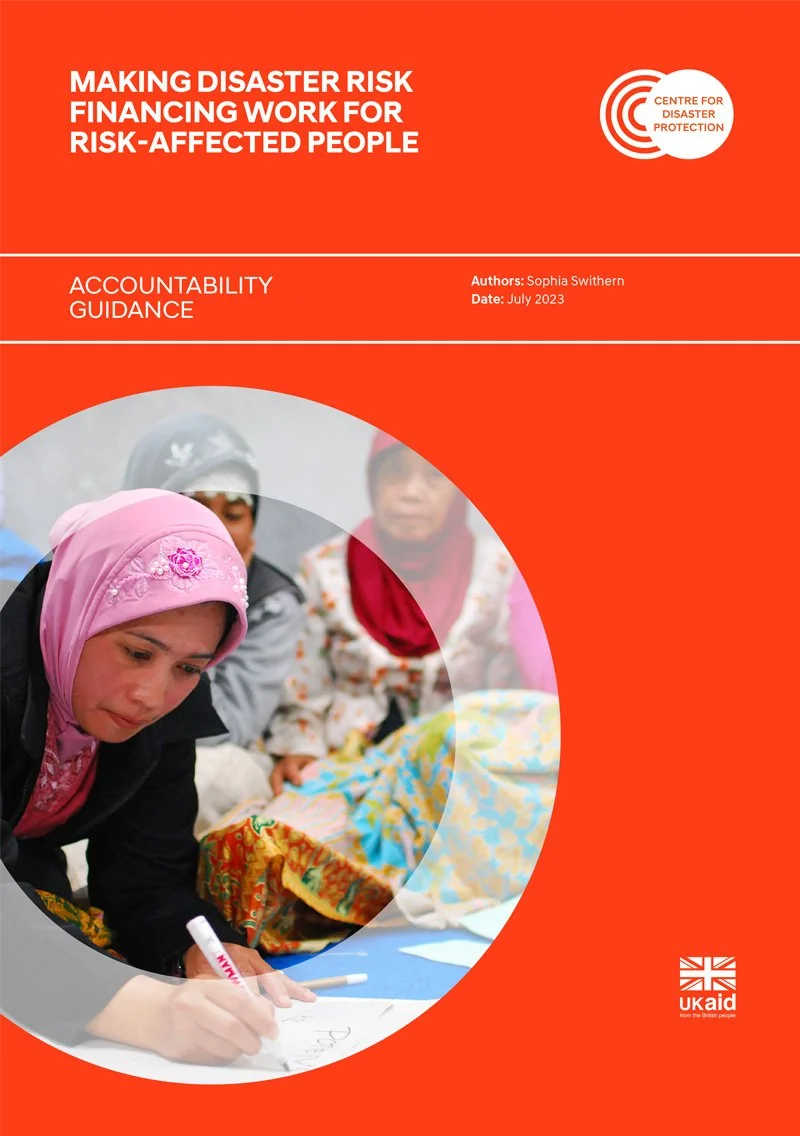
This guidance note is intended as a common framework to support practical approaches to meaningful accountability across the sector.
Read more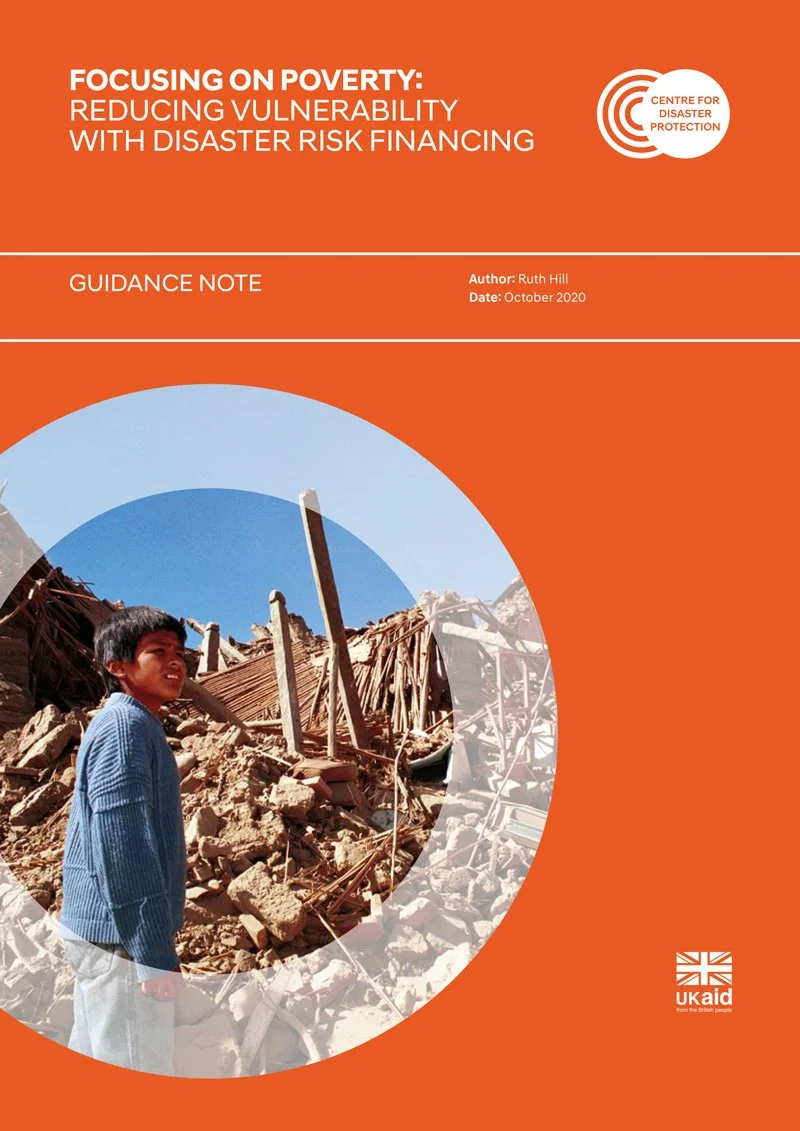
This guidance note sets out some questions to help ensure that DRF is most directed to those who are least able to withstand shocks.
Read more
This publication explains the importance of thinking strategically and sets out four principles for taking a strategic approach, with practical advice and resources.
Read more
The growing scale, duration and impact of refugee crises requires innovative approaches to financing.
Read more
This paper examines the role insurance can play as part of a wider strategy to help societies adapt to climate change and recover from disasters.
Read more
This paper sets out detailed and practical proposals for how the G7 could better protect vulnerable communities by better predicting and preparing for disasters.
Read moreInternational premium support
Premium support is international funding to pay for insurance premiums.
Basis risk
The gap between measured indicators and real losses causing payouts to differ from actual damage.
Social protection
Policies and programmes designed to reduce and prevent poverty and vulnerability throughout the life cycle.
Risk profile
Underlying risks that an organisation or country is exposed to and the extent to which they are mitigated by pre-arranged finance.
Parametric insurance
Insurance that pays when an agreed indicator reaches a set level, not actual losses.
Crisis
A situation where severe needs overwhelm local and national capacity to respond effectively.