Rewriting the rules of disaster finance
.jpg)
Kenya’s new risk financing strategy funds disaster prevention as well as recovery, breaking with a model most of the field still follows.
‘Resilience starts at home’, according to this year’s International Day for Disaster Risk Reduction, putting the spotlight on the millions of homes damaged or destroyed by disasters each year. But whether a home or school survives the next flood is decided years in advance, in a national budget.
As disaster losses climb and aid budgets shrink, governments are under growing pressure to plan not just for how they’ll respond to the next disaster, but how they’ll pay for it. Kenya has just set out one of the clearest answers yet.
The country’s new disaster risk financing plan sets out how the country will fund the whole arc of a disaster — reducing it, getting ready for it, and footing the bill when it strikes. In a sector that likes to separate risk reduction from response and recovery, this approach is unusual.
Kenya was first on the continent to adopt a disaster risk financing strategy in 2018, but that strategy – like almost every one written since the term was coined – focused on financial mechanisms to retain or transfer residual risk. It said little about the money spent reducing disaster risk in the first place. Kenya’s new strategy, finalised in June, breaks from that model. It finances disaster risk across the board and is written to lock into Kenya's broader disaster management policy.
Our two organisations – Centre for Disaster Protection and UNDRR worked alongside Kenya’s government to develop the strategy – part of a broader effort to connect disaster-related fiscal risks with public financial management.
Kenya is not alone. Governments across the Pacific, South Asia, Latin America and the Caribbean, and Africa are formalising similar approaches - from India’s $6 billion disaster risk reduction investment and Australia’s $200 million per year for disaster resilience to Guatemala’s 113 per cent increase in its resilience budget.
How finance got a seat at the table
Disaster risk financing, the business of arranging money for disasters before they happen, has an unlikely origin story.
After the Marmara earthquake in Turkey in 1999, the finance ministry set up a national earthquake insurance pool. Then, after Hurricane Ivan in 2004, Caribbean finance ministries set up the Caribbean Catastrophe Risk Insurance Facility. In each case, finance ministers came to see disaster costs as a hidden liability; their job was to seethe cost coming, shrink it, and plan how to pay, thereby avoiding a scramble after the disaster.
The World Bank coined the term “disaster risk financing” in 2010. Fifteen years later, more than 25 governments have disaster risk financing strategies, usually led by the finance ministry.
But the idea carried a flaw. The World Bank defined disaster risk financing tightly: money for the risk left over once a country has done what it can to prevent and prepare. It left most countries splitting disaster planning across two separate strategies. The disaster management agency wrote a strategy about reducing risk, and the finance ministry wrote a separate one about paying for the ‘residual risk’ that remains.
This gap is not just academic. A government that insures schools against floods, rather than floodproofing them and buying cheaper insurance, is paying to replace what breaks rather than stopping it from breaking. Between 2019 and 2023, contingent credit and insurance expanded, but only around 1% of total development assistance was categorised as disaster risk reduction, prevention, and preparedness.
Kenya’s new strategy moves beyond these silos. The G20’s Voluntary High-Level Principles for Investing in Disaster Risk Reduction point the same way by calling for money to reduce risk as well as pre-arrange finance for risk that remains.
One system, not two
The Sendai Framework, the world's current disaster risk management agreement, focuses on understanding risk, strengthening risk governance, investing in resilience, and enhancing preparedness for response and recovery. Its Midterm Review points to finance ministries needing a bigger role across the whole picture. The field should keep evolving on four fronts:
First, disaster risk financing should mean financing disaster risk in full — prevention, preparedness, response, and recovery together — not just shock absorption for the risk that remains. Governments are already rewriting the definition.
Second, financing strategies should cover the whole problem instead of talking past each other. More money needs to flow before disasters occur – CAF’s recent $100 million resilience bond is one example. Kenya, Pakistan, Tonga, and South Africa are each building evidence for what works and what can be strengthened.
Third, national strategies should be grounded in the costs governments are on the hook for: quantified risks, multi-year-costed plans and clear rules for how funds get applied to risk reduction.
Lastly, finance ministries should work alongside national disaster management agencies to lock in financing for residual risk before shocks hit, not after. There’s no template: the right mix of instruments depends on a country’s politics. New research, ‘What Countries Want from Pre-arranged Financing’ and 'Principles to Practice: Financing Risk Reduction and Residual Risk' shows how this works.
No strategy can eliminate all disaster risk. The task is to finance the risk we can reduce and plan responsibly for what remains. Kenya is showing how.
From Principles to Practice: Financing Disaster Risk Reduction and Residual Risk
Key Terms
Authored by



More Insights
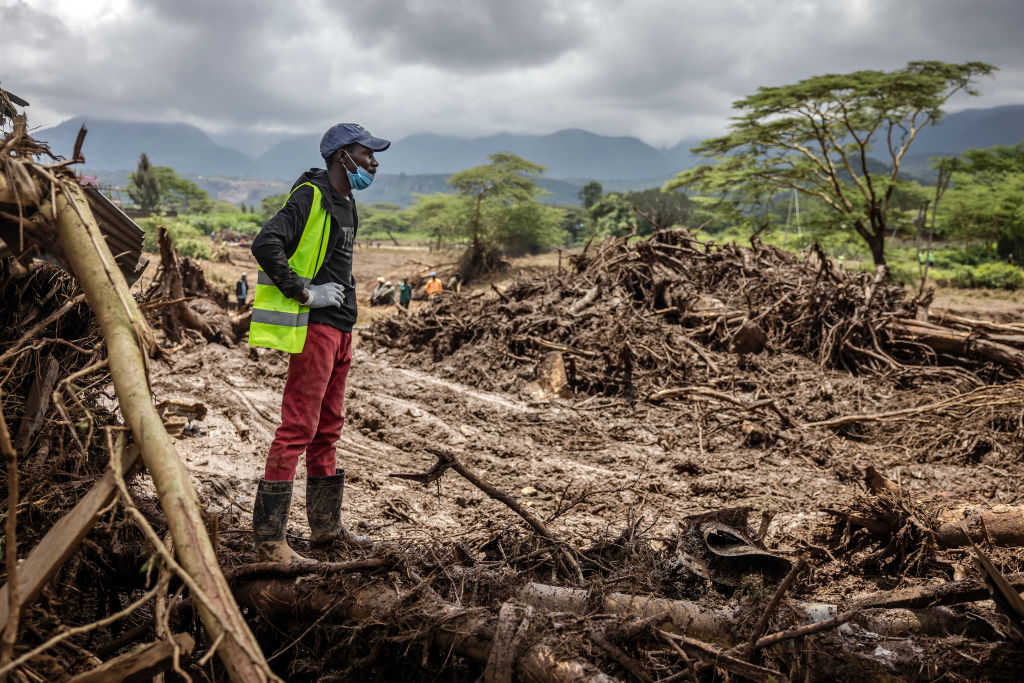
Kenya finances resilience as El Niño looms
Kenya’s new disaster risk financing strategy will be tested by a potentially record-breaking El Niño.
Read more
The DRC’s Ebola outbreak is the fastest on record. The type of financing and hurdles behind the response look almost exactly as it did seven years ago.
Read more.jpg)
Learning disaster risk finance the playful way
Can a game replicate real decision-making better than a workshop ever could? Layer Up!, our new simulation game, is finding out.
Read more