Preparedness
The knowledge and capacities developed by governments, response and recovery organisations, communities, and individuals to effectively anticipate, respond to and recover from the impacts of likely, imminent or current crises. Preparedness can be distinguished between financial preparedness (e.g. the creation of budgetary or financial mechanisms to respond to a particular type of crisis) and delivery system preparedness (e.g. investments in enabling social protection systems to be able to scale up rapidly following a crisis) (the Centre, based on UNISDR 2016).

This report captures and builds on learning from the United Nations Office for the Coordination of Humanitarian Affairs (OCHA) anticipatory action pilot in Nepal.
Read more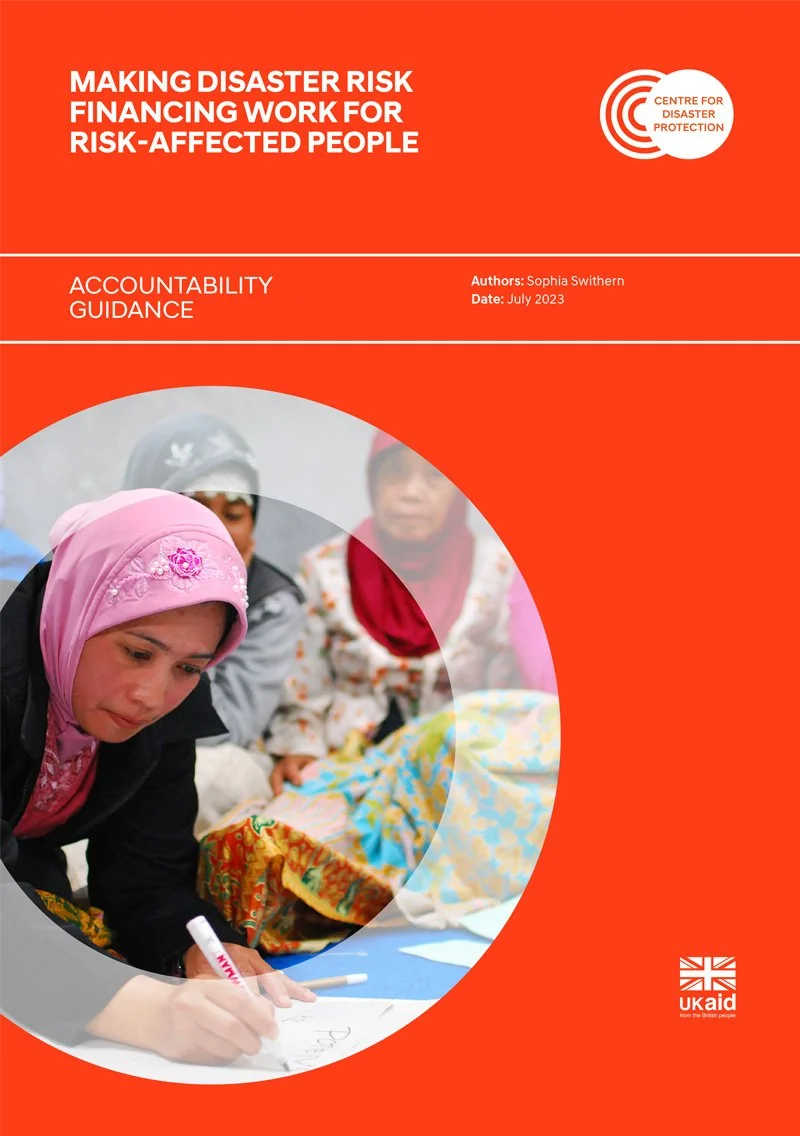
This guidance note is intended as a common framework to support practical approaches to meaningful accountability across the sector.
Read more
Process Learning For Disaster Risk Financing
This guidance document offers practical steps on how to capture lessons from DRF initiatives.
Read more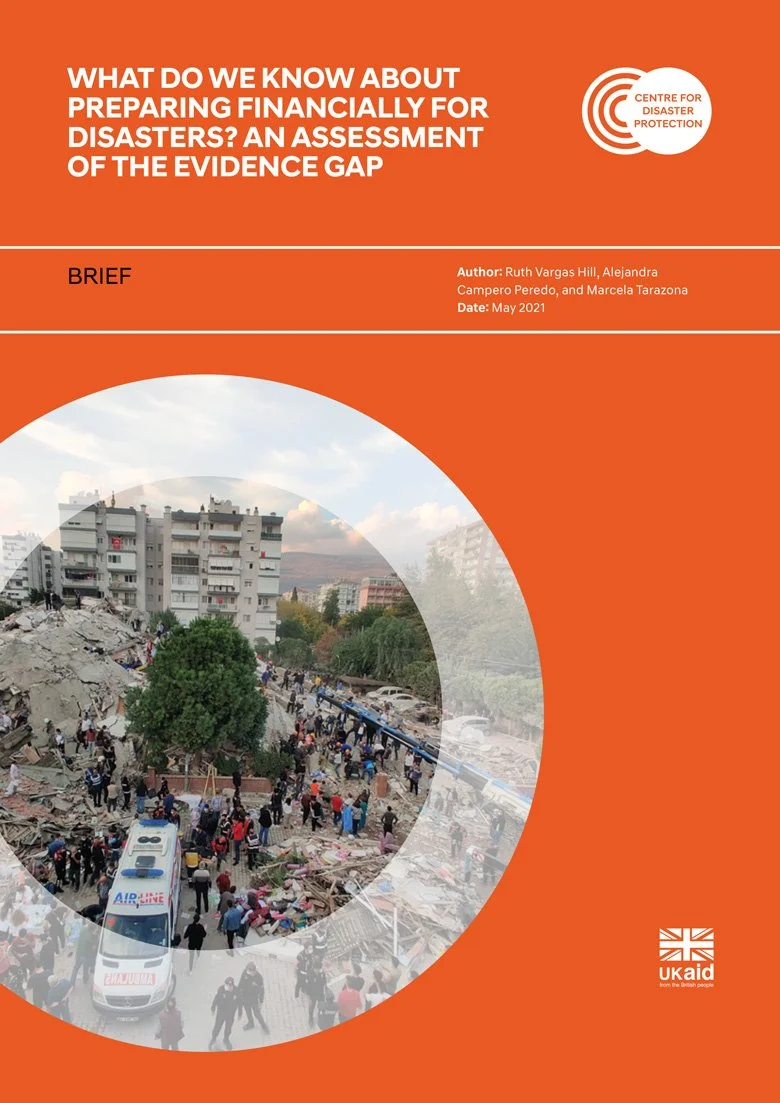
This brief reviews the evidence on the welfare impacts of proactive approaches to setting up finance for disaster response.
Read moreOfficial development assistance (ODA)
Public aid supporting development and welfare in eligible countries, usually on concessional terms.
Anticipatory Action
Actions taken before a crisis hits to prevent or reduce potential disaster impacts prior to a shock or before acute impacts are felt.
International development financing
Public funding flows supporting development objectives in lower income countries.
Hazard
A natural or human process that can cause injury, damage or disruption.
Accountability
Being responsible for decisions and resources, listening to affected people, and accepting consequences for actions taken.
Social protection
Policies and programmes designed to reduce and prevent poverty and vulnerability throughout the life cycle.