Trigger
A trigger is a predefined threshold of an index underlying a risk finance mechanism which, if exceeded, prompts a payout. A trigger may also leave an element of discretion to a designated party about whether or not to launch a response activity (Centre for Disaster Protection).

One of the first attempts to insure children's learning against drought. What happens when parametric insurance meets education, and when is it the right tool?
Read more
The clearest picture yet of what countries actually want from pre-arranged finance and what institutional frictions slow delivery.
Read more
Pre-arranged financing is expanding fast, but the voices of the countries it is meant to protect are too rarely heard. This report gives the clearest picture yet of what countries actually want.
Read more
The first cross-country evidence on what governments actually want from pre-arranged financing, drawing on evidence from nearly 250 government officials and national stakeholders.
Read more
A practical note on Debt Pause Clauses, the first of a series of documents designed to help governments and practitioners understand and compare financial instruments.
Read more.webp)
This policy brief examines the first real-world use of debt pause clauses - contractual mechanisms that allow sovereign borrowers to temporarily defer debt payments in the wake of a disaster.
Read more
This report offers lessons on the process of developing the trigger for the Malawi AA Framework and captures lessons on how AA pilots are being designed and implemented in real time.
Read more
Alongside the Airbel Research and Innovation Lab we provide key lessons for how effective crisis response can be financed and triggered
Read more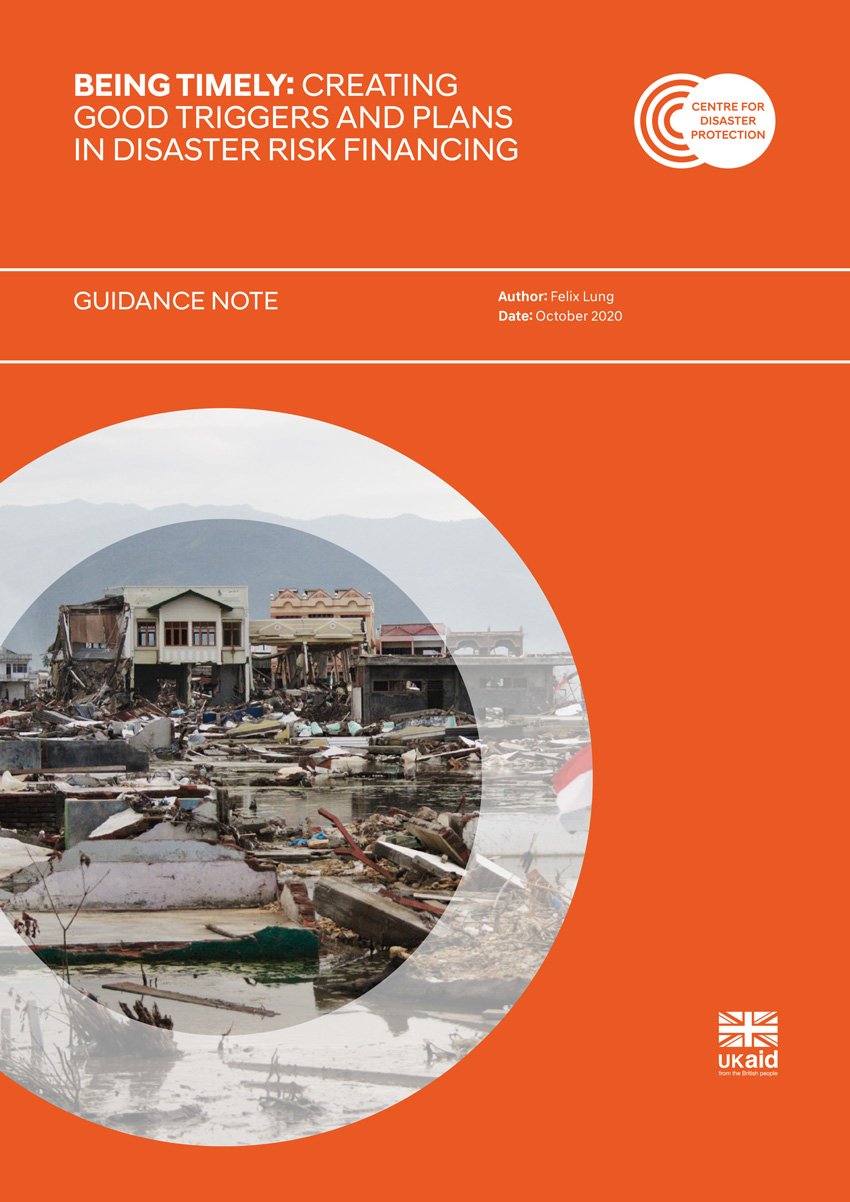
Practical guidance on contingency planning a before a disaster strikes to support a faster, more coordinated, and ultimately, more effective response.
Read more
This publication explains the importance of thinking strategically and sets out four principles for taking a strategic approach, with practical advice and resources.
Read more
This paper summarises the different shocks created by the global Covid-19 crisis.
Read more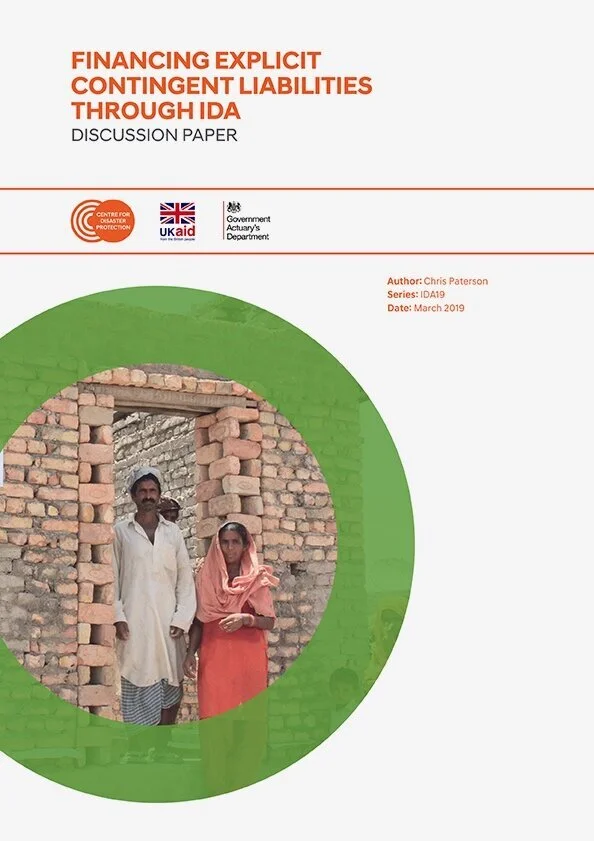
This paper proposes an innovative approach to financing contingent liabilities using IDA.
Read moreDisaster risk financing
Financial arrangements made in advance to pay for disaster prevention, response and recovery.
Financial Flows
Financial flows refer to the movement of funds for disaster risk reduction (DRR) and response, covering planned and unplanned sources.
Hazard
A natural or human process that can cause injury, damage or disruption.
Index
A measurable indicator used to estimate losses and trigger financial payouts.
Disaster risk management
Policies and actions to reduce disaster risks, manage impacts and strengthen resilience.
Attachment point
The loss level above which a reinsurer begins paying under a reinsurance agreement.