Pre-arranged financing
Financing that has been approved in advance of a crisis and that is guaranteed to be released to a specific implementer when a specific pre-identified trigger condition is met. The trigger may be based on data or models related to impact, forecasts, or projections of need, or a declaration of emergency (or similar) by the specified respondent. The funding may be used for anticipatory action or in response to a crisis, either linked to a clear plan for a very specific purpose or general budget support (Centre for Disaster Protection).
This report shows how IDA could line up more money before disasters hit, reach more countries, and keep the cost down - and what IDA 22 can decide to get there.
Read more
The clearest picture yet of what countries actually want from pre-arranged finance and what institutional frictions slow delivery.
Read more
Pre-arranged financing is expanding fast, but the voices of the countries it is meant to protect are too rarely heard. This report gives the clearest picture yet of what countries actually want.
Read more
The first cross-country evidence on what governments actually want from pre-arranged financing, drawing on evidence from nearly 250 government officials and national stakeholders.
Read more
This is the third year that the Centre for Disaster Protection has published its flagship report, and this year it goes further than ever before.
Read more
Analysing the level of effort of international development donors to support a shift towards arranging financing for disasters, before shocks happen.
Read more
This insight paper aims to support policymakers and practitioners as they seek to scale up financial protection against climate-related shocks through sovereign insurance solutions.
Read more
This Disaster Risk Diagnostic supports The Gambia’s efforts to strengthen disaster risk financing and recommends ways to build a clearer risk profile.
Read more
This data-led report assesses the state of pre-arranged financing supported with international development financing in low-and middle-income countries.
Read more
This report synthesises research exploring the feasibility of producing quantitative estimates of the costs of crisis protection across a variety of geographies and crisis types.
Read more
This study analysed international financial flows to nine countries for the 18 months after recent crises to understand funding timelines and other features.
Read more
We explore the key issues in developing a methodology for calculating pre-arranged funding.
Read more
This paper examines the evidence on how to prepare better for disasters.
Read more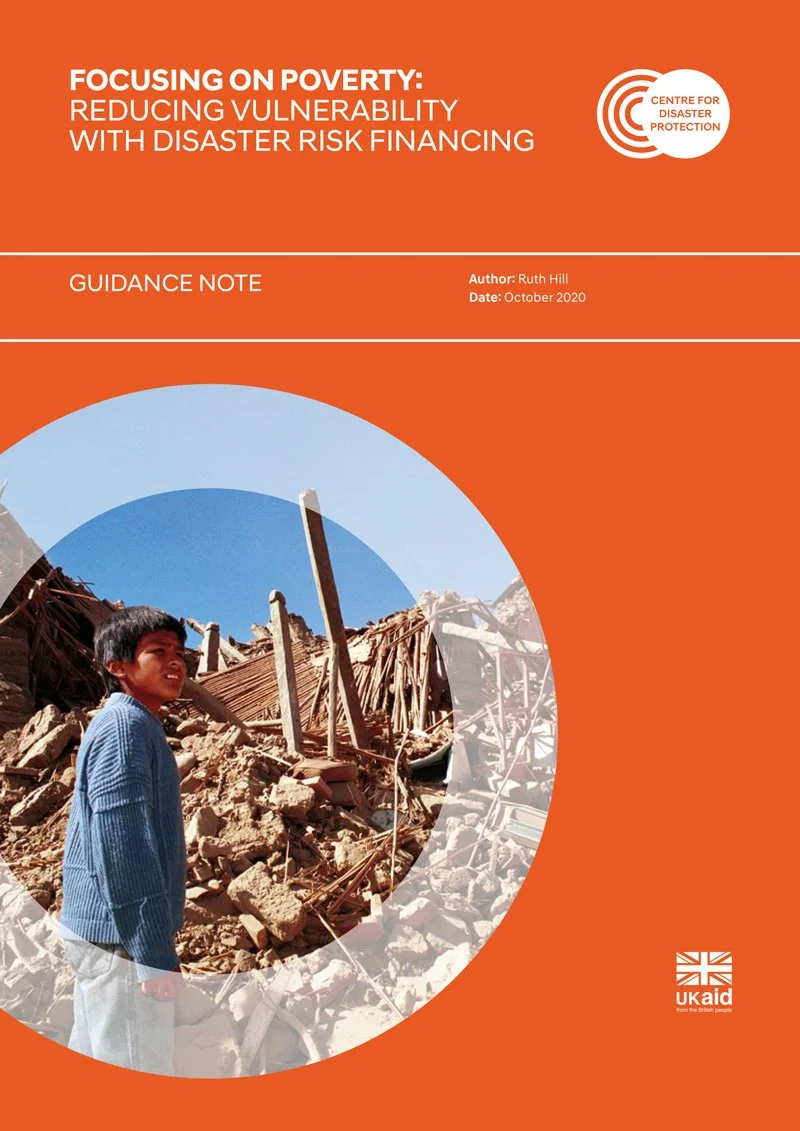
This guidance note sets out some questions to help ensure that DRF is most directed to those who are least able to withstand shocks.
Read moreRisk retention
When governments retain and finance disaster costs themselves.
Disaster
A severe event causing widespread harm that exceeds a community’s ability to cope alone.
Cost multiple
The cost multiple measures the average amount a government pays to receive USD 1 of payout from a financing instrument over its lifetime.
Covariate shocks
Shocks affecting many households at once where losses are shared across the same community.
Sustainable development
Meeting today’s needs without limiting future generations’ ability to meet theirs.
Prevention
Actions taken to avoid or reduce the impacts of future crises and hazards.