Social protection
Social protection, or social security, is a human right and is defined as the set of policies and programmes designed to reduce and prevent poverty and vulnerability throughout the life cycle. Social protection includes benefits for children and families, maternity, unemployment, employment injury, sickness, old age, disability, survivors, as well as health protection. Social protection systems address all these policy areas by a mix of contributory schemes (social insurance) and non-contributory tax-financed benefits, including social assistance (ILO 2017).
.webp)
This report on Chad provides an in-depth analysis of the country’s social protection and disaster risk financing landscape to inform future programme design.
Read more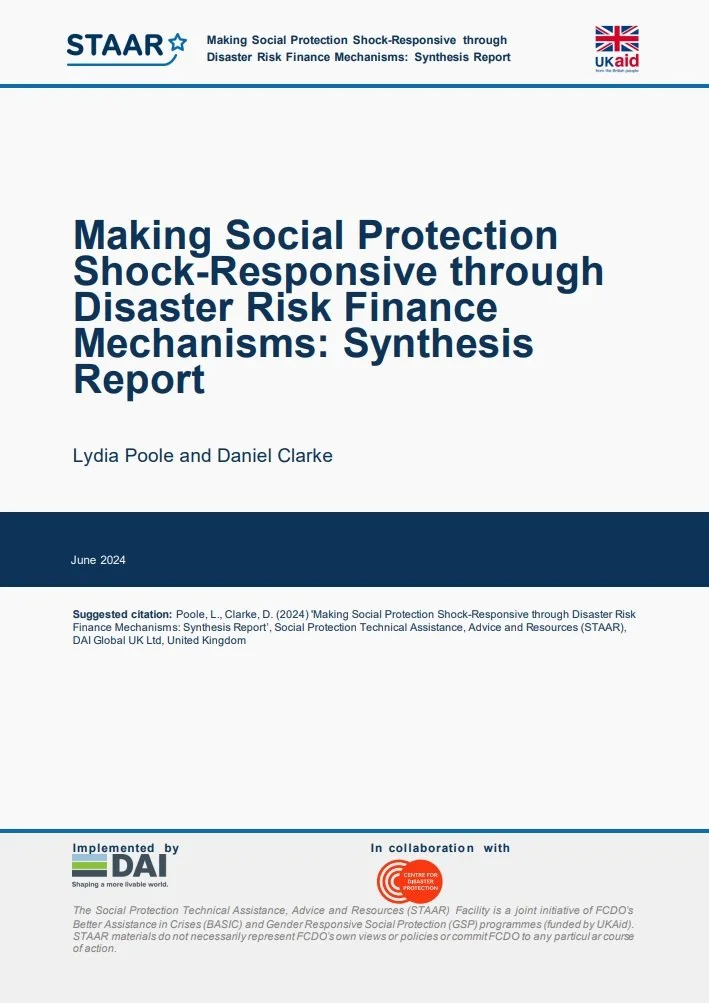
The study puts forward six lessons and 12 recommendations for donors interested in supporting this agenda.
Read more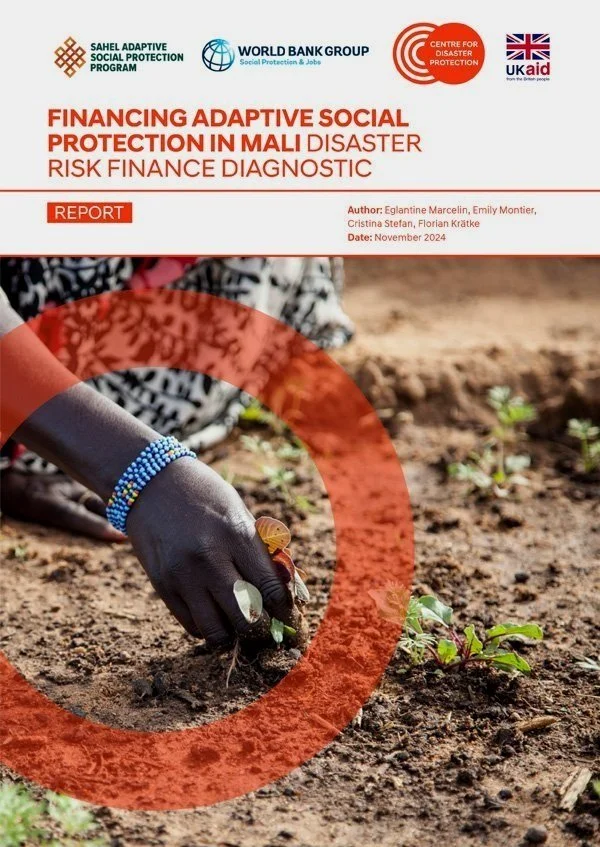
This report on Mali provides an in-depth analysis of the country’s social protection and disaster risk financing landscape to inform future programme design.
Read more
This working paper asks what is required for social protection systems to deliver timely, predictable, well-targeted and cost-effective shock response to disasters.
Read more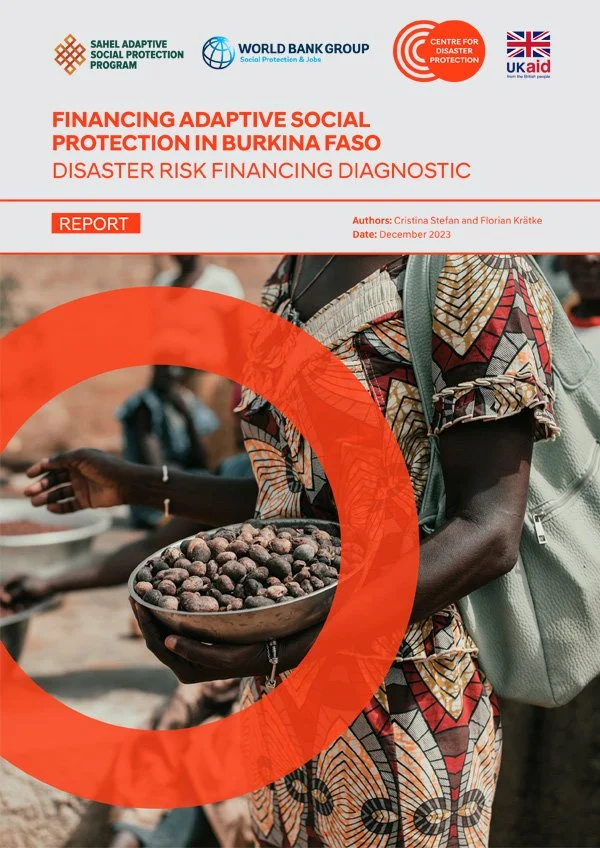
This is the first in a series of diagnostic reports aimed at informing the design and programming of the Centre’s support to the SASPP.
Read more
This report captures and builds on learning from the United Nations Office for the Coordination of Humanitarian Affairs (OCHA) anticipatory action pilot in Nepal.
Read more
This report captures and builds on learning from the United Nations Office for the Coordination of Humanitarian Affairs (OCHA) anticipatory action pilot in Bangladesh.
Read moreTotal crisis financing
Development funding focused mainly on crisis prevention, preparedness and response activities.
Ex ante
Actions, decisions or financial arrangements made before a disaster or crisis occurs.
Anticipatory Action
Actions taken before a crisis hits to prevent or reduce potential disaster impacts prior to a shock or before acute impacts are felt.
Official development assistance (ODA)
Public aid supporting development and welfare in eligible countries, usually on concessional terms.
Crisis financing
Funding designed to prevent, prepare for and respond to crises before and after they occur.
Contingent liabilities
Possible financial obligations that only become real if specific future events occur.