Adaptive social protection
Adaptive social protection (ASP) helps to build the resilience of poor and vulnerable households to the impacts of large, covariate shocks, such as natural hazard events, economic crises, pandemics, conflict and forced displacement. Through the provision of transfers and services directly to these households, adaptive social protection supports their capacity to prepare for, cope with, and adapt to the shocks they face—before, during, and after these shocks occur (the Centre, based on World Bank 2020).
%20-%20website%20(1).jpeg)
This report examines how governments across Burkina Faso, Chad, Mali, Mauritania and Senegal can better plan and budget for disasters before they strike.
Read more.webp)
This technical brief, authored by CERDI and supported by the Centre for Disaster Protection, provides an in-depth analysis of flood risk in Chad.
Read more.webp)
This report on Chad provides an in-depth analysis of the country’s social protection and disaster risk financing landscape to inform future programme design.
Read more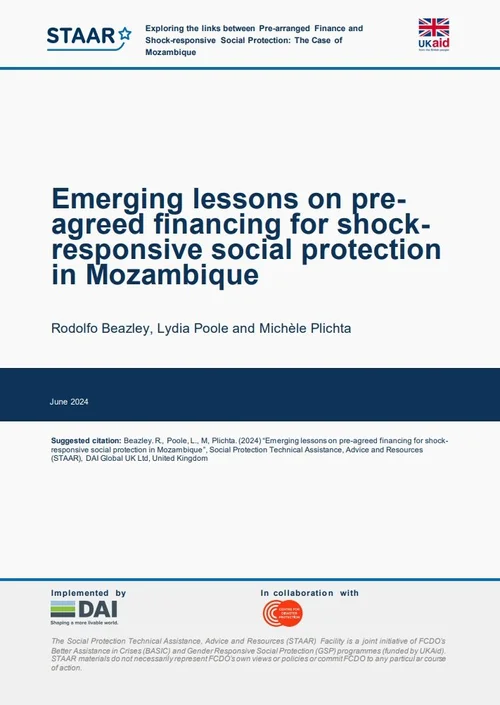
The report contributes to a broader study to consider the opportunities, potential risks, and benefits of channelling disaster risk financing instruments through national social protection systems.
Read more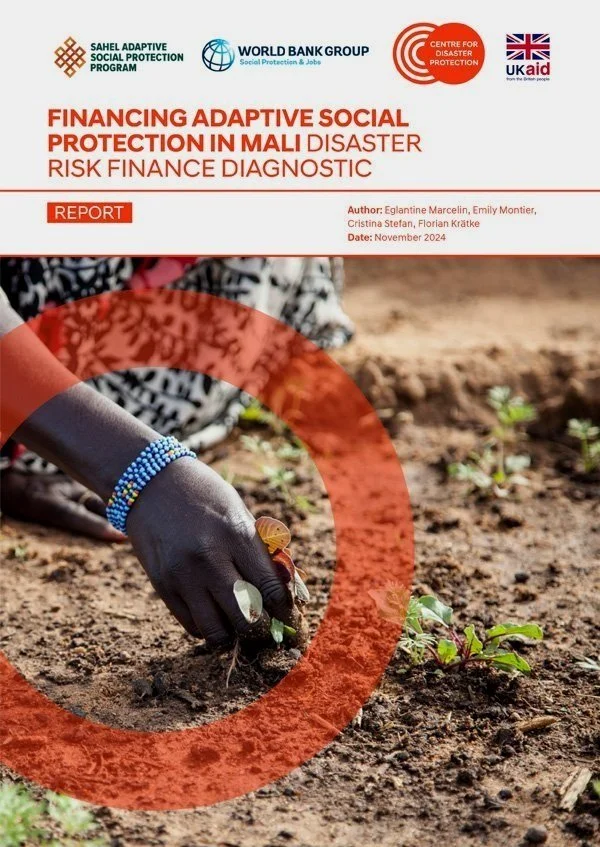
This report on Mali provides an in-depth analysis of the country’s social protection and disaster risk financing landscape to inform future programme design.
Read more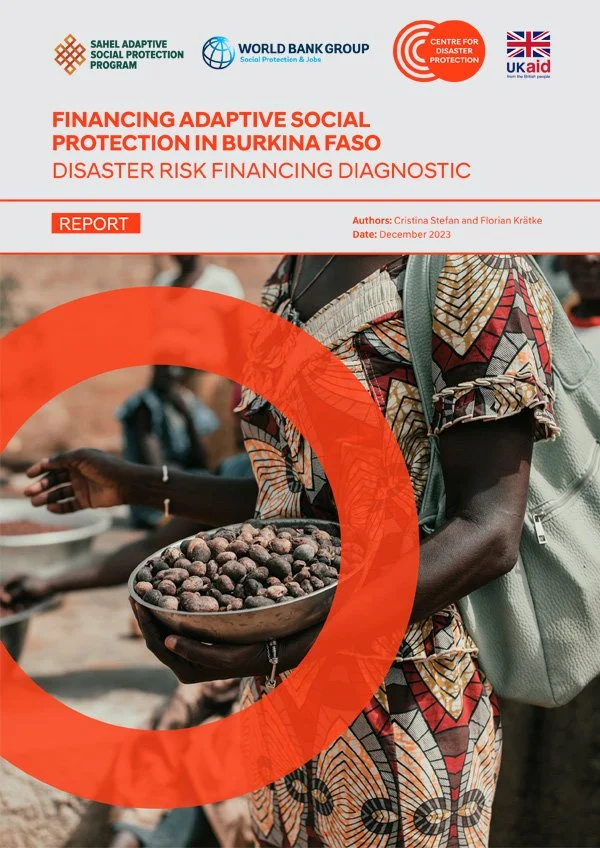
This is the first in a series of diagnostic reports aimed at informing the design and programming of the Centre’s support to the SASPP.
Read moreContingent loan (or credit) and grants
A pre approved loan or grant released automatically when agreed crisis conditions or triggers are met.
Fragility
High exposure to risk combined with weak capacity to cope, often leading to crisis.
Early warning system
Systems that monitor hazards and share information early, so people can act in time.
Risk profile
Underlying risks that an organisation or country is exposed to and the extent to which they are mitigated by pre-arranged finance.
Risk layering
Using different financial instruments for different disaster frequencies.
Accountability
Being responsible for decisions and resources, listening to affected people, and accepting consequences for actions taken.